5 takeaways:
➀ Career shocks can yield important insights. Deborah Douglas, co-editor of The Emancipator, got downsized from the Chicago Sun-Times in 2008. She’d done all the right things, studied at the best journalism schools, landed all the right internships, mastered a broad range of reporting and editing jobs, and settled in as a columnist on the Sun-Times editorial board when the ax fell. “They decided a few weeks before Barack Obama was elected president that they didn’t need the only Black woman and only Latina woman on the editorial board. I was walking to my desk with my coffee, about to sit down and they were like, ‘Come over here. You got to go.’ Earlier that year they downsized the majority of the editorial board while I was at a funeral, and they had guards come and escort them out.”
➁ Ignore messages that you don’t belong. If opportunity doesn’t come knocking, Douglas said that’s not the end. “I had to create an opportunity for me to do the things that I wanted to do because it was made very clear to me in subtle and not so subtle ways that, ‘Well, you shouldn’t be here.’ Or, ‘You can be here, but you have to take up very, very little space.’ And it’s like a weird mind game.”
➂ For Black women, the need to defy expectations never ends. Douglas said there’s a toll to being a Black woman in journalism. “It’s the way that Black women’s humanity and physical presence is ignored, unacknowledged in society and in narratives. And I notice it when you look at like the depth and breadth of coverage and the kind of nuance or lack thereof that we have in media… I decided to take every little piece of my life and do like a deep self-evaluation. So every time I feel like I’m losing, I’m like, “Okay, I may have lost that thing, but when am I getting out of this?” And it’s like, you got to dust it off and look at it again and find the new shiny parts. And so that’s what I’ve done with my career.”
➃ Stay open to mastering new skills. “I’m always learning something,” Douglas said. “But then I started saying no to things and I started trying to figure out how to say yes to more things that I really liked. And that was hard because people are like, ‘Well, you’re really good at this, you should do this.’ And I’m like, ‘But that’s not who I am. That’s not what I want to do.’ So I had to recalibrate and repeat over and over and over again, ‘I’m a journalist, I’m a journalist, I’m a journalist.’ Because I might not be getting a regular paycheck from some large institution, but this is who I am.”
➄ The definition of expertise has shifted. Douglas recalled an important conversation with an editor that changed her perspective. “We were talking about back in the day in the news business, we would come in and we would deliver information and drop it down to the people like they were baby birds and they would just eat it. They don’t do that anymore. And they don’t think that you know more than them. And so the best you can do is show up like a slightly older, more worldly friend and share information and wisdom and then engage in a dialogue about that and allow people to process it themselves. Which goes to the notion of the expertise and who has a right to say something. And you are the expert on your lived experience. And you’re probably an expert on the communities of interest that you come from.”
Speaker:
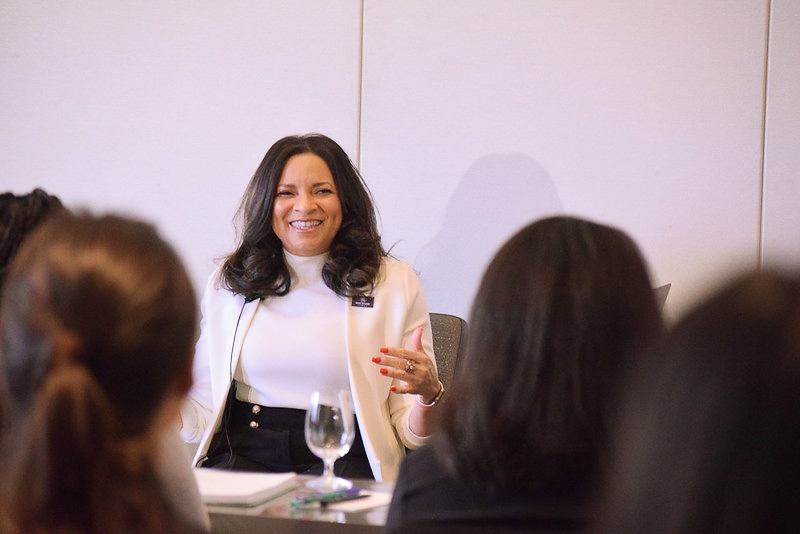
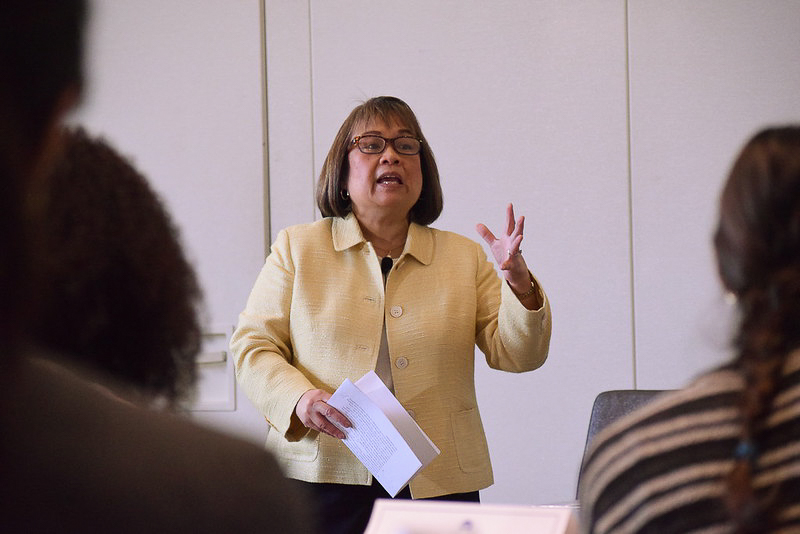
Deborah D. Douglas, Co-Editor in Chief, The Emancipator; Author, “U.S. Civil Rights Trail: A Traveler’s Guide to the People, Places, and Events That Made the Movement”
The Widening the Pipeline fellowship is sponsored by the Evelyn Y. Davis Foundation, Bayer AG, J&J and Twitter. NPF is solely responsible for the content.