Journalists on the front lines of breaking news coverage are always at risk of burnout and emotional stress after viewing repeated acts of violence, protest, natural disasters or political unrest. Many journalists feel obliged to stick to the story and pivot to the default mode of masking stress and trauma, often in unhealthy ways, so as to please editors and appear in control.
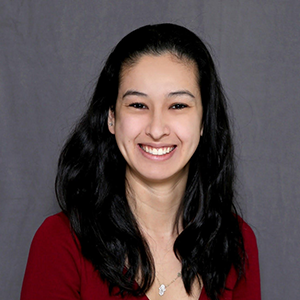
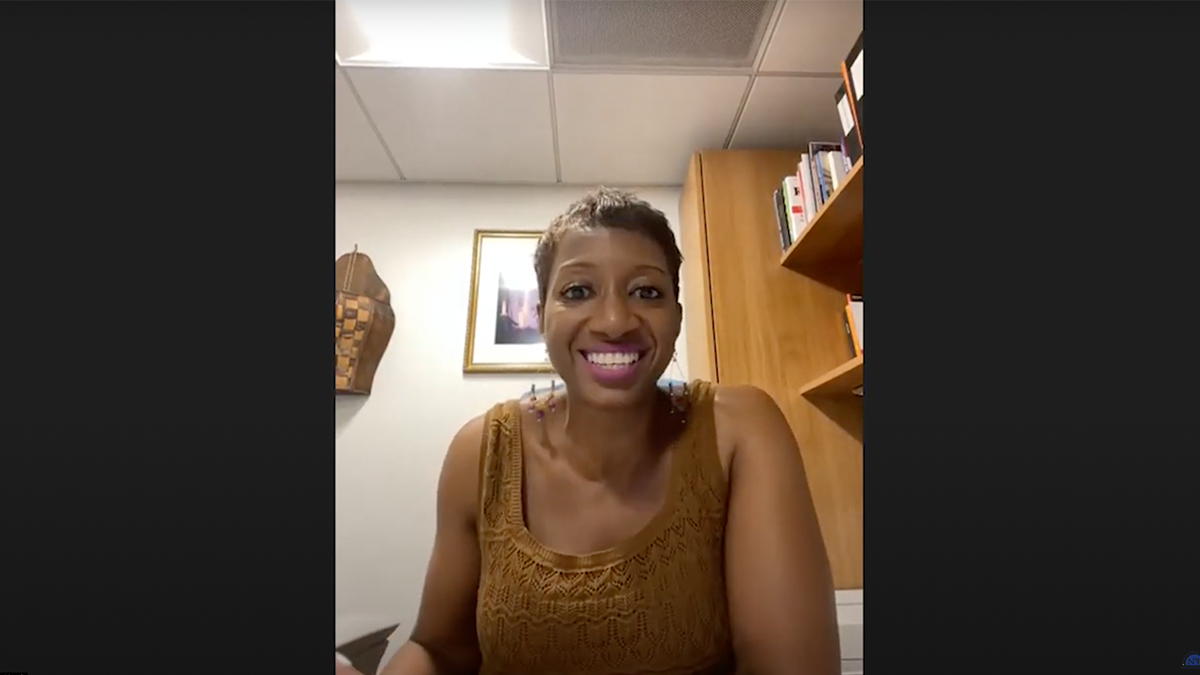
But increasingly, journalists in the newsroom and in the field are confronting an immutable reality; stress and trauma take a toll, and you can either pay now or pay later. During the July 15, 2022, Widening the Pipeline fellowship virtual training, journalists Jarrad Henderson of USA Today and Ali Gostanian of NBC News, and NBC News Editor Eric Carvin, shared some close-to-the-bone insights about the extent of threats, both real and virtual, journalists today face. [Transcript | Video]
5 takeaways:
➀ When melanin matters. When USA Today multimedia journalist Jarrad Henderson got the assignment to cover a speech by then President Donald Trump at Freedom Plaza in D.C. on Jan. 6, 2021, at first it felt like just another workday. But as the crowds near the plaza dwindled, editors began to tell Henderson and his reporting partner, who are both Black, that they needed to head to the Capitol—and stay together. Henderson says he never felt personally threatened, but being a Black man covering the event felt extremely ironic to him.“There’s a conversation that we often have in journalism about being authentic and being unbiased, which means that even as a Black person and as a journalist, those two identities sometimes can cause me to be put in harm’s way.” But Henderson acknowledged that though he can take off his ID at any time and cease to be a journalist, but he can’t take off his melanin and cease to be a Black man, and what he had seen was disturbing. The true impact of Jan. 6 didn’t hit Henderson until a year later, during an incident on a plane when he felt a fellow passenger disrespected him, and he noted the intensity of his response. “I had to stop and really consider, ‘Hey, I need a break. I need a break. I need to be able to talk this out with somebody.’ ”
➁ Be vocal about your emotions. For Henderson, that in-flight moment yielded an important breakthrough. He began to talk about his emotions and seek ways to work through trauma. It caused him to think, “I need to be able to step back from this for a second, and just take a second to really understand what was happening. Because the old school journalists, who many of us revere and are mentored by, can sometimes give this persona of ‘You just fight through it.’ ” He said fellow members of his USA Today reporting team, and his managers, have given him the support he needed. But he also cautioned, “You have to be vocal and advocate for yourself.”
➂ It’s on the managers, not just the journalists. Director of Social News Gathering at NBC News Eric Carvin said it is the duty of newsroom managers to ensure that everyone on their staff is safe, that their mental health is being cared for and that nothing will impede their ability to report the truth. “We need to make sure that people know that they can come to us with anything they need about on these issues, that they will not be seen as weak,” Carvin said. “And we need to show our own vulnerability around these challenges to be able to get that message across.” Journalists of color, female journalists, trans journalists and political reporters are targeted more often than others, he said. “We need to pay extra close attention to them.”
➃ Harassment comes in many different forms. Ali Gostanian, a senior reporter and producer for NBC News, was digitally harassed by a far-right activist who screenshotted one of Gostanian’s tweets and sent it out to her own social media followers. Soon afterwards, Gostanian started receiving nasty messages on Twitter and Instagram. “I think that I’m a fairly tough person, but it’s very difficult to get these very harassing messages on social media from strangers who don’t know you, who have never met you.” Gostanian reached out to both NBC security, as well as the social media platforms. “It was a very difficult situation because I think there’s a very big lack of understanding about how harassment can happen,” she said.
➄ Always keep your perspective. What helps Henderson persist is a book his father gave him when he was 14, “Special Moments in African American History.” The volume included images of Coretta Scott King clutching her youngest child Bernice at her husband’s funeral, and of the mutilated body of 14-year-old Emmet Till, whose mother Mamie had insisted that his casket remain open after he was lynched by a white mob in Mississippi. Henderson said the images taught him the power of photography, which isn’t just to create great images but to document history. “I could not have foreseen that I’d be doing this work, but the thing that I’m thankful for is the opportunity to document history that somebody else might see years from now, right? And so that is the responsibility of journalism as it was inherited, taught to me by my father and by my people. So, it’s not just taking pictures for the sake of making great images.”
The Widening the Pipeline Fellowship is sponsored by the Evelyn Y. Davis Foundation, Bayer, J&J and Twitter. NPF is solely responsible for the content.