Current and former top law enforcement officials acknowledged that authorities have often failed to open their agencies to press scrutiny at crucial times, fueling a long-standing adversarial relationship that has grown more tense since the 2020 murder of George Floyd by Minnesota police.
“There should be a healthy distance between reporters and police,” former Philadelphia Police Commissioner Charles Ramsey told journalists at the Crime Coverage Summit hosted by the Radio Television Digital News Association and the National Press Foundation. “But I think… change really starts when you have an incident like George Floyd. As painful as it was to watch that, that’s what sparks legitimate change.”
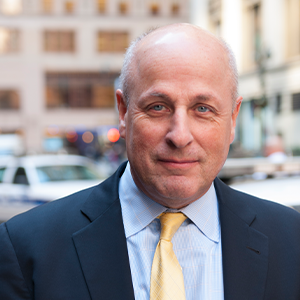
Ramsey, who also served as police chief in Washington, D.C., joined Cathy Milhoan, the FBI’s chief spokesperson and Philadelphia District Attorney Larry Krasner in an examination of the complex coexistence that for generations has defined the law enforcement-press relationship. The session was moderated by Chuck Wexler, executive director of the Police Executive Research Forum, a D.C.-based law enforcement think tank.
The discussion turned contentious when Ramsey was questioned about a 2002 incident in which hundreds of demonstrators — and some journalists – were improperly swept up by D.C. police in connection with an anti-globalization protest. Ramsey, the D.C. chief at the time, later apologized for the action, which resulted in a costly lawsuit against the city.

From left: Chuck Wexler, Charles Ramsey, Cathy Milhoan and Lawrence Krasner. Photo by: BP Miller/Chorus Photography
“So, all I’m saying is this, we screwed up,” Ramsey said. “I said it publicly; I wrote an op-ed that was published in the Washington Post, apologizing not only to the media but to every single person, including some folks that were out there doing wrong, that we should not have made the arrest the way we made it. Now, you name me another (chief) that’s actually gone that far to write an open apology…because we screwed up; we screwed up. My suggestion to you, you need to try to get over it, man. It’s been 20 years…”
Wexler described the testy exchange as a “teaching moment,” highlighting the purpose of the session and the need for a continuing discussion.
Krasner, who has repeatedly called out police misconduct in Philadelphia, also lamented that prosecutors have historically driven a wedge in law enforcement’s dealings with journalists.
“I think most prosecutors in the United States, in history, have been a disaster,” Krasner said. “I do think that there’s some room for improvement in terms of what’s done with journalism, and a lot of it, frankly, is prosecutors’ fault… They have been deliberately black boxes because they felt controlling the information is how you get re-elected.”
The district attorney said he has attempted to chart a new path for his office and “been clobbered at times for it and done well at times for it.”
Milhoan, who was named the FBI’s chief spokesperson in 2021 after serving as director of communications for the U.S. Secret Service, acknowledged that law enforcement “culture’’ had been an initial obstacle.
She said her experience at the Secret Service had been more difficult.
“Great men and women, but they had not engaged with the media at all,” said Milhoan, who advocated for more engagement – formal and informal.
At the FBI, Milhoan said Robert Mueller’s 12-year tenure as director, marked a “change in culture,” when the bureau increasingly hired its press officers from the media ranks.
Access the full transcript here.
The 2024 Crime Coverage Summits are sponsored by Arnold Ventures. NPF and RTDNA are solely responsible for the content.