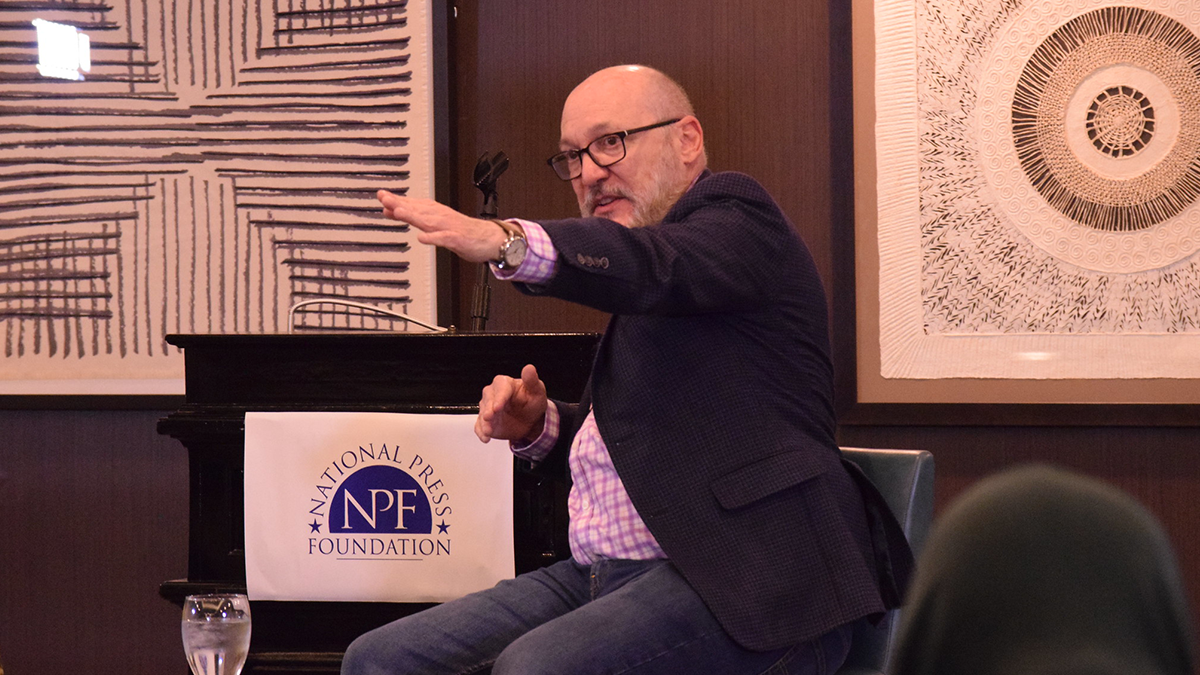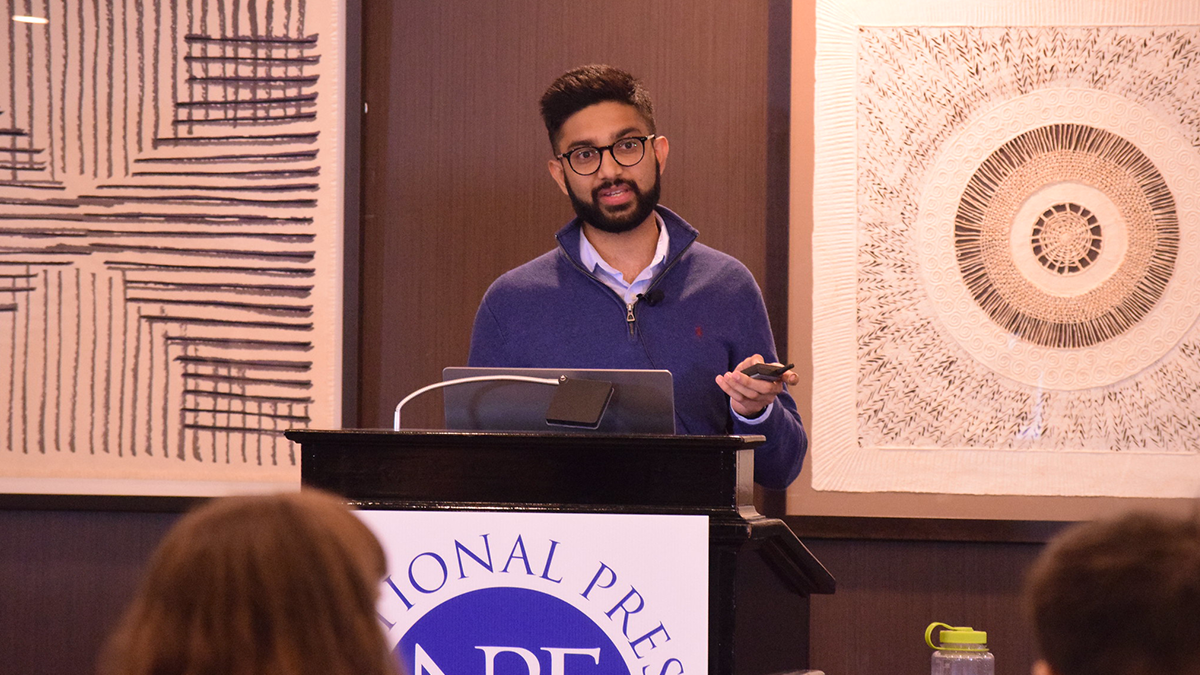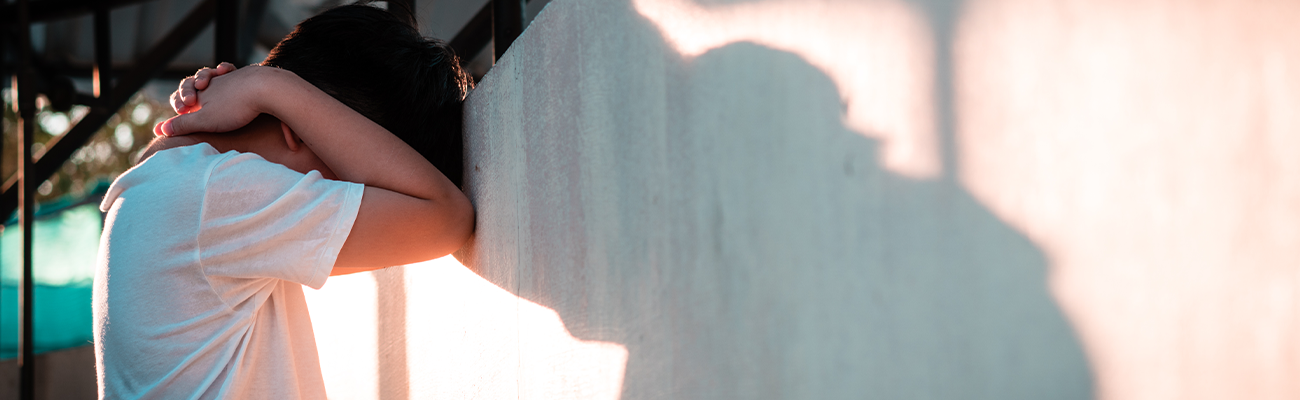
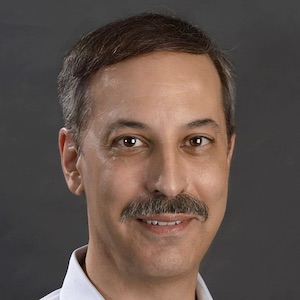
In 2005, the National Center for School Crisis and Bereavement was established to help students in New York through the grief and trauma that followed 9/11. “One out of four of the students surveyed six months after 9/11 self-reported symptoms consistent with mental health disorder,” Dr. David Schonfeld, the founder and director of the National Center for School Crisis and Bereavement, told NPF fellows in McAllen, Texas. Since then, the organization has helped hundreds of schools and communities in the aftermath of tragedies. From the shootings in Newtown, Connecticut and Parkland, Florida to natural disasters in New Orleans and Missouri — here’s what Schonfeld thinks journalists should know.
5 takeaways:
➀ School shootings should not be considered the “new normal.” The pandemic is also not our “new normal” because a pandemic is not normal, Schonfeld said. But that reference is used because it’s exhausting to try and repetitively address something that’s difficult and painful. People shut down and use avoidance as a copy strategy even when they’re struggling, Schonfeld said.
What should happen? After a major crisis event, psychological first aid is recommended, he said. “You want people to understand the impact of a crisis and what can you do to cope and then provide supportive services to promote effective and normative coping strategies and adjustment.” This can help build resilience, Schonfeld said.
➁ Grief is a universal experience, but it can intersect with other challenges. Schonfeld explained it this way: “Individuals who are disadvantaged tend to be multiply disadvantaged, so they have less resources, higher risk, and a compounded need.” However, financial advantage doesn’t necessarily mean you get greater support services. At a recent visit to a private school where a student committed suicide, Schonfeld learned there was no counselor on staff. Sometimes, he said, “they don’t provide support for emotional needs because it’s not felt that the families would want that or see that as an in intrusion on the family space.”
➂ Be aware of compassion fatigue and vicarious traumatization. Journalists are at risk for both, Schonfeld said. “If you care about the people that you interview and you want to try and help society… then you will be impacted by hearing the narratives of people,” he said. Vicarious traumatization is hearing the traumatic element, feeling scared and becoming traumatized. “But you can also just have compassion fatigue where you care about people and their stories of their pain and suffering changes you.” He said good reporters are the ones who care about people, so it’s important to have a support system, practice self-care and commit to “exercising” to increase your capacity. “I’m sure if you cover a story that makes a difference in the lives of people, that probably is an incredible feeling,” he said. “So go for that feeling… and take care of yourself so you can come out of that journey ready to do it again.”
➃ “How do we promote post-traumatic growth?” And other story ideas to consider. “Individuals in the helping professions… are probably more likely to be hurt by helping others than the general population,” Schonfeld said. Story ideas to consider include:
- Focus on the vulnerability of those who help, like those in pediatrics and healthcare
- Look at the difference between trauma and grief and how they’re approached in the U.S.
- Cover the funding, or lack of funding, that provides mental health services in states and schools
➄ Schools should be able to “build back better” after major traumatic events. As communities try to pick up the pieces after school shootings, there should be less of a focus on getting back to the way things were, Schonfeld said. “Renewal is going to where you wish to be. And, I actually think in the pandemic, for example, there’s too much attention being placed on trying to recover, to get back to the behavioral health services we had before. But, they weren’t good before. So, I really think we should be rethinking renewal.”
This program was sponsored by the David and Lucile Packard Foundation, the W.K. Kellogg Foundation and the Heising-Simons Foundation. NPF is solely responsible for the content.


 Reload document
 Open in new tab