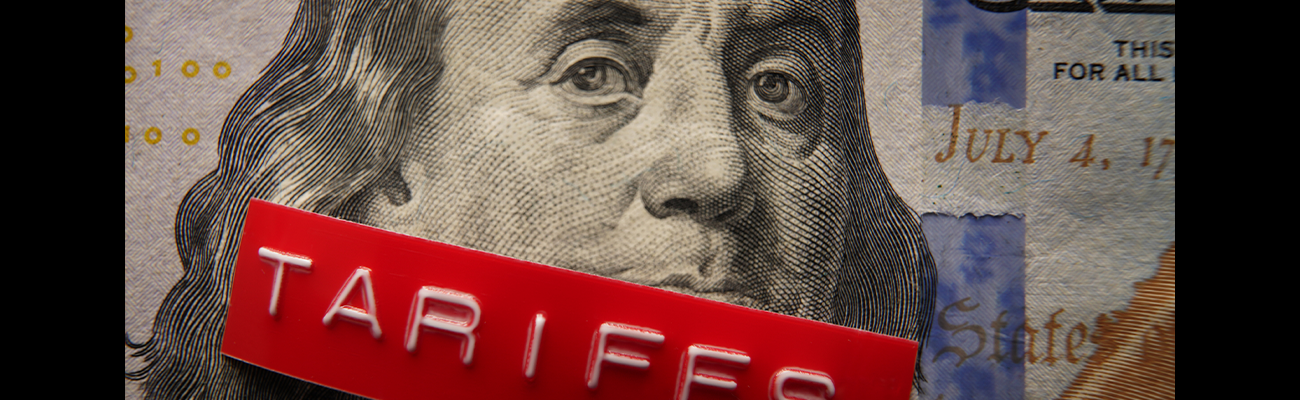
Six months into President Donald Trump’s second term, the torrent of tariff threats, fragile truces, legal challenges, and shifting deadlines continue to ripple through the global economy, as governments and businesses attempt to find shelter from direct hits.
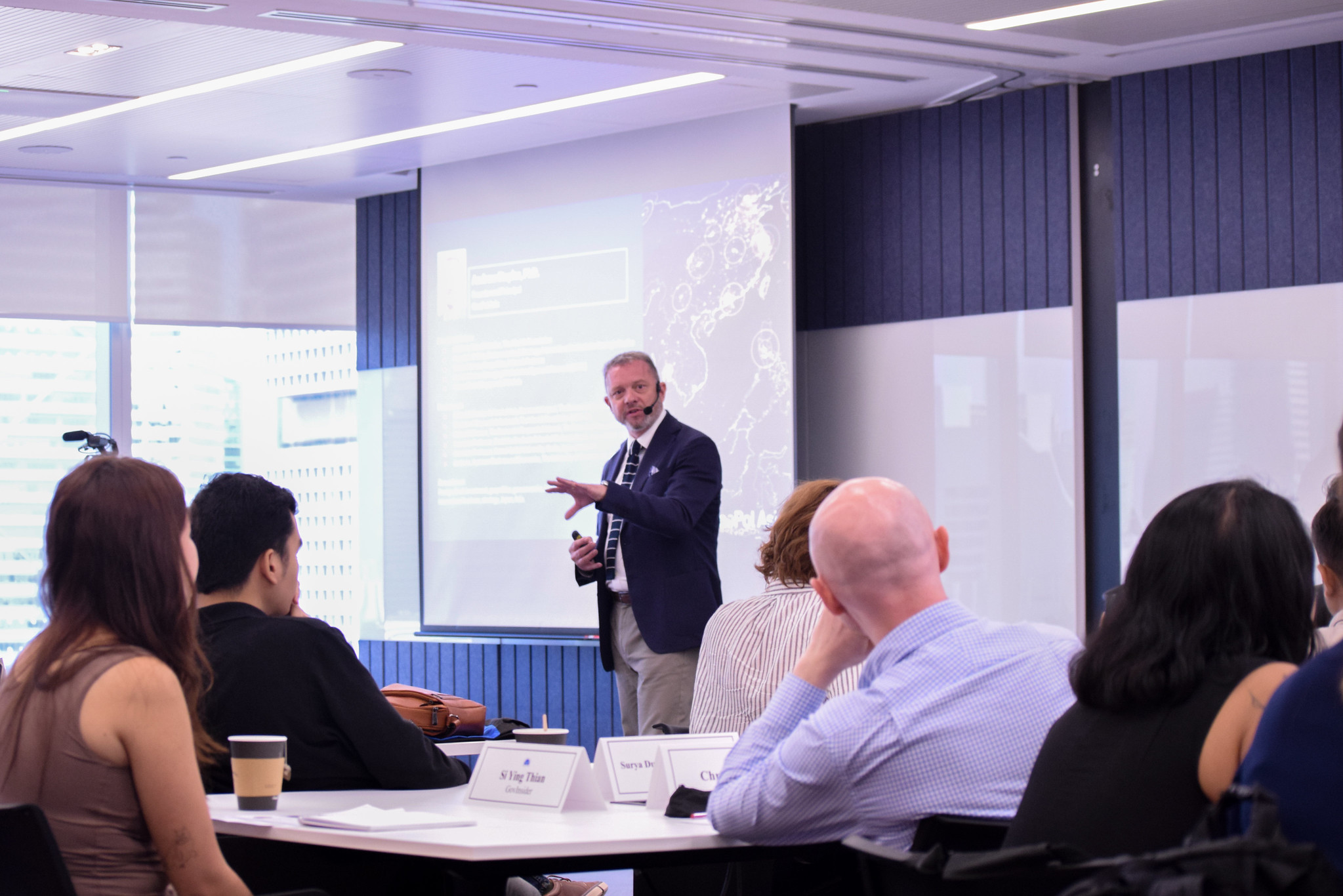
In an attempt to assess the far reaching economic implications, the National Press Foundation and the Hinrich Foundation hosted a deep dive into the White House strategy, featuring Deborah Elms, the Hinrich Foundation’s head of trade policy; David Lynch, global economics correspondent for The Washington Post; Dennis Shea, former deputy U.S. trade representative and U.S. ambassador to the World Trade Organization; and Jeffrey Schwab, senior counsel and interim director of litigation at the Liberty Justice Center.
While the collective verdict on the deluge of tariff policies pursued by the Trump administration has yet to be issued, some analysts warn that real pain is coming if the president follows through on some of the most daunting sanctions facing U.S. trading partners and as a new Aug. 1 deadline looms.
“We have had an unbelievable amount of trade disruption and we are still waiting to see, ‘Are those ripples in that pool going to ever calm down or are we going to continue to have this disordered amount of waves crashing back and forth for an ongoing period of time?’ ” Elms said. “My suspicion… we will be drowning in the swimming pool for a very long time to come because the waves themselves, the continuous throwing in of new rocks by Trump and then the reaction of others is likely to keep going for as long as he stays in office.”
As the U.S. economy continues to be tested by Trump’s “sector-specific” sanctions and reciprocal tariffs, Elms said the potential outlook is forbidding.
“So, I think the damage is coming and coming faster than some people would like to admit or acknowledge,” she said.
There also could be risk in the markets’ recent surge after investors increasingly appeared to brush off Trump’s repeated tariff threats and subsequent deadline extensions.
“The danger… is that both sides of this equation sort of derived the wrong lessons from this recent experience,” Lynch said. “The president looks at the market often as a bit of a report card on his performance. He likes to see the market go up. No president likes to see it go down of course. And the fact that the market has been going up can seem like vindication or validation of the policies that the president’s been pursuing that might at the margin make him less likely to back off the August 1st threats.
“Likewise, investors may be learning the wrong lesson,” Lynch said, citing the mocking nickname for Trump’s approach to trade policy as TACO (Trump Always Chickens Out). “I don’t think he does always chicken out. I think he often backs off his most extreme threats, but I think he’s quite serious about the 10% baseline tariff on all imports… So I think we’re going to end up ultimately in a very different trading landscape from where we were before President Trump returned to the White House. And it’s not quite clear exactly what the contours of that different system will be.”
Shea, who served in the first Trump administration, said the rollout of Trump’s second term followed the campaign playbook.
“Did I see this coming? The answer is yes,” Shea said.
“President Trump campaigned on a 10 to 20% global tariff. He campaigned on reciprocity and bilateral trade relations. He campaigned on increasing tariffs on China up to 60%. These were campaign promises and the issue of tariffs were central to his campaign, so there should have been no surprise that the president was going to do roll out these tariffs and basically fulfill a campaign promise. Basically, he’s doing nothing less than rewriting the rules of global trade, which he views as being deeply disadvantageous and deeply unfair to the United States over the past couple of decades. In his own words, he’s trying to do something that in the end will be historic.”
Shea said Trump believes the U.S. consumer market is a “source of leverage.”
“He’s using that leverage to achieve several objectives, more balanced trade, protecting key industries, and building up the productive capacity in the United States, combating unfair trade practices, including non-tariff barriers, which we’ve been hearing a lot about.” Americans have learned about non-tariff barriers and also raising federal revenue, and I think he’s raised, they’ve collected about a hundred billion plus over the past year, which is significantly more than last year.”
Schwab’s Liberty Justice Center, however, has won the most potentially consequential court victory of Trump’s tariff campaign.
In May, the U.S. Court of International Trade ruled that Trump exceeded his authority under the International Emergency Economic Powers Act in pursuing the global tariff strategy. A federal appeals court is set to consider the Trump administration’s challenge on July 31.
“The president is asserting a vast amount of power, the power to tariff,” Schwab said. “Basically, he says he can impose tariffs on any country at any time, for any reason, at any rate that he wants. The problem with that is that under our constitutional government, Congress is given the tariff power, not the president, and so the president only has the power that Congress has delegated to him and the Congress has not delegated an unlimited power to tariff to the president.”
The case, whatever the result, is likely to find its way to the U.S. Supreme Court.
“The world economy is at stake…,” Schwab said.
This program is sponsored by the Hinrich Foundation. The National Press Foundation is solely responsible for the content. All programs are on the record. Resources and transcripts are available to journalists worldwide.