Apart from the press corps covering conflicts around the globe, perhaps no group has been challenged more than journalists tracking the economic upheaval of the past six months.
Finding meaning, providing context and broadening networks of knowledgeable sources while building public trust have been daily tasks for the reporters on the front-lines in unrelenting, super-heated news cycles.
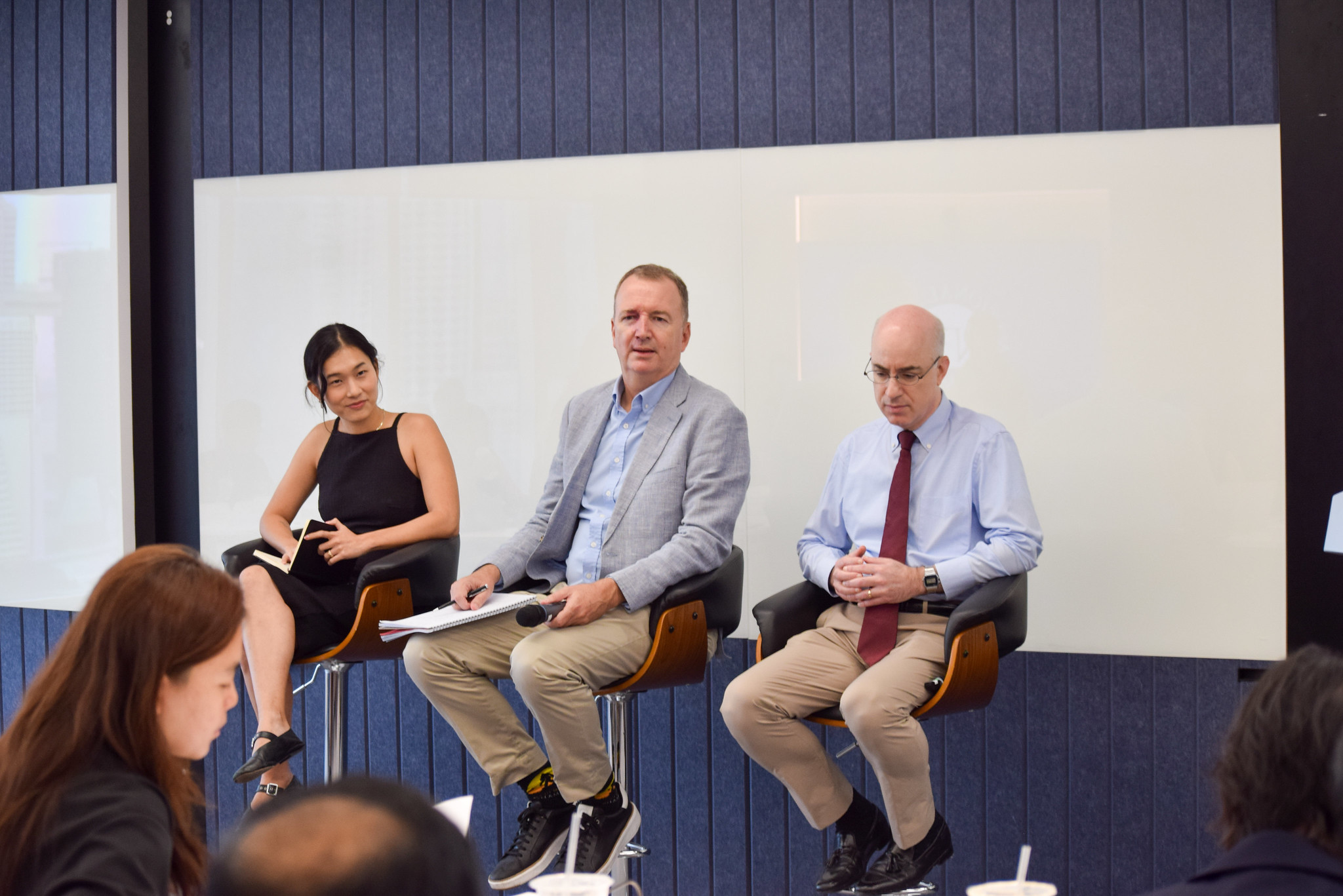
In a wide-ranging exchange with the NPF International Trade Reporting fellows, Rebecca Tan, Southeast Asia Bureau chief at The Washington Post; Peter Landers, The Wall Street Journal’s Asia business, finance and economics editor; and Daniel Moss, Bloomberg’s Asian economies columnist said reporters can best serve their audiences by deciphering fast-moving developments in ways that matter to them.
“We write for a general audience and with trade and with the economy, I think everyone has a sense that things going very badly, but making sure that that’s something that people understand why it matters to them,” Tan said. “What’s happening to global shipping, what’s happening to global infrastructure, what’s happening at the ports, making sure that the lay reader understands that and how it’s going to going to affect them.”
Moss said the volatile times have begged for often elusive explanations that benefit from heaping doses of historical context.
“At what point does one dive in and try to be definitive, if that’s even possible in the last six months,” Moss said, adding that daily reporting has so far provided “down payments on definitiveness.”
“Look, you can’t try to tackle everything [while] everything’s coming at you. By the way, that’s partly the objective of the [Trump] administration. Try to distinguish between the performative – and there’s been plenty of that since January 20 – and what is the underlying.”
‘Strike at the Right Moments’
As an editor, Landers said the goal is to support and encourage reporters but also find the “critical moment” when the reporting will mean the most to the audience.
“I think one of the big challenges for me is to strike at the right moments,” Landers said.
“We have to think of typical U.S. readers and ask: ‘Is this development important enough to report?’ And again, speaking from the perspective of an editor, I don’t want it to discourage reporters from developing expertise and staying in touch with the sources and keeping track of the blow by blow.
“And so one doesn’t want to disappoint people and say … your scoop is not good enough,” Landers said. “It is good, it is good, but maybe it’s not quite the right time. … The Wall Street Journal has changed its bar over the years. I think we have a higher bar now for saying what is the critical moment, the key story that American readers are really going to want to read and what are the incremental developments and also how can we build them over time so that it’s not just wasted reporting – that the reporting produces something in the end.”
Getting Sources On The Record
Almost as difficult, the journalists said, is finding sources and subjects of the reporting to speak on-the-record.
“It seems to get harder every year and I mean not to pick on one company, but it was symbolized for me when briefly the Tesla automatic response to emails requesting comment was a poop emoji,” Landers said.
The volatile political climate has sometimes pushed against transparency.
“What I think has changed is the people operating in the sort of industry association/think tank/academia space,” Tan said. “I think there’s far more wariness now about being caught on the wrong side of a policy shift.”
The International Trade Reporting fellowship is part of an ongoing program of journalism training and awards for trade coverage sponsored by the Hinrich Foundation. The National Press Foundation is solely responsible for the content. All programs are on the record. Resources and transcripts are available to journalists worldwide.