For journalist Jill Barshay, the months following an executive order to dismantle the U.S. Department of Education have been some of the most tumultuous of her career – and she was a foreign correspondent in the former Soviet Union.
“I had the driest possible beat in the universe: ed research and data,” said Barshay, a writer-editor with The Hechinger Report. “I had professors and think tank researchers begging me to be quoted … And now I feel – I mean, the Trump administration has upended my life. I feel like an investigative reporter. The Signal app on my phone is the most important thing in my life right now, and I’m begging people to go on the record.”
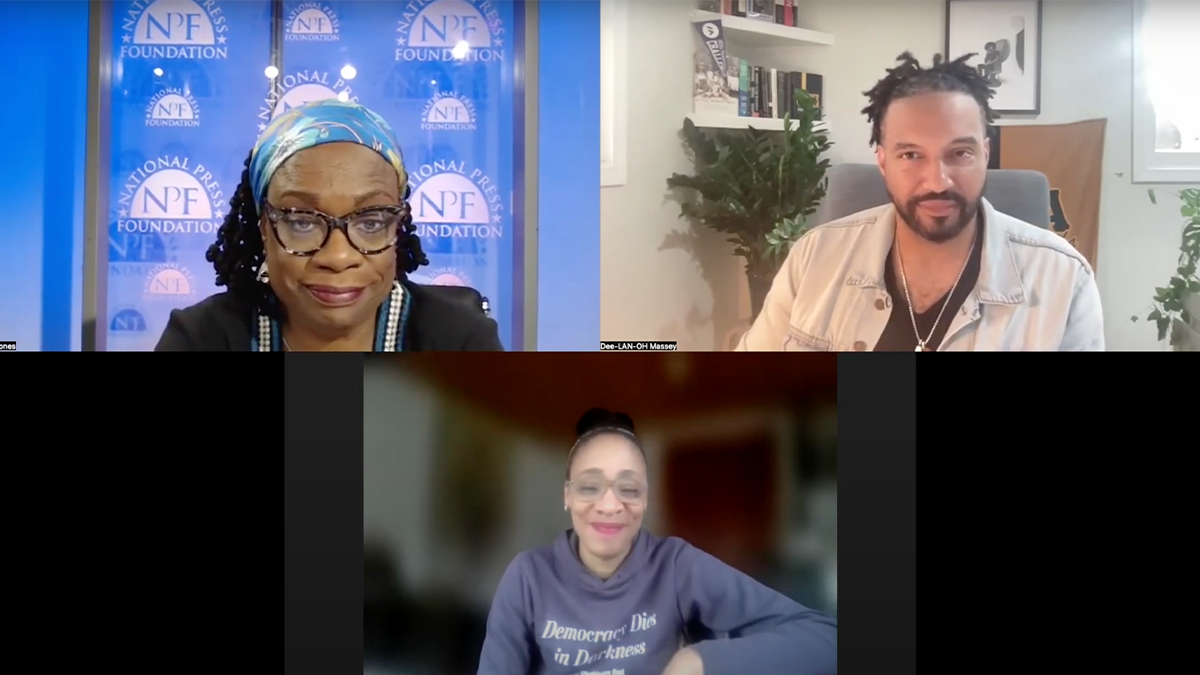
In the NPF webinar “How to Cover Education Department Cuts in Local Communities,” Barshay was joined by former National Center for Education Statistics (NCES) deputy commissioner Stephen Provasnik, School Superintendents Association associate executive director Noelle Ellerson Ng and National Parents Union founder and president Keri Rodrigues.
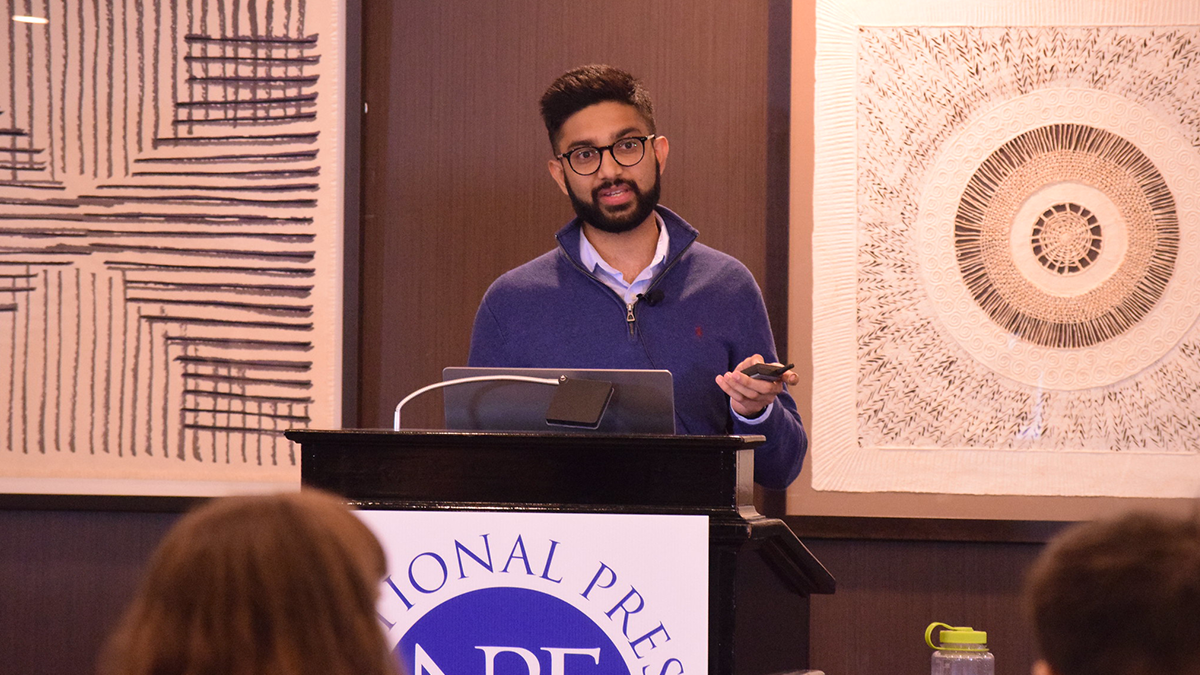
Provasnik’s role as a former Education Department official and an education historian yielded insights into how the executive order may have already dealt a critical blow to public education. For example, the flurry of layoffs, lawsuits and mixed signals has brought the work of the NCES to a halt.
“Without data, how are you going to hold anyone accountable?” he said. “How are you going to know whether anything is successful or not? … You’ll lose the ability to have any reliable way to compare local data to national trends except using old data.” It will also obscure U.S. performance compared to other nations, he said.
On June 10, Rodrigues was in Washington with a group of parents hoping to air their concerns with legislators.
“If we do not have data to hold these systems accountable, we are never going to be making improvements. And so when we see cuts to things like [the Institute of Education Sciences] and the idea that we are somehow magically going to depend on states who frankly have never done a good job of spending money wisely of allocating it to the kids that need it the most, it really strikes fear in the heart of a lot of Americans,” said Rodrigues, whose organization has members in all 50 states, D.C. and Puerto Rico.
The panelists’ conversation unpacked the Education Department’s role in schools, which many Americans don’t realize is relatively limited. As Ellerson Ng reminded viewers, roughly 90% of funding for public schools comes from state and local sources. One of the biggest challenges for school superintendents nationwide has been the lack of clarity about what role the federal government will have.
“At the end of the day, as superintendents work with their boards and council to open their schools every day, they are integrating and implementing in a braided manner state, local and federal policy,” Ellerson Ng said. “And it’s one thing to implement policies that are a little far apart, but we have a president who says he wants to get the federal government out of education, but then he has an executive order that’s talking about ending ‘woke’ curriculum. Well, are you getting the Department out of education or are you establishing a national school board? Those are so diametrically opposed.”
The panelists highlighted the potential for this issue to have far-reaching consequences for the quality and equity of education, and urged journalists to find the stories that would bring context and clarity for families:
Who will be affected by federal funding cuts?
Ellerson Ng urged journalists to carefully analyze hot-button issues, such as whether or not funding cuts would be most harmful to large urban school districts.
“What looks like deep cuts in dollar amounts to blue states and blue cities – to the New York, to the LA, Chicagos – when you put it in proportion in terms of what federal funding represents to an operating district budget, while on average districts get about 10 to 11% of their funding from a federal level, red states and red districts have a disproportionately high reliance on federal funding. So we’re talking upwards of 15, 18, 20. Some areas are 70, 80% relying on federal funding.”
Barshay reminded journalists that as in other coverage areas, always follow the money.
“There are now some databases and lists of canceled contracts and canceled research, and you can see which ones are happening in your community and write about the consequences,” she said. “At the same time, not all of this spending was done so efficiently, and there may be a point that things could be done better. It’s a complex story that needs to be told fully.”
Who are you talking to?
Rodrigues advised journalists to carefully identify sources when reporting, including their local affiliations.
“I would ask the tough questions. I was just literally down marching with some members of our organization in Broward County, folks that actually have kids in the Broward County schools, whose voices were not being heard because they were being drowned out by a Moms for Liberty group with folks who do not even have kids in public education,” she said.
Ellerson Ng said on-the-ground journalists need to build relationships with sources as they’ve always done.
“I think one of the first things you can do is don’t be afraid. Ask to walk around in a school, build that relationship just like we tell our superintendents to build relationships with their elected officials. And it’s increasingly hard to build relationships with local reporters because while I will geek out on an education beat, I’m fully aware that that’s not necessarily what sells all the papers. But that’s an important relationship for superintendents to have. And then those site visits might open your eyes to a story that you didn’t even know was there.”
How does this compare to historical precedence?
Provasnik said it’s important to keep the historical context in mind.
“The history of the U.S. education system has always been entangled in larger political questions. As a journalist, you always have to kind of think about what political question is being framed at the moment. I mentioned NCES was created after the Civil War, and it had very much to do with the fact that slaves had been freed and the Republican Party needed to come up with a way to show that it was going to be responsible in promoting democracy by promoting the education of the freed slaves who had been denied education.”
Without a full grasp of the underpinnings, reporting on this moment can fail to communicate that public school is “at the heart of America’s great experiment,” Provasnik said.
Access the full transcript here.
This webinar is made possible thanks to Evelyn Y. Davis Studio funding.





 Reload document
 Open in new tab