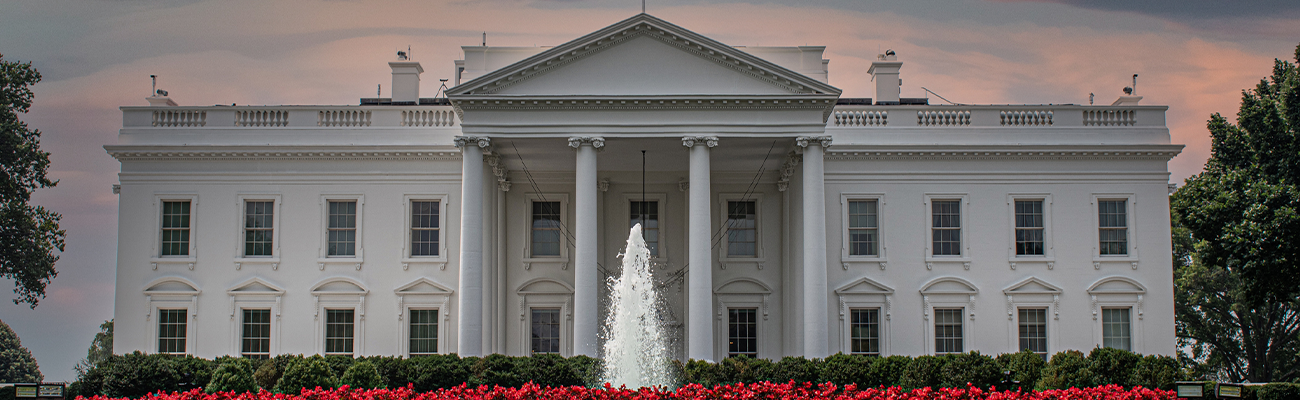
Covering the White House has always been a challenging – sometimes daunting – assignment, even more so in the new Trump administration which has taken extraordinary steps to control access.
Perhaps, no organization has been affected more than the Associated Press. A federal judge Tuesday ordered the White House to restore the wire service’s access to the daily rotation of journalists provided up-close vantage points at events involving the president. The ruling reversed a ban on AP photographers and reporters from pool access related to the news organization’s decision not to abide by the presidential directive to rename the Gulf of Mexico as the Gulf of America.
Aamer Madhani, part of the AP’s White House team, told the National Press Foundation’s Paul Miller Washington Reporting Fellowship that the difficult work goes on.
3 key takeaways:
1. ‘Talk to anybody and everybody’
“Presence at the White House even now I think is important because … we’re not going away. We’re going to cover this administration,” Madhani said.
While it can be difficult to break though at packed White House briefings, Madhani said showing up is important.
“You’ve got to find the sources wherever they are; you go to where the information is,” he said.
During the early days of a new administration is a great time to make and connect with sources, according to Madhani.
“There’s a treasure trove of sources being made right now,” he said. “Talk to anybody and everybody.”
And if officials don’t want to comment publicly on certain stories, Madhani urged fellows to verify claims through other sources, increasing the chances of obtaining an on-the-record response.
2. Build a strong foundation, then set yourself apart
“To stay in the business, you’ve got to be producing and you have to continue to evolve and get better,” Madhani said. “You have to figure out your ways, how to find your spots, how to navigate and make yourself distinctive.”
Ultimately, the job is to inform the public.
“Our core value should be to truth,” Madhani said. “It comes down to being truthful and trying to explain things to people clearly so they can have a semblance of knowledge of what’s going on in their world.”
3. Under pressure, self care
“The pressure on you guys just to get stuff right, to get it fast, to get there and to be first is enormous. At the same time, if you screw up, the consequences of that are also enormous,” Madhani said.
With all the pressure inherent to the job, Madhani urged reporters to take care of themselves.
“Go to the doctor, eat well, get exercise, try to get sleep, don’t drink too much, find out healthy outlets for the enormous amount of stress,” he said. “I think you’re better getting into learning these healthy habits and seeing them as sort of almost an investment in yourself professionally.”
Hustle can only last so long, and we want dedicated journalists in the field for the long haul.
Access the full transcript here.


