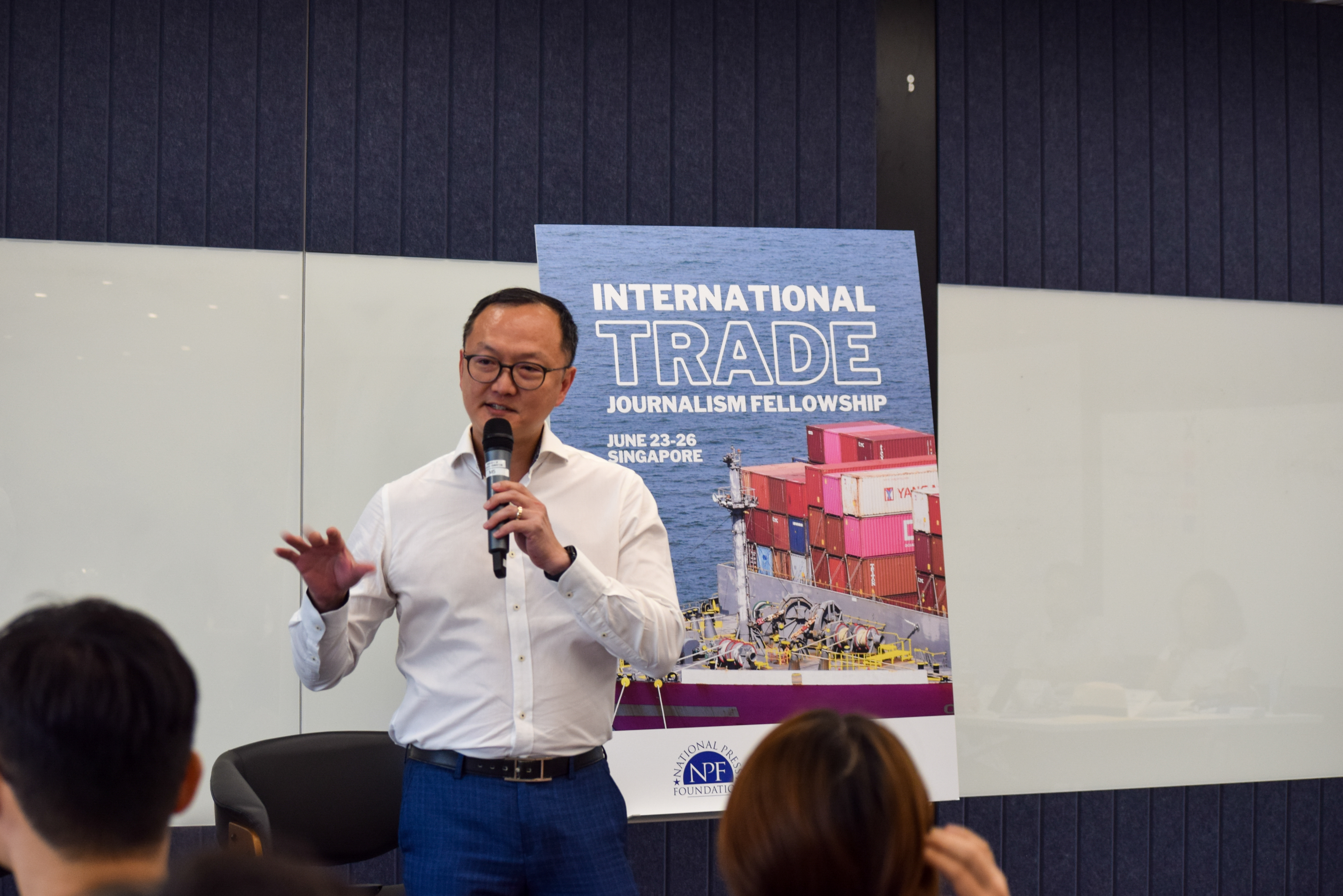
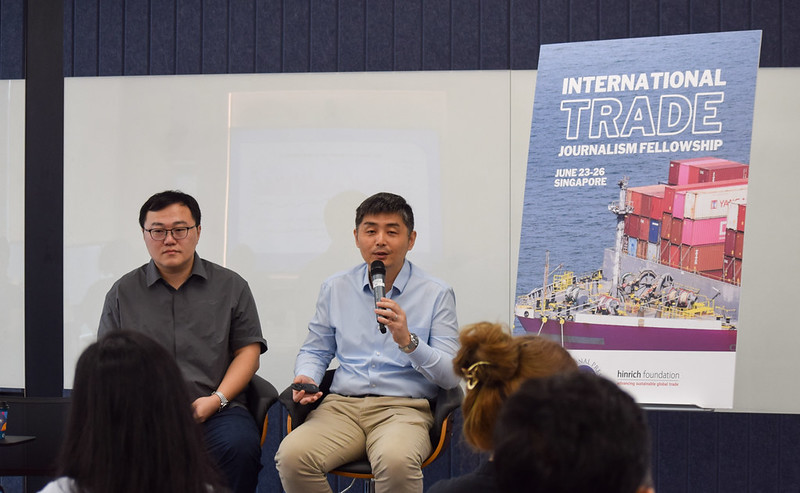
AI tools out of China, such as DeepSeek and Manus, have dominated recent headlines. But Chinese innovation goes beyond artificial intelligence, and journalists will have their work cut out for them covering a field and a country known for secrets. The National Press Foundation hosted experts on AI, trust, global trade, technological patents and more to increase understanding of this rapidly evolving space and what it means for the U.S. and the rest of the world.
4 Key Takeaways:
1. ‘Necessity is the Mother of Invention’: True for China
“I think the Western world always thought China cannot innovate. I think that is a myth that needs to be changed,” said UCLA Professor Christopher Tang.
Since the U.S. has imposed export controls on advanced AI chips and semiconductor technologies, China has had to innovate.
“It’s a very really innovative way to do frugal innovation. You don’t have everything, but you just use what you have to make something good out of it, so I think that was a surprise,” he said.
Hodan Omaar, a senior policy manager focusing on AI policy also said “the real distinction I think is between developing the new and sort of deploying the existing when it comes to AI.”
This is important when remaining competitive, according to Omaar.
“China is doing both and China is good at both,” she said.
2. Patents Track China’s Rise but U.S. Still Dominates Science
To anyone tracking patents globally, China’s headline-making technology comes as no surprise. China accounts for 54% of active patent families, to the United States’ 11%, Marco Richter, senior director at LexisNexis Intellectual Property Solutions, showed.
“Just think also of the human capital and the human ingenuity behind these patents that was built up by China all of these years clearly outpacing most other economies here in the world,” he said.
The quantity and the quality have both increased, with the U.S. share of patent assets based on Chinese citations leaping from merely 2% in 2000 to 47% in 2020.
However, the U.S. still leads in pharmaceutical and medical innovations, according to the LexisNexis Innovation Momentum: The Global Top 100 report.
“During COVID … [the U.S.] was really the only country [that] can develop the mRNA COVID vaccines. China could not do it,” Tang said.
However, China is graduating millions more engineers than in the U.S. every year.
3. U.S. AI Lacks Trust
China and the European Union have established data regulations that the U.S. is lacking, said Susan Ariel Aaronson, an international affairs professor and public interest technology scholar at George Washington University.
“I think that’s deeply worrisome because we are not going to be successful as competitors in AI if the technology is not trusted,” she said.
To build trust, it must be regulated with public recourse or comment taken into account, Aaronson said.
“Governance needs to be democratically determined, it needs to be transparent, it needs to be accountable. Right now in the United States, we don’t have that, I would say to some extent because government is captured by very rich people who have huge investments in AI and want to see AI used for national security purposes and want to see AI widely without constraints as it develops,” she said. “I don’t think that’s good for American AI because I want to see AI reach its potential, and to me that potential is not only as the general purpose technology, but as a public good.”
4. What tech reporters can do
Britney Nguyen, an AI reporter for Quartz, says journalists should read research papers so they can see through companies’ marketing.
“I try to talk to professors and researchers who really get to focus a lot on the competition without influence of focusing on stock market movements or fluff from companies,” she said.
It’s also helpful to have a diverse media diet.
“I think it’s important for me, too, to see what outlets in other countries – especially in China and Southeast Asia that are not so U.S. centric, that are not so Western centric – what they’re saying and what they’ve been reporting on. Because otherwise that’s why we’re all caught by surprise, because we haven’t been paying attention,” she said, referring to how DeepSeek caught many off-guard.
Richter urged journalists to utilize data in their coverage as much as they can.
“If you turn to data, you get an unbiased story,” he said.
Other topics that the speakers encouraged journalists to look into include digital twins (models of people or objects), AI in healthcare, environmental impacts of AI, autonomous weapons and the data around inventions, innovations and patents.
Access the full transcript here.
*This event is sponsored by RELX, a global provider of analytics tools, including LexisNexis. The National Press Foundation is solely responsible for its content.







 Reload document
 Open in new tab