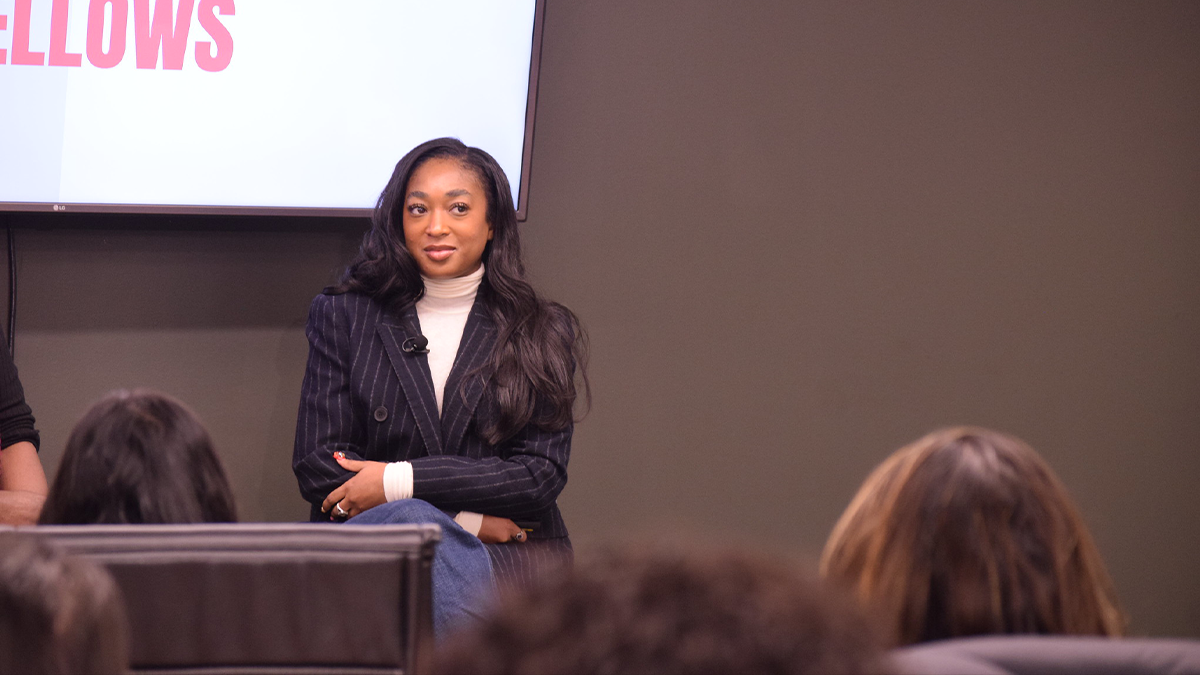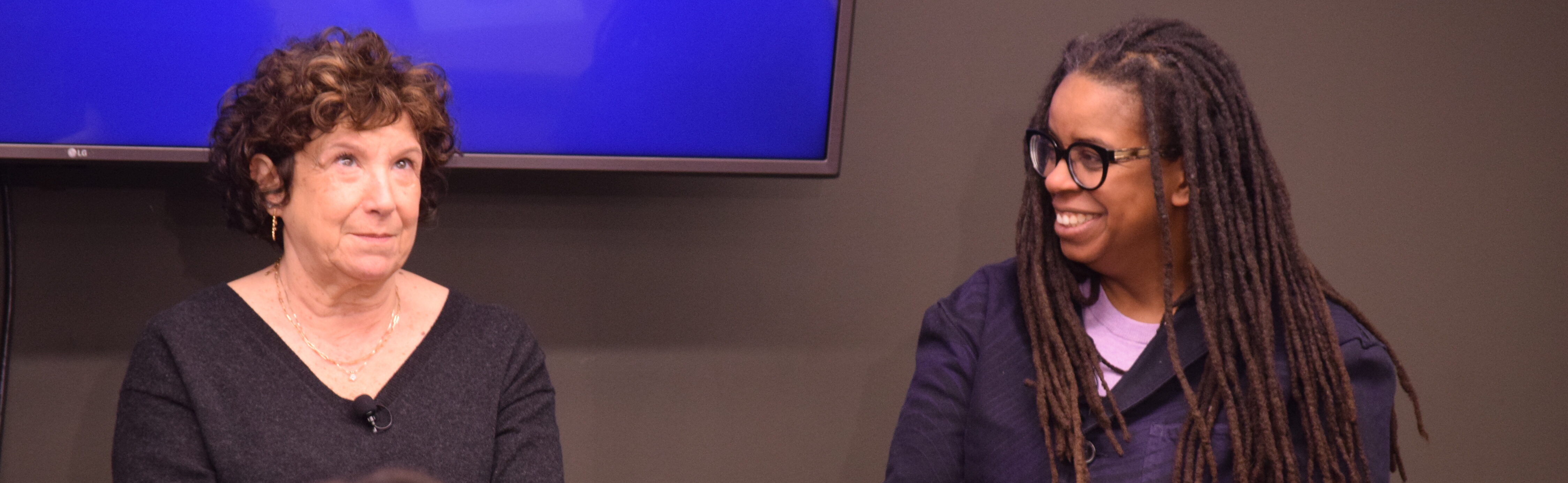
Suki Dardarian, the former editor and senior vice president of the Minnesota Star Tribune and NPF’s Editor of the Year, has faced a multitude of challenges in the changing and disrupted landscape for local newspapers. Dardarian and her team were tested by reporting the death of George Floyd and the erupting community anger in the newspaper’s hometown of Minneapolis.
Dardarian, joined by Kyndell Harkness, the Star Tribune’s head of culture and community, shared with NPF’s Widening the Pipeline fellows how they navigated those challenges and led through change.
3 Key Takeaways:
1. Leader or not, be aware of blind spots
“Because you’re a leader, it doesn’t mean you’re not curious. If you stay curious … you’re in better shape,” Harkness said.
After Floyd’s death, Dardarian said she asked herself how the people of color in her newsroom were feeling and realized she didn’t know; this is when she went to Harkness.
This allowed Dardarian to build better relationships and create a newsroom where people felt free to speak up and raise questions.
“Those underlying relationships were really important,” the editor said in regard to covering Floyd.
And from the other direction, Harkness suggests having solutions ready when raising concerns to management.
“We were able to give examples and then give solutions to those examples,” Harkness said. “There’s a good chance if [management] actually knew the solution, they would have done it. They don’t know. It’s their blind spot. So it’s our job to help guide them to a place where there can be harmony in how we do things.”
2. It’s OK to not have all the answers
“I think maybe that’s kind of the core of leadership … knowing that you don’t have the answers and that you don’t have to have the answers,” Dardarian said.
It can also be challenging to get into a groove when new leadership occurs, according to Dardarian.
“When somebody first becomes a frontline editor, they … over edit,” she said, and that’s when forming good relationships in the newsroom becomes essential, especially during challenging coverage.
When reporting on Floyd, “there was this real strong sense of team. And Kyndell would raise questions. And other people would raise questions. She made it safe for people to raise questions, and it became this ethic that we all had,” Dardarian said.
3. Use leadership positions to find holes in communication
“If you’re paying attention you can see where the holes are in the game, how are we not connected, how are we not communicating in a real way with each other,” Harkness said.
This is the moment when she realized she wanted to lead and pitched the idea for her position.
Harkness also gave advice to journalists of color who are the only ones in their newsroom: “Build your allyship among peers.”
Access the full transcript here.
The Widening the Pipeline fellowship is funded by the Evelyn Y. Davis Foundation and the John C. and Ethel C. Eklund Scholarship Fund.