Now more than never, journalists must be able to master more than one platform. Just about every legacy media company has a robust video and audio division, and the proliferation of podcasts and social media influencers offers journalists a wide range of opportunities to expand their brand.
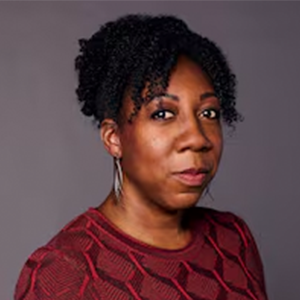
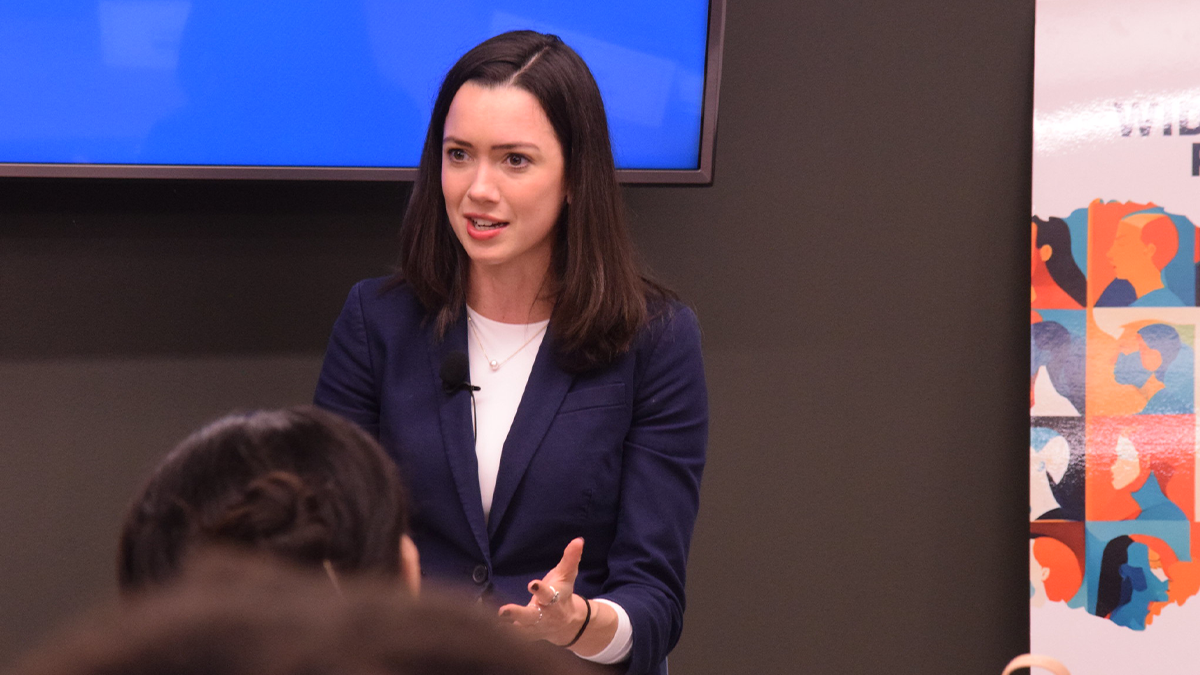
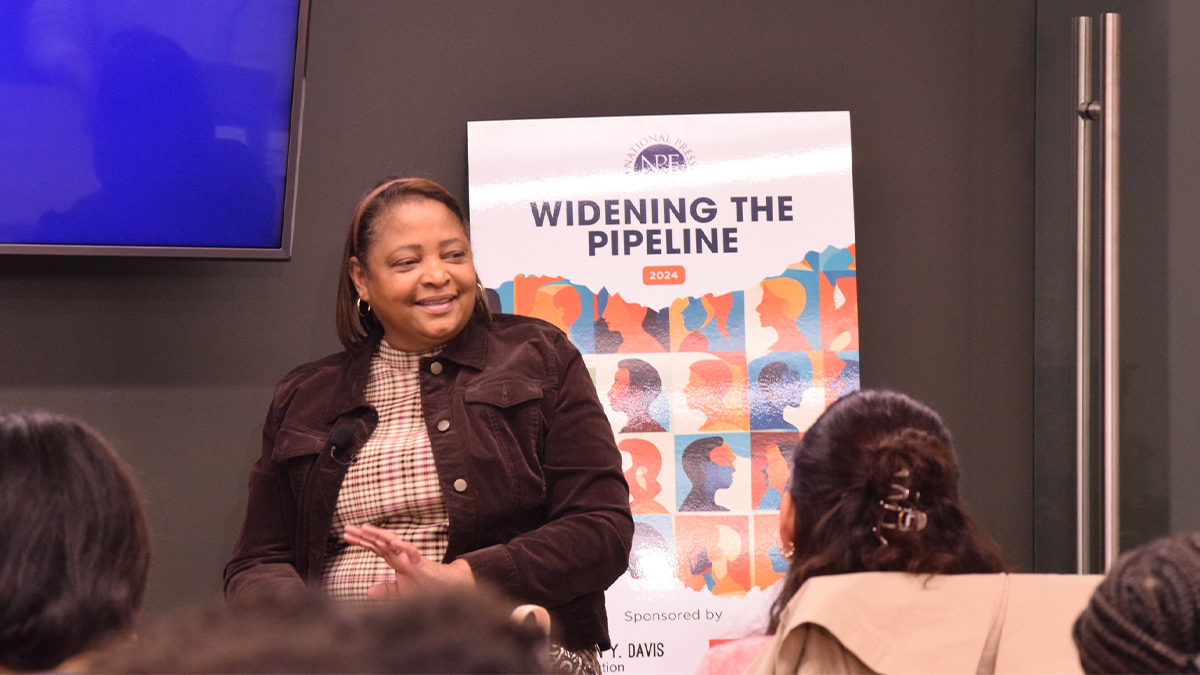
Two veteran D.C.-based journalists who are used to the spotlight – Caresse Jackman, national consumer investigative reporter for Gray Television, and Tia Mitchell, Washington Bureau Chief for the Atlanta Journal-Constitution – spoke with NPF’s Widening the Pipeline fellows about expanding their expertise through media training.
The prospect of being on-camera is daunting for some journalists. The three C’s are something both Jackman and Mitchell recommended that all reporters follow: be calm, be confident and be comfortable.
“You know your story … have the bullet points, take a deep breath and go,” Jackman said.
Nerves can kick in even for broadcast journalists, but Mitchell and Jackman actually find this to be a good thing.
Dealing with the discomfort is a learned skill, she added.
“Just because things are uncomfortable now does not mean this industry is not for you. But journalism requires us to get out of our comfort zone,” Mitchell said.
Both journalists advised finding mentors, which can be especially helpful for women of color in newsrooms.
“You go in there and know you are going to be just as good if not better,” Mitchell said.
They encouraged young journalists to accept opportunities to be on camera.
“Don’t be afraid to say yes and try it,” Mitchell said. “Right? It’s five minutes, it’ll be fine. You know your stuff.”
Access the full transcript here.
This fellowship is sponsored by the Evelyn Y. Davis Foundation and Lenovo. NPF is solely responsible for the content.