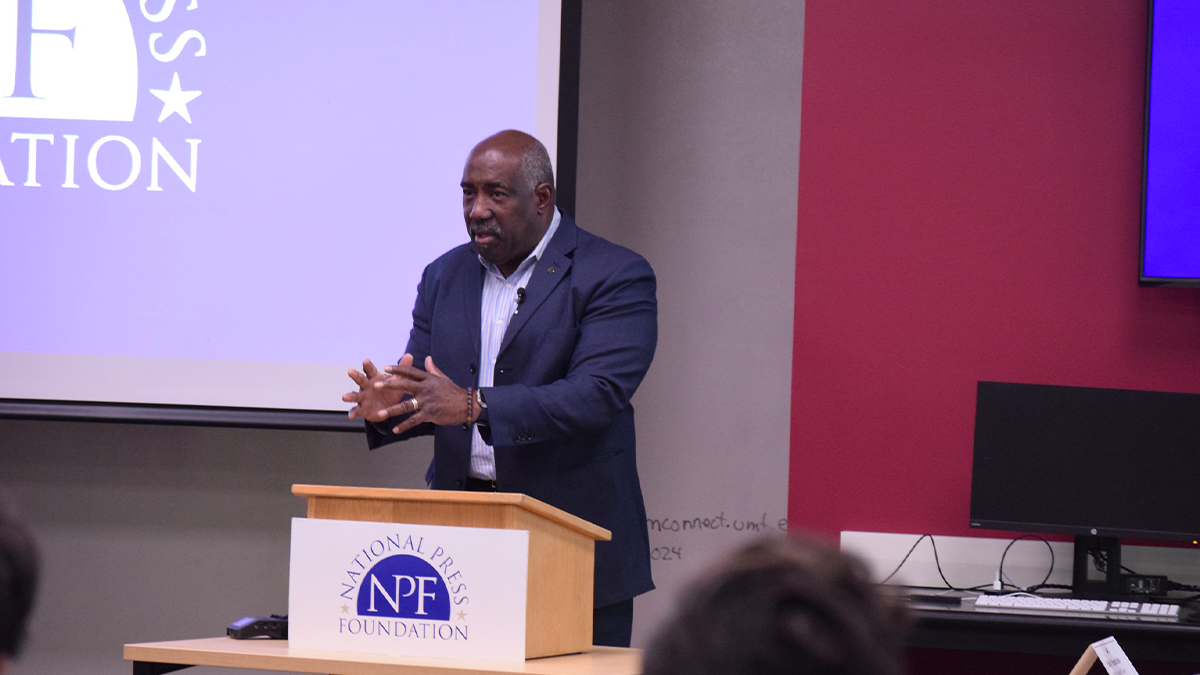
Health reporters take on the enormous responsibility of informing the public about issues that affect their well-being – as well as matters of life and death. Reporters Alexander Tin of CBS News and Aneri Pattani of KFF Health News shared tips with NPF’s Widening the Pipeline fellows on how to stand out on this important beat.
5 Takeaways:
1. Don’t be intimidated by covering health
Even if you have never covered health in your beat, Pattani said to not be intimidated by the jargon and the wealth of information associated with health and science.
“I didn’t quite realize I wanted to do health reporting until I was at the end of my undergrad career and had taken zero health and science courses, which should be reassuring to you that you don’t need that background,” Pattani said.
One way Pattani suggests writing these stories, is by breaking them into small pieces.
“Boil things down and start small because otherwise the system can feel overwhelming,” she said.
There are also many resources to reference, such as The Open Notebook, the Association of Healthcare Journalists and PubMed.
2. Ask all the questions
Even if you think a question is dumb – ask it, said Pattani.
“Our job is to ask those before we do the reporting because we are a stand-in for people who don’t know, for readers who don’t know health and science stuff. It’s also so that we don’t get things wrong,” she said.
She also suggests asking experts what people often misunderstand about a topic. Another way of framing it: ask experts if the public narrative about the story or issue is right, Tin said.
He also suggests researching and listening for frequently asked questions on your beat. If they’re not being answered, that’s an easy place for any journalist to start.
3. Interest in health stories: High and higher
With President-elect Donald Trump nominating Robert F. Kennedy Jr. to be his Department of Health and Human Services secretary, interest in health stories has increased and is likely to remain high.
Pattani and Tin both are looking at this as an opportunity.
“It has been an opportunity to really take the stories and the experience that I’ve built on covering this beat and actually using it to add something to the conversation … I’m actually looking forward to the opportunity to hopefully tell good, interesting, nuanced stories and I’m glad there’s interest in it,” Tin said.
Pattani encourages journalists to take this time to really dig deep into covering specific policies.
“I think there’s also an opportunity to look at what are they actually proposing as the policy and what are the merits or the drawbacks to those actual policies regardless of who it’s coming from,” Pattani said. “I think that helps us as reporters and our audiences deal with some of the fatigue and hopelessness that can come from reporting.”
In terms of finding sources in the new adminstartion, Tin suggests attending health conferences, particularly those held by federal agencies.
“There are some really good sources that I’ve developed as a result of just being present and being interested and just attending as much as I could,” Tin said.
4. Find health stories through human stories
“It’s really human,” Pattani said. “The reason I care about it, honestly, is because it affects everyone at home.”
She suggests drawing stories from your own life and your current beat even if it isn’t health.
“You don’t have to be a health reporter to cover health. Mental health shows up in education. This shows up in crime and courts reporting, it shows up in politics, so there’s lots of roads into this,” Pattani said.
5. Zig while others zag
Tin provided the reporters with advice he received from a mentor about planting seeds ahead of time.
“There’s the breaking news story that you’re covering in the moment, and then everyone’s going to move on to something else. But don’t forget that if it was interesting now, a couple months when nobody else is paying attention to it, it could be interesting again,” he said.
To do this, he said he sets aside time at the end of the week to take note of stories that were big for him and his beat. He brainstorms ways these stories could be big again and what he can do to prepare.
“Often for me that’s like FOIA requests, but it can be any kind of thing,” Tin said.
Access the full transcript here.
This fellowship is sponsored by the Evelyn Y. Davis Foundation and Lenovo. NPF is solely responsible for the content.