Louisiana’s top law enforcement officials committed to a deeper engagement with the press, asserting that the relationship is key to building public trust in both institutions.
“First and foremost, my personal media philosophy is that there is no such thing as no comment,” New Orleans Police Superintendent Anne Kirkpatrick told journalists at the Crime Coverage Summit hosted by the Radio Television Digital News Association and the National Press Foundation.
“Let me tell you what I was trained on my side of the market: Feed the sharks. … You need to actually communicate, whether or not you like each other. Likeability has nothing to do with it. You must communicate.”
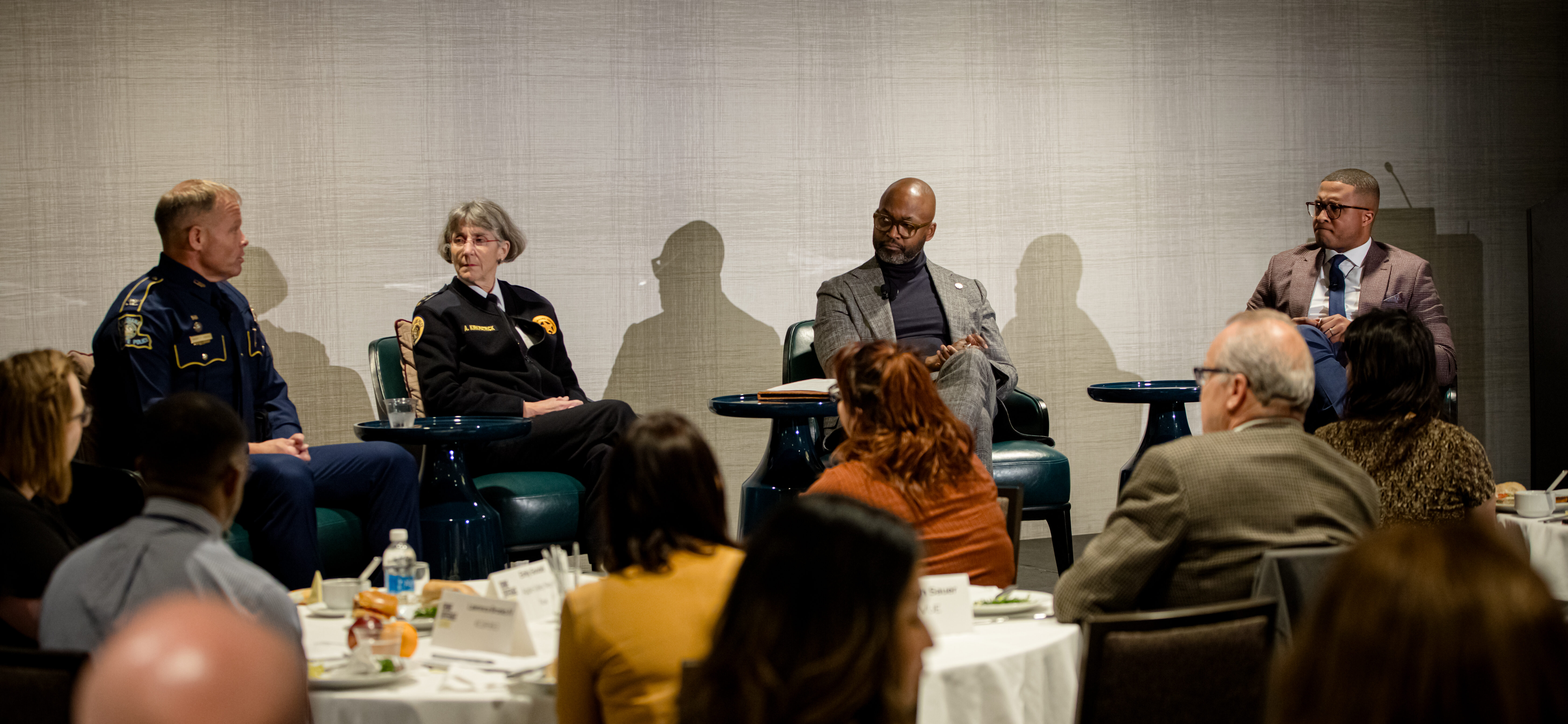
Kirkpatrick was joined by Col. Robert Hodges, superintendent of the Louisiana State Police; and Jason Williams, Orleans Parish district attorney; in an examination of the complex coexistence that for generations has defined the relationship of law enforcement and the press. The discussion was moderated by WDSU New Orleans anchor Darryl Forges.
The officials acknowledged that media scrutiny can have real consequences.
Reporting on the Minnesota police murder of George Floyd in 2020, and the fatal shooting of Breonna Taylor the same year by Kentucky police showed the “ugly warts and molds of the American criminal legal system,” Williams said.
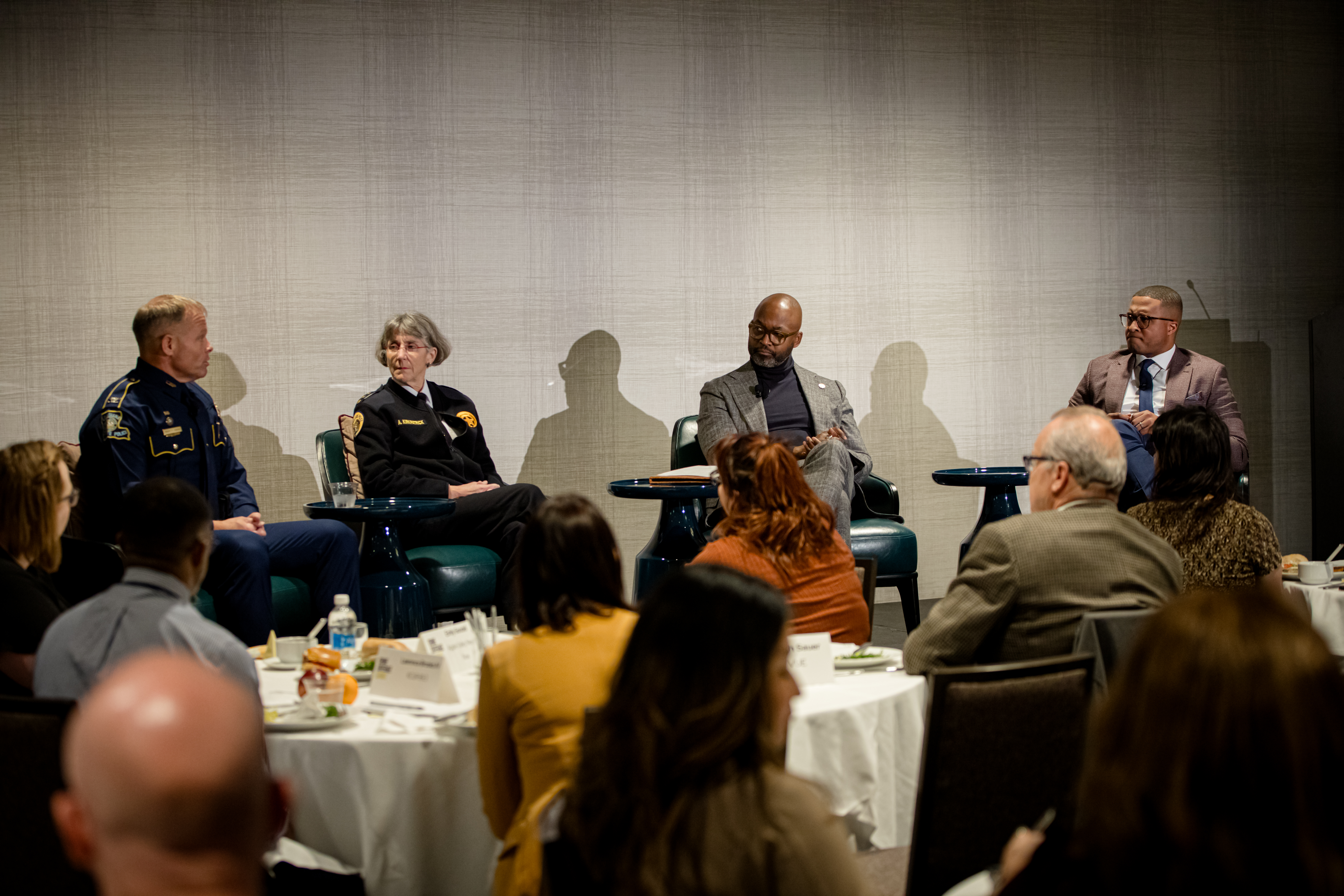
Law enforcement panel discussion. Photo by: BP Miller/Chorus Photography
“It led people to believe that they don’t want to be law enforcement anymore. And it’s really hard to recruit police officers and really hard to recruit prosecutors. And the truth, what we say when we’re in these spaces is (to) be the change you seek. If you see problems with a system, being a part of that system to make it better is how you can improve it. But we have a very difficult time,” the district attorney said.
In complex cases involving law enforcement, Williams urged reporters to balance their interests when speed to market may compromise accuracy.
“There’s a lot of pressure on both professions, law enforcement and journalists to get it out quick, solve the case quick, make a quick arrest, prosecute the case quick, or tell the news story quick,” Williams said. “And being the first to tell the story, sometimes you might be first, but you might not be as complete or as accurate as necessary. And that’s tough. And that’s a real interesting pain point for both professions because accuracy is so vital in both of our work.”
Said Hodges: “We would rather be accurate and right than first. And I understand y’all’s business, I get it. I share your passion to be the first. I understand that. And I know you have a lot of pressures from the presidents and CEOs and the shareholders of the publicly traded media groups that are most, and that is expected and you want to live up to that expectation.”
Access the full transcript here.
Crime Coverage Summit 2024: Beyond ‘If It Bleeds, It Leads’ was sponsored by Arnold Ventures and hosted by NPF and RTDNA. NPF is solely responsible for this content.