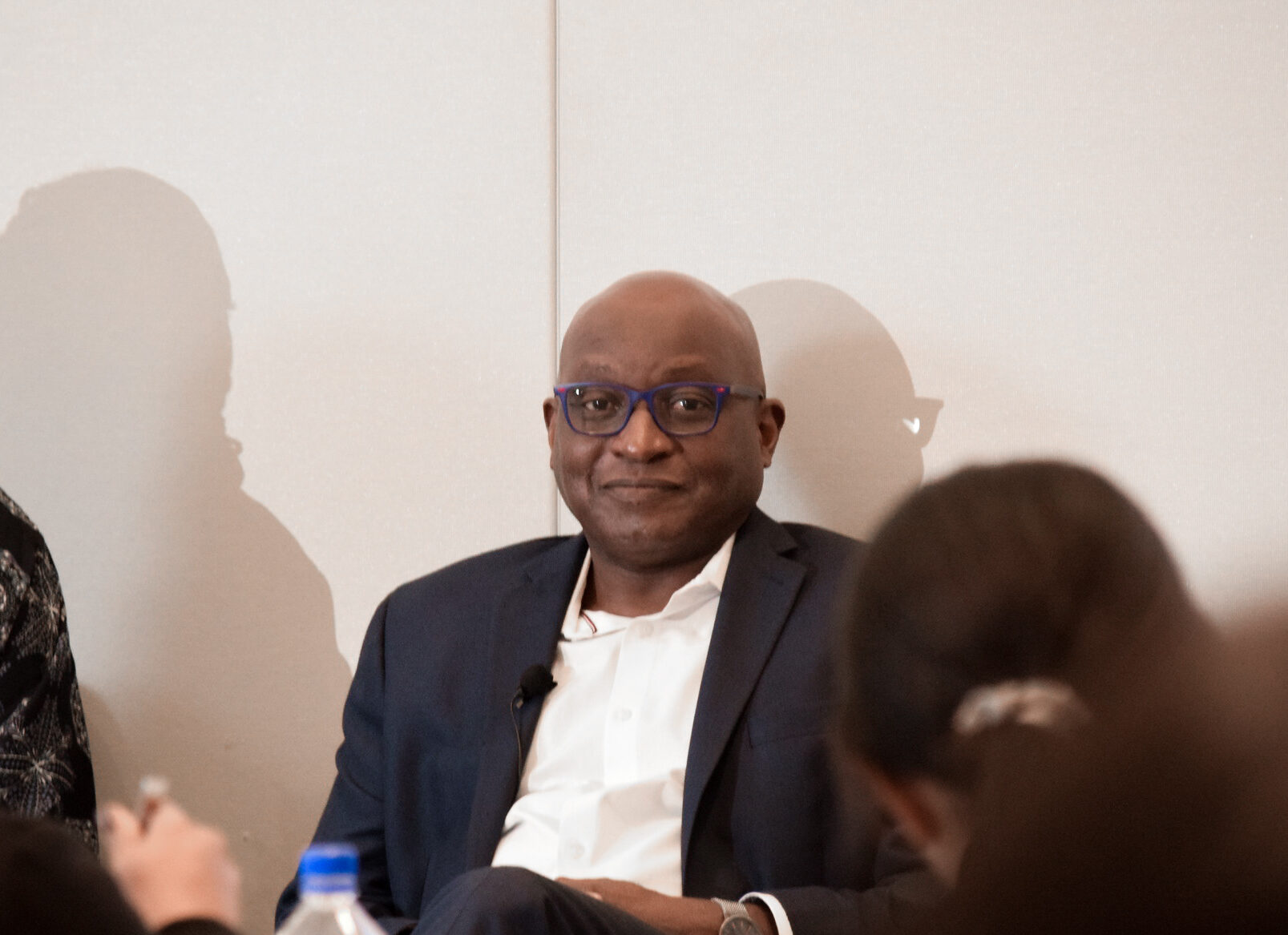
When Michael Bolden’s journalism career began, the options were fairly simple: reporter, copy editor, managing editor, photographer, etc. Though he’d had prestigious reporting internships, he accepted a copy editor position as his first newsroom job. It was just the first time in a long, distinguished career that American Press Institute CEO and Executive Director Bolden pivoted to take advantage of an opportunity. In today’s higher-stakes newsrooms where jobs are constantly evolving, one bottom line remains for journalists of color: the need to maximize lived experience as a way to strengthen careers and engage with communities. Bolden shared insights from his journey and advice on how to play the long game in journalism during the final training for 2022-23 Widening the Pipeline fellows.
5 takeaways:
➀ Stay ready so you don’t have to get ready. Young journalists of color must be ready to adapt and capitalize on the dynamic changes in journalism. “We can talk about the disruption in local news and the disruption in business models and all of that,” Bolden said. “But that’s today, and we missed that when it was starting to happen in our industry. We were not thinking resiliently about how this business might need to adapt down the road.” Journalists should start considering how what’s happening now will play out in five years. “We can’t predict the future, but we can darn well prepare for change and know that things are not going to stay the same.”
➁ Don’t sleep on Next Generation TV. That’s because Next Generation TV doesn’t even require broadband to access, Bolden said. You can connect with a simple antenna. And it’s already here. “There are televisions today that you and I can go by for this,” he said. “It’s going to revolutionize television and the relationship that we all have with it in this country. It’s going to revolutionize the relationship we all have with news organizations and media of all types. Who’s preparing for it? Very few people.”
➂ You can love your job and still be open to the next one. Bolden says though he was actually having fun as a managing editor at the San Francisco Chronicle, the killing of George Flovd and the ensuing so-called “racial reckoning” was a catalyst for his career pivot. “One of the stories I assigned (at the Chronicle) was let’s do an assessment of all of the promises that Apple and Google and everybody made following George Floyd’s killing and see what progress has been made.” What did they find? Very few organizations have followed through.
That’s why the API job made sense for Bolden. “We have a bully pulpit. So that we can say things and hopefully people will listen to us some of the time. And we have lots of organizations that run through our programs, and usually, the people who run through our programs are people who are in charge of something.” This allows Bolden and API to fuel industry-wide conversations about what makes a healthy news organization, not just a profitable one. “Part of being a healthy local news organization is supporting the people who are doing the work so that they can deal with all of the stuff that’s coming down the pike.”
➃ Use the “Imposter Syndrome” as career fuel. Bolden says that at this point of his career, he can’t remember when he wasn’t a “first.”
“I am the first Black Latino gay CEO of the American Press Institute. I was the first Black Latino gay managing editor of the San Francisco Chronicle. I was the first Black gay Latino managing director of the Knight Fellowship.
“And any time that happens, I’ve always wondered, ‘Am I worthy?’ But I will tell you now that I’m sitting in the chair that I’m in now, I’m no longer asking that question.” Bolden has developed the insight and self-awareness to navigate any career challenge he faces. “There’s a lot to be said for having, even if you are unsure about a job, having confidence in your abilities and what you know you’re capable of. I mean, in knowing for example that you might not have any quit in you, that you frankly want to get the job done, that counts for a lot.”
➄ Journalists should be able to speak freely about newsroom challenges. API has partnered with the International Women’s Media Foundation to offer training on coping with online violence and harassment. “What are the policies that news organizations have to help people deal with all of the turmoil from covering a pandemic and depending on where you live, maybe fires and drought and tornadoes and all of the stuff that takes a toll on people emotionally?” Bolden said. “Especially if you’re a person of color and you’re more subject to some of this abuse.
Bolden said the partnership is designed to put pressure on newsroom managers who have the power to change policies. “One of the things that the San Francisco Chronicle has actually done, that started as part of the policies I was trying to implement, they’ve actually brought on a staff psychologist. And they’ve also started rotations among people who are covering some of the most intense stories. Things like COVID and the fires and things like that because they recognize all the weight that people carry and the need to help people unburden themselves.”
The Widening the Pipeline Fellowship is sponsored by the Evelyn Y. Davis Foundation, Bayer, J&J and Lenovo. NPF is solely responsible for the content.