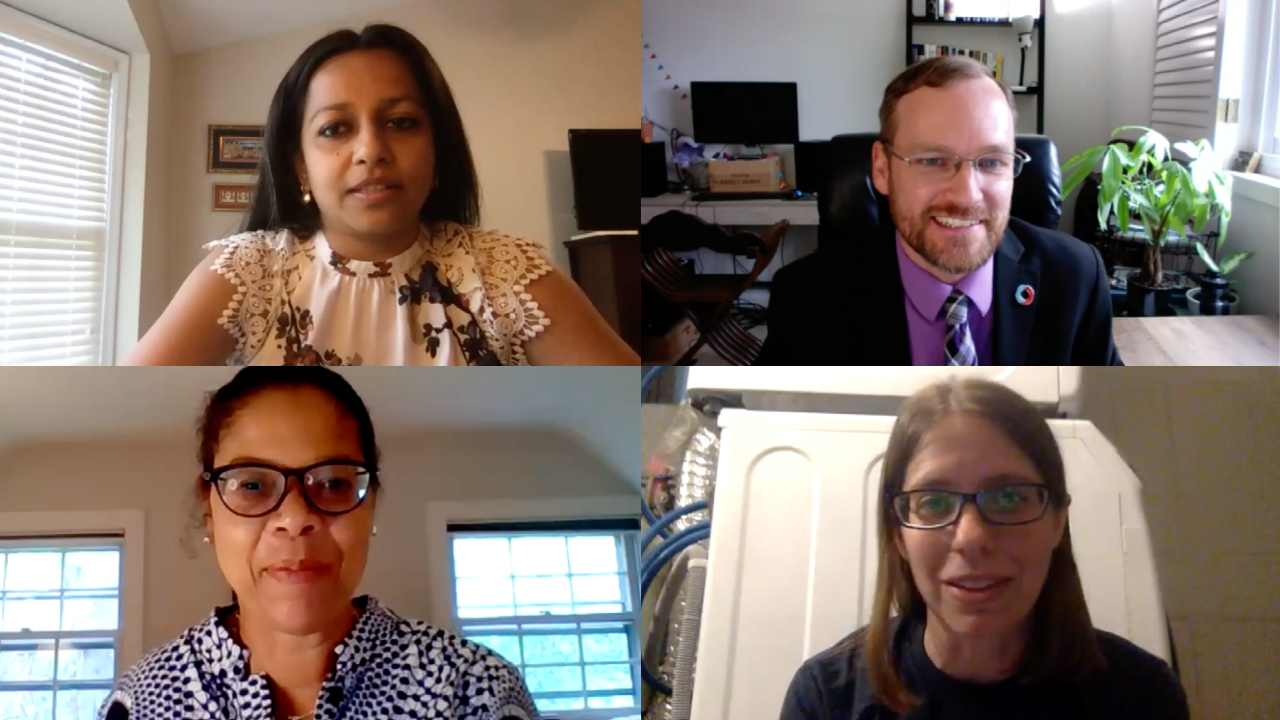
Though the data is not yet complete, OpenSecrets’ current findings indicate the 2022 midterm elections were the most expensive in U.S. history. “This is possible because of the Supreme Court’s Citizens United decision in 2010 paving the way for super PACs and non-disclosing non-profits to raise unlimited sums from unlimited sources to spend unlimited sums on mailers, TV, online, radio ads, peer-to-peer texting, and other independent expenditures for and against a candidate,” OpenSecrets Executive Director Sheila Krumholz told NPF’s Paul Miller fellows. [Transcript | Video]
3 takeaways:
➀ Campaign spending is roughly equal between political parties. “It’s an arms race. As soon as the political ads drop supporting one party, the other party answers in kind,” Krumholz said. Scholars use the term “campaign inflation” —like economic inflation, it’s when too many dollars chase too few goods, “creating incentives for outside spending groups, professionalized consultancies, non-stop fundraising, and increased spending on ballot initiatives,” she said.
“As divided as America is, I think Americans across the ideological spectrum don’t want a government for sale.”
➁ A ton of money comes from few people and PACs. During the most recent election cycle, the top two outside spenders were the Senate Leadership Fund and the Congressional Leadership Fund, followed by the Senate Majority PAC and the House Majority PAC. “These top four party leader super PACs also have dark money affiliates that have steered more than $295 million from secret donors into federal elections,” Krumholz said.
While super PACs disclose their finances to the FEC, dark money groups, such as 501(c)4s, do not.
“We call this dark money because it leaves all of us in the dark about where the money’s coming from,” Krumholz said. “Voters don’t have the information they need and deserve, frankly, to weigh the credibility of the messages they’re being bombarded with.” When it comes to individuals, “The top donor is a mainstay of Democratic mega-donors, George Soros.” The only other Democratic donor in the top 10 in 2022 was Sam Bankman-Fried. A top donor to Republicans, PayPal founder Peter Thiel, funded J.D. Vance in Ohio and Blake Masters in Arizona.
“You see how one person can have extraordinary impact,” Krumholz said. A tiny group of 465 American billionaires pumped over $881 million into federal midterm races…20 couples gave $643 million, or 70 percent, of all billionaire contributions in the ’22 elections.”
➂ Campaign finance is a national security risk. “Money can come from any foreign source, any foreign government, corporation, individual oligarch,” Krumholz said. “And it’s easier than ever before.” She said in the 1990s, Democrats received “soft money” from Indonesia, Korea, Hong Kong and other nations. “It’s an honor system, you can’t know if the money is coming from a foreign adversary or a dangerous source. It now opens up the question of campaign finance being a risk to national security … for that matter, it could be coming from drug cartels,” she said, citing an incident in 2012 in which President Obama’s campaign returned money that was given by the family of a casino owner with drug charges. “No candidate wants to be receiving this money, but they’re raking it in hand over fist. And now, so much of the money is going to outside groups so they have no control over the risk assessment or ability to take precautions.”
NPF is solely responsible for the content.



 Reload document
 Open in new tab