5 takeaways:
➀ Telecommuting is likely here to stay. More than 40% of the U.S. labor force worked from home during the pandemic. (Essential workers weren’t as fortunate.) The pandemic proved that workers remained engaged and productive at home, but long-term forecasts speculate that only 25% of the workforce will work remotely. Most of them will be, as during the pandemic, highly educated and white-collar. “Telecommuting opens up more workforce opportunities to more people,” said Texas A&M Transportation Institute agency director Gregory Winfree. “However, it’ll be interesting to see how businesses will alter their operations and/or move to get the workforce that they need.”
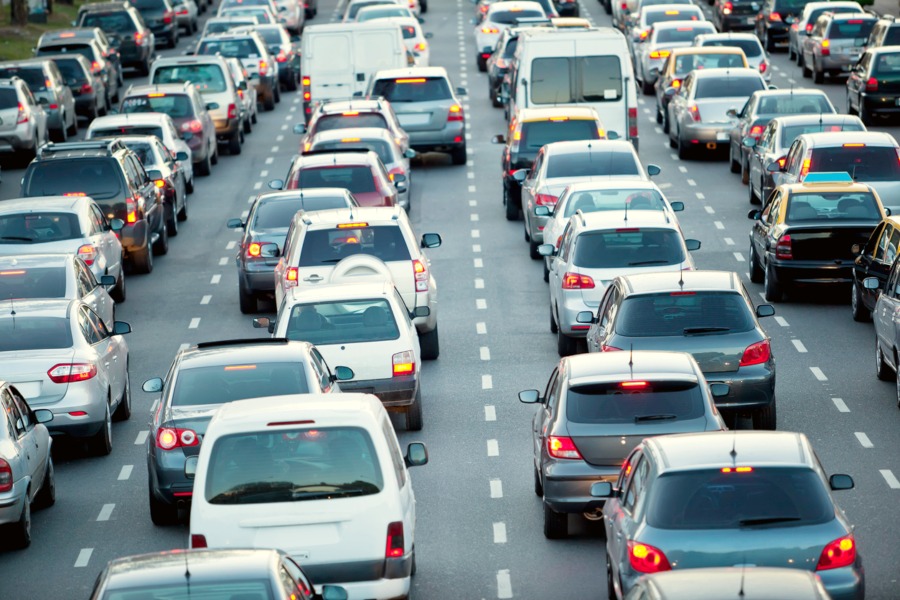
➁ The pandemic almost emptied the highways of commuters, but traffic fatalities managed to increase anyway. The Texas A&M Transportation Institute has tracked traffic patterns for decades. Their measure of congestion — vehicle miles — was down 30% to 50% during the pandemic. But Americans exercised what Winfree called “freedom to choose higher speeds,” the prime cause behind the 50,000 people who died in traffic accidents in 2020, the largest number since 2007.
➂ It may take incentives, like free fares, to lure people back onto mass transit. Robert Puentes, president & CEO of the Eno Center for Transportation, said commuter rail and subway ridership declined by 85% to 95% in some places. Bus ridership fell 40% to 60%. “Public transit certainly is going through an existential crisis,” he said. Once people began working from home, the only riders were disproportionately low-income workers of color who had no other options. A couple of cities, like Kansas City and Los Angeles, are experimenting with free fares on public transit to get people back.
➃ The mass transit death spiral is a possibility. You can’t run buses or trains for free, of course, because it would “starve” the systems, as Puentes put it. As it is, no transit system can cover its costs with fares alone. Slate transportation reporter Henry Grabar said fewer riders beget service cuts which beget fewer riders which leads to more service cuts — hence the death spiral begins. Grabar said there has been a certain amount of fear mongering about safety on public transit that is without merit. “That’s a perception that unfortunately persists,” he said.
➄ Businesses play an outsize role in deciding the future of commuting. Winfree said companies should consider flexible or hybrid schedules for workers to promote a shift from peak to non-peak commuting. For example, companies in one community could agree to staggered work start times to even out the busiest commuting windows. He also said companies could offer incentives to encourage public transportation or car-pooling. Puentes said big capital infrastructure projects should get a new review, in the aftermath of lessons learned from the pandemic. “As we emerge from this pandemic, those big capital projects probably need another look because they’re usually based on models for former commuting patterns,” Puentes said.
Speakers:
Robert Puentes, president and CEO of the Eno Center for Transportation
Gregory D. Winfree, agency director of the Texas A&M Transportation Institute
Henry Grabar, transportation reporter for Slate
This program was funded by Bayer. NPF and the Association of Foreign Press Correspondents in the US are solely responsible for the content.