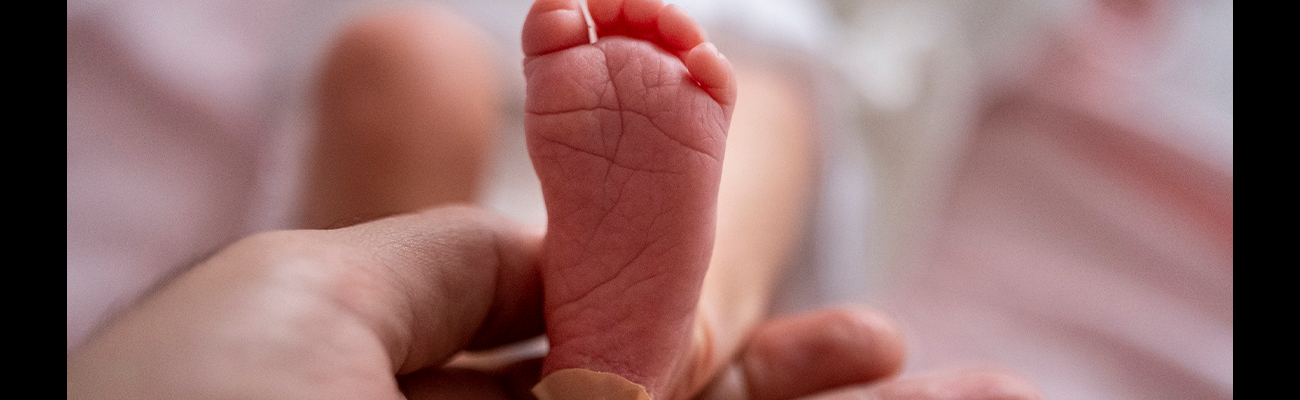
For many families, the first encounter with rare disease happens when a child is born and receives a heel prick that yields a drop of blood. That blood is analyzed to determine the presence of complex medical ailments like phenylketonuria or PKU, cystic fibrosis and sickle cell anemia.
Journalists interested in covering rare diseases received a wealth of insight into the role newborn screening plays for patients and their families during the Feb. 10 National Press Foundation webinar. The panel discussion yielded important contextual insights into the science behind genetic screening and the policies that govern the process, and how access to information fuels progress in the rare disease community. The webinar coincided with the release of the National Organization of Rare Disorders’ latest white paper, “Preserving Public Trust in the U. S. Newborn Screening System” and took place with enough time to for journalists to prepare coverage for Rare Disease Day 2025, which is Feb. 28.
Panelists Allison Herrity, Senior Policy Analyst with NORD, Sarita Edwards of the E.WE Foundation, and veteran science journalist and author Bijal Trivedi, provided important insights for developing stories related to newborn screening.
5 takeaways on rare diseases and newborn screening:
1. Why newborn screening started
Newborn screening predates the Human Genome Project and genomic sequencing technology. Herrity explained that the practice originated in the 1960s when a microbiologist named Robert Guthrie developed a blood test for a condition called phenylketonuria or PKU. Babies born with PKU appear healthy at birth but are born with insufficient levels of an enzyme that’s necessary to break down specific components of a protein. As a result, an amino acid called phenylalanine builds up in the body and causes permanent neurological damage.
“Prior to Dr. Guthrie developing this blood test for PKU, kids with PKU weren’t diagnosed until after they started to show symptoms, at which point they had already developed permanent brain damage,” Herrity said. The blood test allowed healthcare providers to detect the condition shortly after birth, giving them the opportunity to treat the condition earlier and avoid serious health complications.
2. Equity in access to screening matters
When Sarita Edwards gave birth to her son Elijah in 2017, she and her husband were prepared to confront rare disease. Doctors had confirmed their son had Trisomy 18, a diagnosis that can cause heart and kidney failure, severe intellectual disability, breathing and feeding problems.
But though all their other four children had received a heel prick at birth, doctors told them it was not needed for Elijah. Only 5 to 10% of babies who are born or diagnosed with this condition will live past their first birthday, and Elijah’s physical challenges were so profound, doctors sent him home with hospice care.
Months later, Edwards learned that another family whose daughter was born in the same hospital with the same condition received different treatment. After a conversation with that mother, Edwards was shocked. “I learned that (the baby girl born with Trisomy 18) did undergo newborn screening. And I have to also say that she was a white baby with a white family.”
3. Find out what conditions your local health care facilities screen for
Learning about the Department of Health and Human Services Recommended Universal Screening Panel (RUSP) is an important first step for journalists who want to pursue the topic of newborn screening. Trivedi has done extensive reporting on genetic screening for conditions like cystic fibrosis and sickle cell disease. She cautions that unless the information collected represents the entire community, the path to research breakthroughs can be hampered.
“It’s important to realize that unless a state is using a newborn screening test that involves an ethnically diverse range of mutations, you’re going to miss people. And you’re going to miss people of color and that’s going to exacerbate health disparities among that population.”
4. Rare diseases can hide in plain sight
Edwards’ son Elijah beat all the odds and today is a 7-year old surrounded by a circle of care from family and doctors. She urges journalists to be especially mindful of how rare disease affects individuals and communities.
“I’m willing to bet that there are hundreds or thousands of people affected by a rare diagnosis right where you live,” she said. “Highlight those stories and just let raise awareness and let people know that in your own community, your neighbor could be someone dealing with a rare diagnosis and you just don’t know.
“You may notice that their child is always sick, but you don’t know that it’s a rare diagnosis. I think that there’s just a lot of opportunity to highlight rare diagnoses and what they mean for your community.”
5. There’s debate over blood spots
Herrity said the retention and secondary use of newborn screening dried blood spots is critically important. The information is a vital resource for newborn screening program operations as well as for public health and rare disease research. But Herrity cautioned that unclear legal and ethical guardrails, and ambiguity around retention and secondary use policies, may impact the continued use of residual dried blood spots and the success of lifesaving newborn screening programs more broadly.
This webinar was sponsored by PTC Therapeutics. NPF was solely responsible for its content.



 Reload document
 Open in new tab