5 takeaways:
➀ There is no substitute for the ethical practices most journalists learn early on. Jesse Holland, who reported for the Associated Press for 27 years before pivoting to teaching and writing best-selling books, told journalists during the last Paul Miller Fellowship session of 2021 that technological advances can’t replace the basics. “Journalism ethics are hard until you find out why they exist,” he said. One of the things my students always complain about is, ‘Why are you making us get three sources? This person knows what happened.’ That’s cool until you find out that person lied to you. There’s a reason why even in this day of internet and social media that journalism ethics exists.” It’s a tough lesson that even the major media players can’t avoid. “Whoever made the decision at CNN to allow Chris Cuomo to interview his brother is feeling the effects of their lack of journalism ethics today,” Holland said.
➁ You can be an active citizen without appearing to be an advocate. Holland acknowledges the need for objectivity but dismisses academic debates about whether journalists should vote. “Too many of my ancestors had to fight for the right to vote for me to give it up for any job. There is absolutely no way I will sacrifice my constitutional right to vote,” he said. However, Holland does not vote in primary elections. “If you’re voting in a state primary, you are publicly taking a side because the records of who votes in what primary are public records.” Holland also believes journalists should not attend protests to participate. “The right to assembly is in the Constitution. There is nothing constitutionally wrong with journalists participating in political events or partisan events. It is your right to do so — but understand the consequences of doing that.”
➂ Should journalists express opinions about the beats they cover? If it is clear that the content is being presented as an opinion and not a fact, Holland thinks it’s appropriate for reporters to produce commentaries. “As long as it’s not being presented as news. I think that’s one of the biggest failings of the journalism industry to this day is that we don’t explain to our audience how we work. Our audience thinks that what Rachel Maddow does, what Sean Hannity does is the exact same thing as what reporters do. Much of our audience cannot distinguish between commentary and reporting. It’s not their fault. That’s our fault.” Delivering information is only part of our jobs. “We should explain to our audience ad nauseam what we are doing and why we are doing it this way. So they don’t have to try to figure out, ‘Well, today he’s a columnist. Tomorrow he’s a reporter. The next day, he’s an editor. But he’s now doing commentary on Fox News.’ We should explain to our audience how our industry works so they can then make a choice about what they want to read.”
➃ Can fiction-writing blur the lines for a news reporter? After leaving the AP, Holland wrote the non-fiction book “Black Men Built the Capital.” He also spent a year teaching journalism ethics at the University of Arkansas, which fueled his later teaching stints. But his incredible “side gig” producing content for the legendary “Star Wars” franchise stemmed from his boyhood obsession with comic books. He’s also contributed to Marvel Comics’ “Black Panther” franchise. “For years I didn’t write fiction because I thought it would affect my reputation as a reporter, as a non-fiction writer. But I think the market out there is sophisticated enough that readers will not say, ‘This guy makes up great stuff in his fiction. Could he be making up stuff for his non-fiction?’ I think the journalism audience out there is sophisticated enough to be able to separate the two.”
➄ Journalists must prioritize their mental and physical health to stay at the top of their game: The psychological toll for journalists on the front lines of major news events affects their overall performance. Holland says his coverage of the issues surrounding the Black Lives Matter movement ultimately led to panic attacks. “It took me figuring out for myself that I had to step away. There needs to be some structure inside newsrooms where we begin to realize that we can’t expose the same people to this stuff over and over and over again and not expect it to have some kind of toll on them. You yourself need to make sure that you are in a good place because if you’re not, then your journalism won’t be in a good place either.”
Speaker:
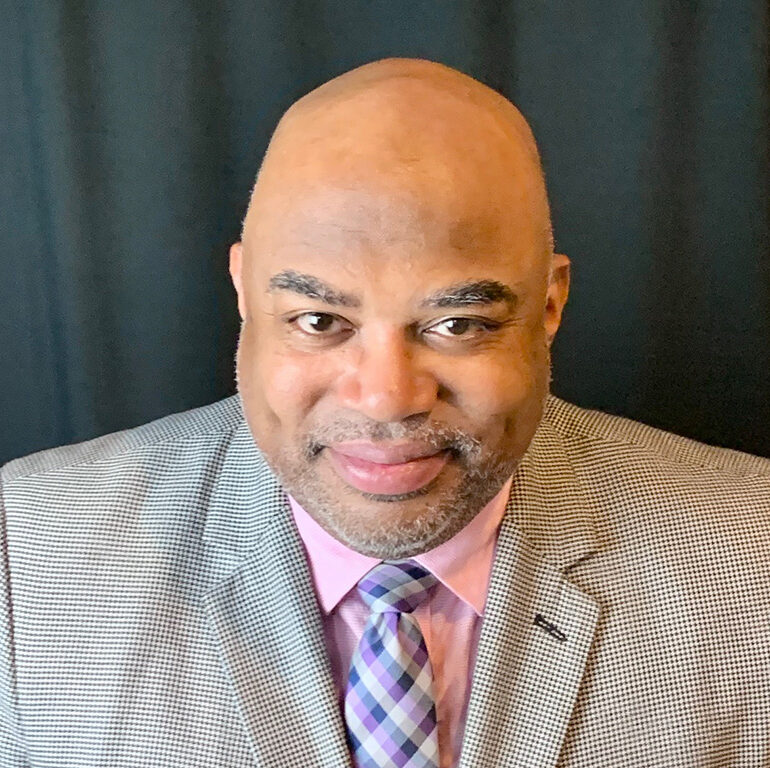
Jesse J. Holland, Assistant Professor of Journalism, George Washington University School of Media and Public Affairs, Saturday Host, C-Span’s Washington Journal.
This program, part of the Paul Miller Fellowship, was funded by the Walter and Karla Goldschmidt Foundation, Johnson & Johnson and its employees, in honor of the late Wanda Moebius, and other donations to the National Press Foundation, which is solely responsible for its content.