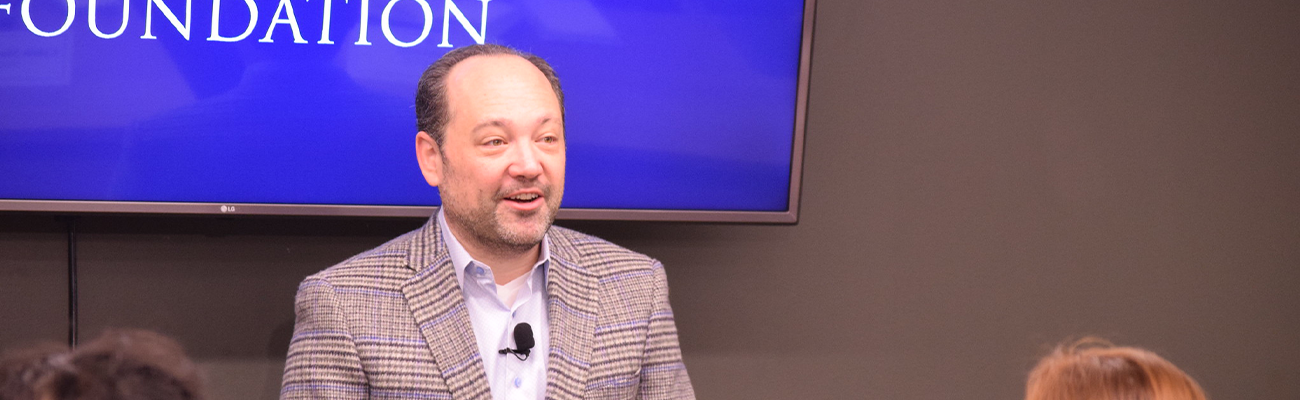
Meaningful reporting depends on the constant development of well-informed sources who can help deliver both exclusive information and crucial context to everyday journalism, Washington Post national editor Philip Rucker told the National Press Foundation’s Paul Miller Washington Reporting fellows.
The two-time Pulitzer Prize winner described source building as “probably the most essential ingredient to success as a reporter.”
“In any beat that you’re covering, you don’t have a story if you don’t have information and you don’t have information, if you don’t have sources of information who are sharing things with you,” Rucker said, adding that some of the most important contacts are those who can help interpret complex information for the larger public good.
“Somebody who helps you understand what’s happening, somebody who has a base of knowledge that you can draw from in the moment on deadline who can inform the way you’re thinking about the news and what’s happening, and therefore inform the public, which is of course your responsibility as a reporter.”
Amassing a network of contacts, Rucker said, requires persistence and a commitment to establishing trusting relationships based on transparency.
“I think about it as just building and building and building, and you want to just have layers of sources that are part of your orbit,” Rucker said. “They don’t always have to be exclusive sources, but they should be people who you know and you have a relationship of trust with. I think the best way to build a relationship with a source is not in a crisis moment, but in a more kind of neutral moment.”
No Surprises Journalism
And true trust is perhaps best established by ensuring sources are never caught unaware.
“I think the easiest way to burn a source, so to speak, is to surprise them in a way that they wouldn’t want to be surprised,” Rucker said. “I think it can sometimes be really hard as a reporter to tell a source something that they might not want to hear or to have a difficult confrontation or a difficult conversation. But I think it’s really essential to do that in order to build a relationship of trust. And I think sources will respect you for being really forthright and direct and honest with them.”
Failing to tend to those individual relationships risks damaging reporters’ larger reputations in the “source world.”
“Make sure that you’re giving that source an opportunity to comment on every single thing that’s going to be in that story that you’re kind of walking them through, not sharing the story with them, but walking them through the contours of what you plan to report like they deserve to know.”
Access the full transcript here.