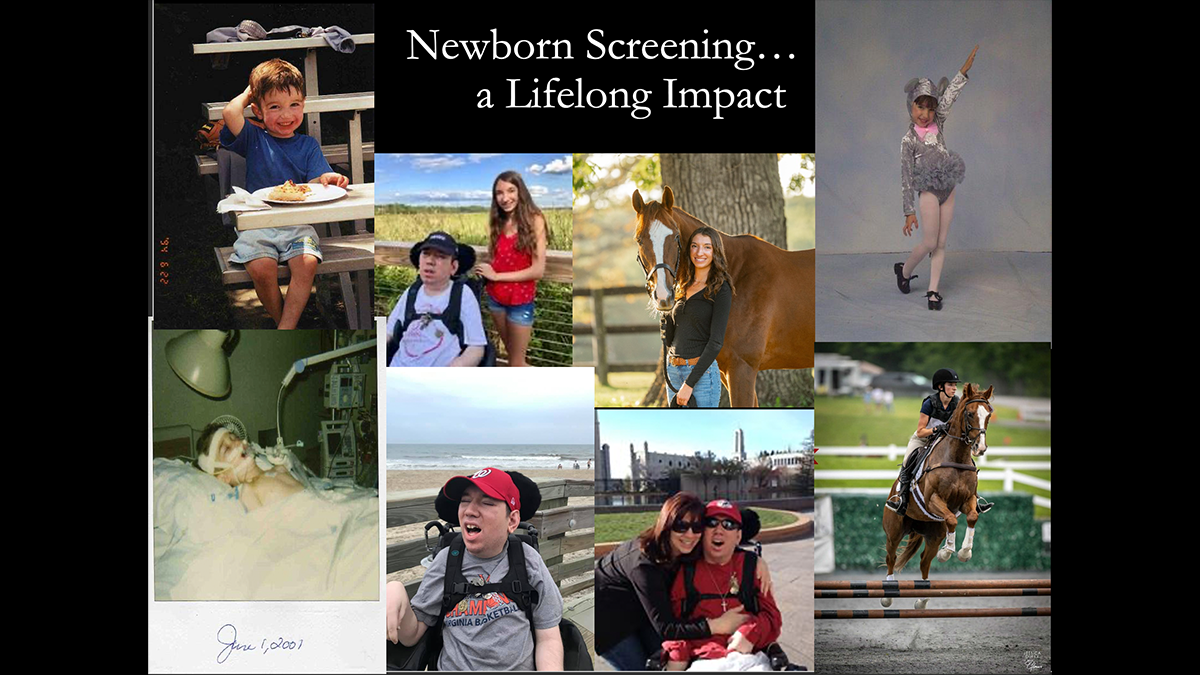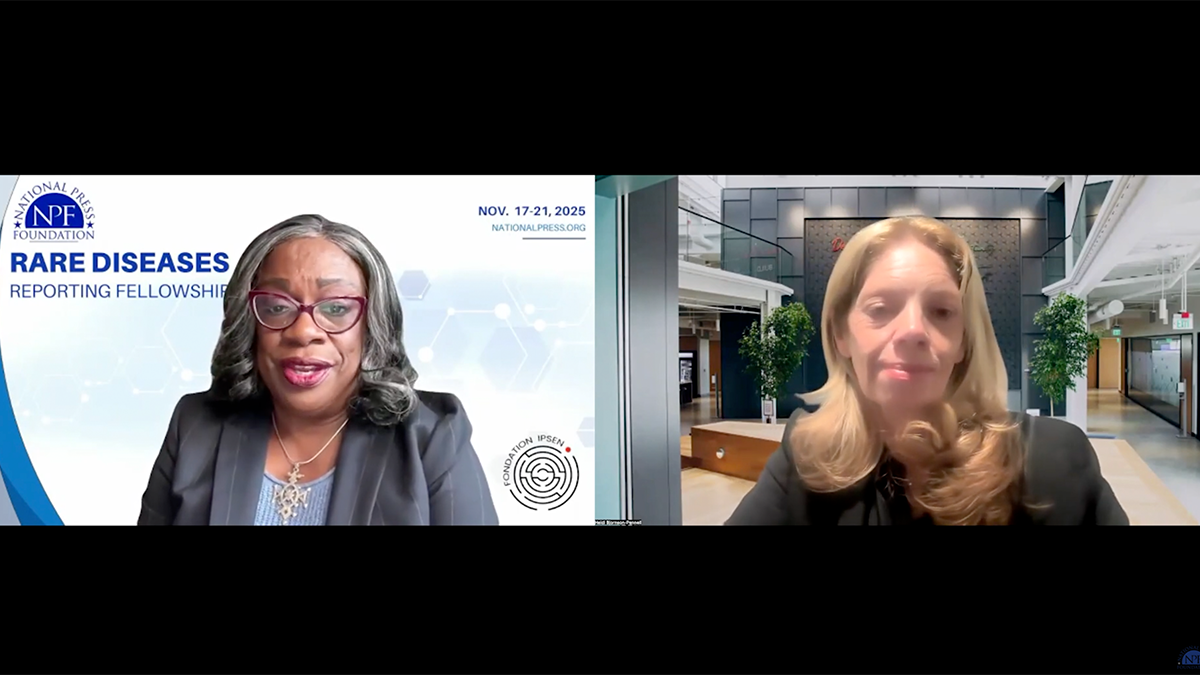
When Sarita Edwards’ son, Elijah, was diagnosed with Trisomy 18 during her pregnancy, he was not expected to survive to birth or for long afterward. After he was born, the lack of support Edwards and her family encountered early in Elijah’s life led her to believe that storytelling is key to disease perception, policy and research.
“When you’re sharing stories, you’re framing how the world understands an entire patient community,” Edwards told National Press Foundation Rare Disease Reporting fellows.
Trisomy 18, also known as Edwards Syndrome, results from an extra copy of chromosome 18, which is random and unpredictable, according to the Cleveland Clinic. It most often results in miscarriage. Survivors experience low growth and physical and intellectual challenges. Only 10% live past their first birthday. At one point, Edwards planned Elijah’s funeral.
“I’m overjoyed to share that today. Elijah is eight years old,” said Edwards, who established the E.WE Foundation to support families with rare diseases. “He does have more than 20 physicians on his medical team, but he’s alive. And to me that’s a story worth celebrating.”
Advocates also celebrate policy changes. In 2024, Alabama passed the Zachary Thomas Newborn Screening Act, expanding newborn screening tests in the name of the teenager who was not screened for the MPS I, aka Hurler syndrome.
“Stories like these highlight the need for earlier diagnosis and better state level support. And as a journalist, you can play a critical role in producing the narratives that can influence lawmakers and their staffers,” Edwards said.
Journalism can highlight patient experiences for policymakers and healthcare professionals alike. Edwards said that her son’s care greatly improved when his providers understood his personal story, not just his medical conditions.
“As journalists, you can translate lived experience by balancing empathy and accuracy. When you tell patient stories, you are letting patients set the tone for their experiences and the way a story is told can influence whether people receive support, whether research gets funded and whether laws change,” Edwards said. “We know that stories can influence clinical decisions. Clinicians often make decisions with limited time and incomplete information. A patient’s story can fill in those gaps.”
Sharing patient stories can direct research efforts into finding cures and improving treatment. Edwards said that when researchers understand the day-to-day experience of the patients, they conduct better studies.
“Storytelling helps patient communities advocate for funding. It helps with clinical trials and quality of life studies, and it brings attention to the science as it relates to lived experiences,” she said.
When journalists cover patient stories, they help indicate which issues matter, Edwards said, increasing the chance that rare diseases receive attention from researchers.
Access the full transcript here.
This fellowship is funded by Fondation Ipsen. NPF is solely responsible for the content.


 Reload document
 Open in new tab