5 takeaways:
➀ Small businesses are an engine of U.S. growth, representing 96% to 98% of all businesses. But 27% of them closed during the pandemic. It’s not yet clear how many are gone for good, and how many entrepreneurs will reopen their old businesses or start new ones, if they can access the capital to do so. Black entrepreneurs were worst hit, with a 41% closure rate during the pandemic, compared with 32% of Latino-owned businesses, 26% of Asian-American owned businesses and 17% of white-owned firms, according to a Federal Reserve Board study. Poorer access to credit, lower revenues, less accumulated wealth, and the location of more minority-owned businesses in COVID-19 hotspots all drove the disparities, experts said. African American businesses fell from 1.1 million before the pandemic to 640,000 in April 2020, said Major L. Clark III, acting chief counsel for the Office of Advocacy at the U.S. Small Business Administration.
➁ Black women were worst affected, as were entrepreneurs with family caregiving responsibilities. Before the pandemic, entrepreneurship among Black women was growing at a faster rate than for any other group, noted Patrice Willoughby of Signal Group. But self-employment among Black women dropped 19.8% during the early pandemic , compared with a 6.3% drop in self-employment among all population groups. Since May 2020, the number of single self-employed people increase by 40% but the number of married self-employed ones increased by only 8%, according to Census data. And in a Fed survey, 29% of Black-owned businesses said they expected family obligations to be a challenge over the next 12 months, compared with 21% of white-owned businesses. Journalists need to look at comparable figures from before the pandemic to understand these disparities, Willoughby said. A recent study by American Express found that for every dollar generated by a privately held business, female business owners generated only 30 cents.
➂ A number of bills pending in Congress aim to address these inequalities. Legislation introduced by Sen. Ben Cardin and Rep. Kweisi Mfume, both Maryland Democrats, would create innovation centers in undeserved communities. Sen. John Hickenlooper has four bills to create and expand SBA programs and build up cooperatives. It is widely known that access to Paycheck Protection Program loans has been worse for minorities, but it’s less well known that they have also not secured a proportionate share of federal relief contracts. Of $23 billion tagged as COVID dollars by the Federal Procurement Data System, African American businesses were awarded 4% of contracts and received only 0.17% of funds given out by the Department of Heath and Human Services, according to Clark. In Baltimore, by February 2021, 56% of African Americans had been able to access either federal or state pandemic assistance, compared with 95% of whites, said Frances Murphy Draper, whose grandfather founded the AFRO-American newspaper in Baltimore in 1892.
➃ Blacks are still more likely to be turned down for loans, and more likely to use online lenders for pandemic relief aid. A Goldman Sachs survey found the rejection rate for Black business owners applying for bank loans was 27% compared to 9% for white applicants. As a result, Black and Hispanic owners applied to fintech firms — online nonbank lenders that presumably are less likely to know their race — at far higher rates than whites, according to a Fed study.
➄ Journalists should report on solutions. “We have to broaden the lens,” Draper said, to look not at “what’s wrong with the business, or what’s wrong with black people or the black or brown community, but recognizing the humanity and that we’re all in this together.” Willoughy recommended reporting on some of the growing number of private lenders and community development financial institutions that now offering access to capital to disadvantaged populations. “As Major [Clark] said, black businesses are not looking for a handout, we’re really looking for a hand up.”
Speakers:
Major L. Clark III, Acting Chief Counsel, Office of Advocacy, U.S. Small Business Administration
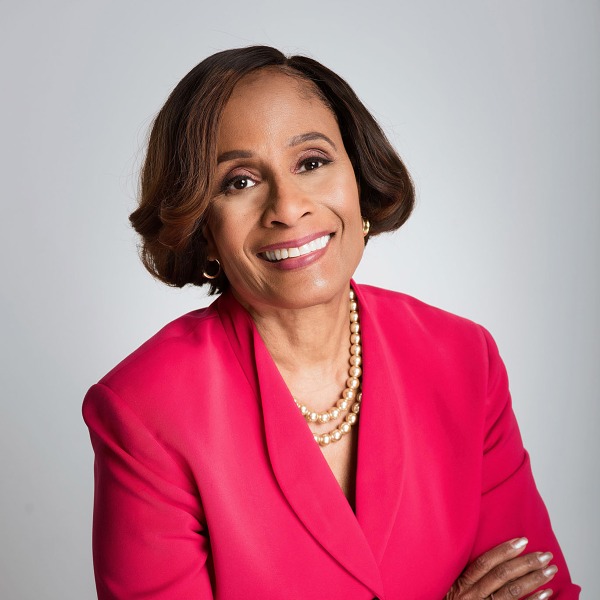
Frances Murphy Draper, Publisher, AFRO-American Newspapers, Baltimore
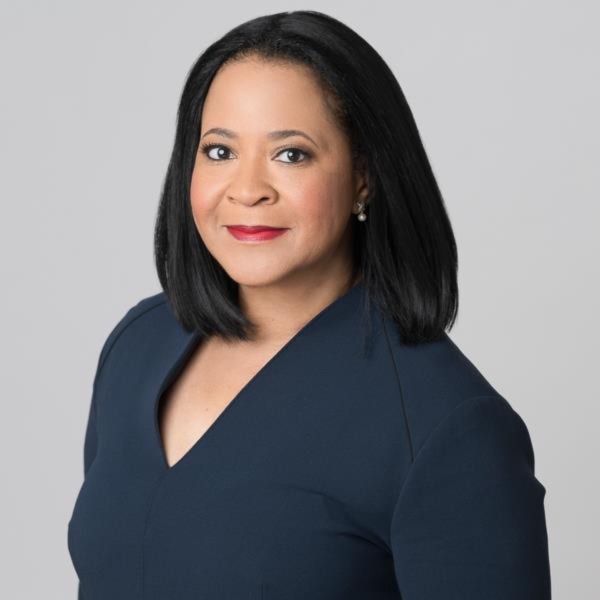
Patrice Willoughby, Managing Director and Head of Diversity, Equity, and Inclusion Signal Group
This program is funded by the David and Lucile Packard Foundation, the W.K. Kellogg Foundation, and the Heising-Simons Foundation. NPF is solely responsible for