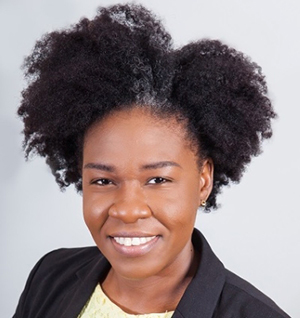
Like many of her colleagues in the biotech industry, Sika Dunyoh has a compelling personal reason for choosing to work in the rare disease realm. Her beloved younger sister died from a rare disease that caused her body to attack its own cartilage.
“Unfortunately, a year and a half after her diagnosis, she passed away unexpectedly. So, obviously, that left a huge hole in my life and my family’s life. And then, eight years later in 2015, I thought, “God, I wish I had done something meaningful in her memory.”
So after a long and successful career in marketing, Dunyoh first began fundraising for the National Organization for Rare Disorders (NORD) in her sister’s memory. She then started working for NORD, telling her sister’s story while organizing many of the organization’s conferences.
At one of those meetings, Dunyoh met her current boss who was with Travere Therapeutics.
“I mean, I definitely had to really even think about my feelings and relationships or relationship towards the biotech industry. And I hadn’t thought much about it before. And so, I had to think about is this a place I could see myself? What are my personal feelings about the industry? And the rare disease community, only 10% of the diseases have an FDA-approved treatment.”
“And where I came down to it is a couple of things. Everyone I met at Travere was extremely authentic about their mission to serve patients. And I think that changes the personality of the company when you’re really in the cause yourself. And then also, I think it’s important that there are advocates, passionate advocates in every part of the rare disease landscape.”
“And so, when you think about that and you think about the loss of hope that many of these disease communities have in not having a treatment available, I thought to myself, ‘It’s important that biotech is driving innovation for rare diseases.’ And to be able to go to a company 100% focused on rare diseases, our company doesn’t work in common diseases at all. I think it’s important that there are biotechs out there committed to this particular community that’s already marginalized.”
A Fighting Chance
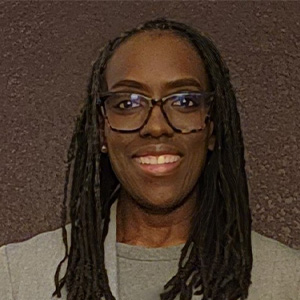
Sarita Edwards and her husband Kareem confronted a rare disease in 2016, when she was pregnant with their fifth child, Elijah. At around 22 weeks, a fetal medicine specialist confirmed that their unborn child had a condition called Edwards Syndrome.
“They told us, ‘Do not Google search it,’ and that we should find a support group. And that was the extent of the conversation,” Edwards said. “And so, of course, immediately, after the appointment, I went straight to Google and really started trying to understand what this was. At the time, we did not know that it was a rare disease. They did not use that specific language. They just said that it looked like Edwards Syndrome (aka Trisomy 18, a genetic condition that causes physical growth delays during fetal development.) And so, we began to just kind of do our own research to learn more about it.”
Prenatal visits were like “pulling the scalp off of a wound that was trying to heal,” because doctors were certain that death would be the only outcome. In March 2017, Elijah was born alive, but because of the high mortality rate of this disease, they were told that newborn screening wasn’t necessary. “We were really fighting the healthcare system for routine prenatal and post-delivery services that we had experienced with our other kids. And we were just continually told to enjoy our time because he would pass away soon.”
And there was something else even more ominous. “I think race played a part when we began to push back and asked for alternative solutions for our son. We acknowledged that we understood this is the science. We understood that these are the statistics, only five to 10% will live past their first birthday. We understood that our challenge was not lack of understanding, and we felt like that’s how we were being treated as if we were not comprehending what they were trying to convey to us. And that was not the issue. We just wanted to have a conversation about an alternative solution.
“We were trying to figure out, ‘Okay. So he was born, he’s alive. What’s next?’ And so, we felt like we were being treated as if we had limited comprehension of what they were trying to tell us. We felt like they were treating us as if we were ignorant.
That suspicion deepened when she learned of another newborn who had received a similar diagnosis.
“We did later learn, and I even met and had a conversation with a mother, a white family. She actually had a daughter with the exact same diagnosis within a year of our experience at the exact same hospital. And she had a completely different outcome. Her daughter was actually trached, and a G-tube was placed before they left the hospital. That was not something that we had to have, yet we were sent home in hospice, and she was sent home with early intervention and resources.”
The different experiences were a real shock for Edwards. “She did also share with me that she was a scientist, and they knew that she was a scientist at the hospital because she had done some work with them. And I found that interesting because neither myself or my husband are scientists, but we both are educated and college graduates. And so I found it very interesting that she made that reference in our conversation that she knows that they knew who she was, but two completely different instances in terms of how care was provided to us.”
Edwards and her husband launched The E.WE Foundation in 2019 to provide resources and support to families impacted by Edwards Syndrome or Trisomy 18 and other rare diseases. When working with families, it’s always important to get to know their lives and circumstances, Edwards said. “When you are having a conversation with a family, with a patient, with a parent, a caregiver, whomever, I think you should always go in with no assumptions. I don’t think it’s ridiculous to not be able to empathize depending on your own experience and where you are in your life. I recognize that everybody can’t relate or have empathy for the experiences that we’ve had, but I do believe that in having a conversation, you can approach it from a clean slate and walk into the conversation with no preset thoughts or judgments about what I might say.”
“I think sometimes we miss really good conversation and opportunity for dialogue because we have already convinced ourselves of the outcome before the conversation has ever even started. But I think if you walk in with just a clear conscience of what are you trying to gain from this conversation, I think you can have a good conversation. I’m a huge champion, a huge advocate for removing assumptions. Just don’t assume you know anything. Even if you’ve done some research ahead of time, walk in with a clean slate. That way, you have no preset thoughts or judgments about anything that might be shared.”
Access the full transcript here.
This training was sponsored by Fondation Ipsen. NPF is solely responsible for the content.