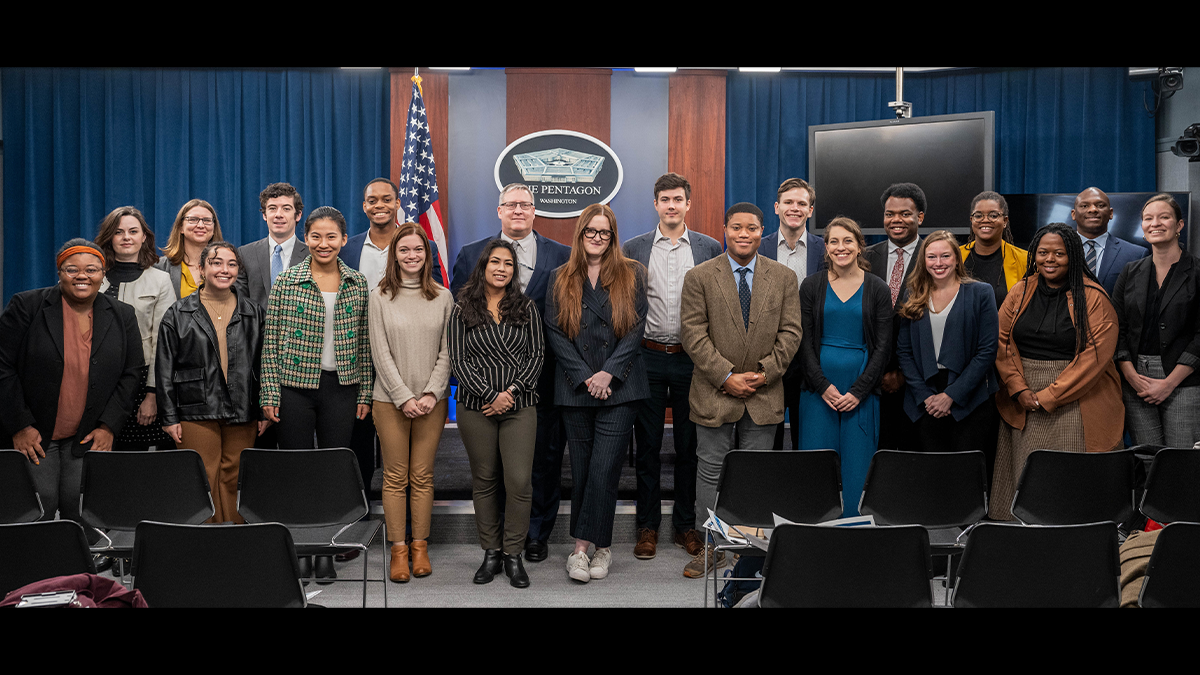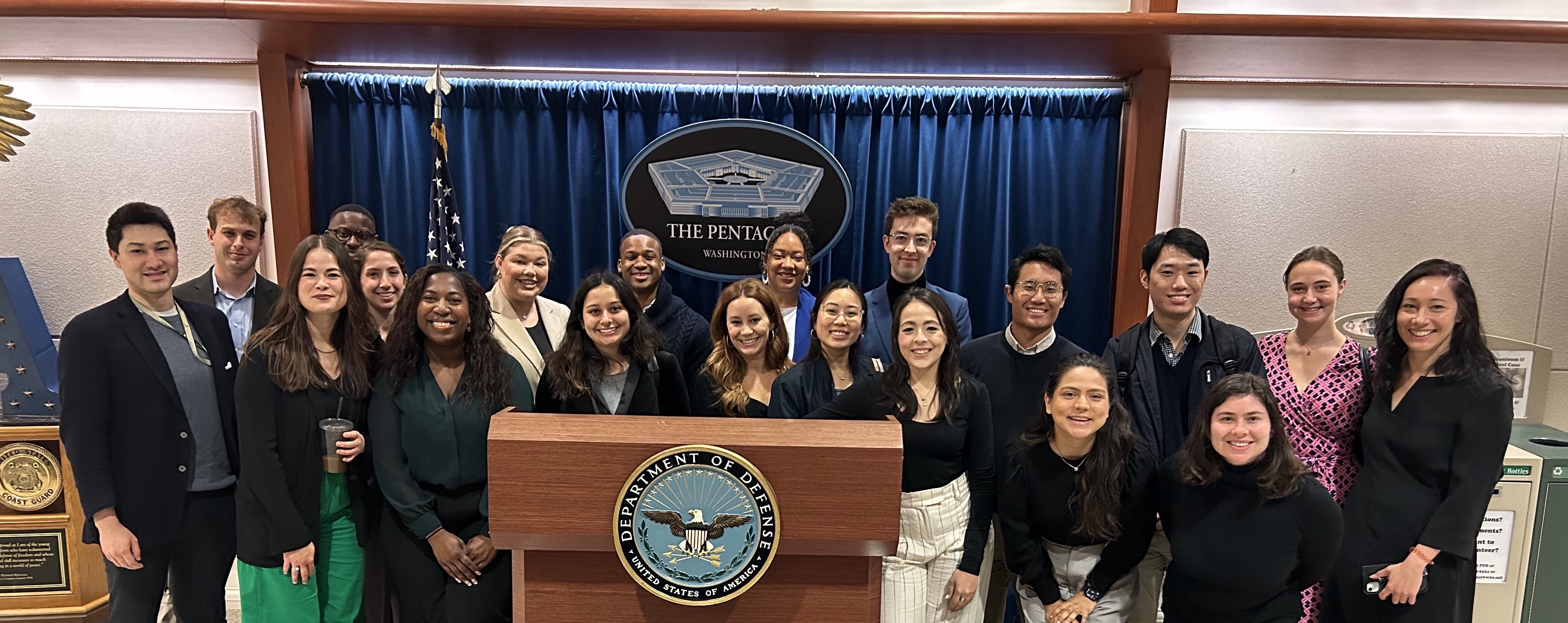
Col. Audricia “Driece” McKinney Harris has led troops in Afghanistan and advised senior military officials, currently serving as a senior military assistant to Chris Meagher, the assistant to the Secretary of Defense for public affairs. She and Deputy Assistant to the Secretary of Defense for Strategic Engagement Melanie Fonder Kaye described to 2023 Paul Miller Washington Reporting fellows their roles in the Pentagon and how they work with journalists [Transcript].
5 takeaways:
➀ Transparency matters.
The Department of Defense (DoD) Principles of Information prioritize the “free flow of information,” along with withholding information if it would threaten the safety or privacy of military or government personnel or their families.
Harris said being upfront and transparent about “unfavorable information” helps the Department of Defense (DoD) “maintain accountability.”
A lack of accountability and trust “weakens the government’s capacity to be productive,” she said. “Take a look around in the history books at other countries where a lack of trust and lack of accountability has persisted. It usually results in fragility of countries and, in worst cases, violent extremism and then civil conflict.”
However, judgment is applied when handling sensitive information. “Unquestionably, it is hard sometimes to balance transparency with national security,” Harris said.
In recalling a case of requesting a journalist to wait on reporting an incident involving a U.S. citizen abroad, Fonder Kaye added, “it literally is life or death here, and that’s the difference.”
➁ Social media democratized the military, too.
Individual servicemembers’ ability to push content out on their own social media channels has changed military communications. “No matter your rank, you have a platform to speak about some of the things that you’re going through as well. Sometimes things that would never have been considered before,” Harris said, including negative posts, such as posts discussing problems with barrack facilities, or even whistleblowing.
➂ There are news deserts and there are military news deserts.
A recent study from the military publication Warhorse News and the University of Chicago found that a lack of reporting on veterans and the military further divides civilians from the military and threatens national security.
“There used to be a dedicated reporter for each base … and that doesn’t exist anymore,” Fonder Kaye said. “It’s a huge problem.”
Newsrooms “are completely being decimated,” she said.
“You used to always have, in Norfolk for example, you’d always have several military reporters from local publications that covered the local bases and covered the military community. And now almost everywhere we go there’s military reporter deserts.”
This is especially noteworthy as fewer members of the American public have personal connections to the military. As of 2011, the number of Americans serving in the military is the lowest it’s been since peacetime between World War I and World War II, according to Pew Research Center.
➃ Who’s the expert?
When you see reporters doing in-depth national stories, such as series on suicide or sexual assault in the military, “there’s probably multiple off-camera background briefings with the subject matter experts” from the Pentagon, Fonder Kaye said. For instance, in the case of the “huge, huge cultural change” of how sexual assaults are reported and dealt with the Independent Review Commission in the military, Beth Foster Gayle, executive director of Force Resiliency, has been shepherding those efforts. Other speakers on or off record could include the deputy secretary or press secretary, depending on the importance of the topic.
For projects like Top Gun and military documentaries, the DoD advises Hollywood, too. “Any documentary that you could think of that has, uses some DOD asset, we work with,” Fonder Kaye said.
➄ Expect last-minute changes.
In military lingo, there’s something known as a FRAGO — a fragmentary order, which is a change to a previous order.
“Lots of surprises and schedule changes. Even though sometimes it’s inconvenient, it really is our norm here. So you kind of get used to being able to ‘flexecute,’” said Harris.