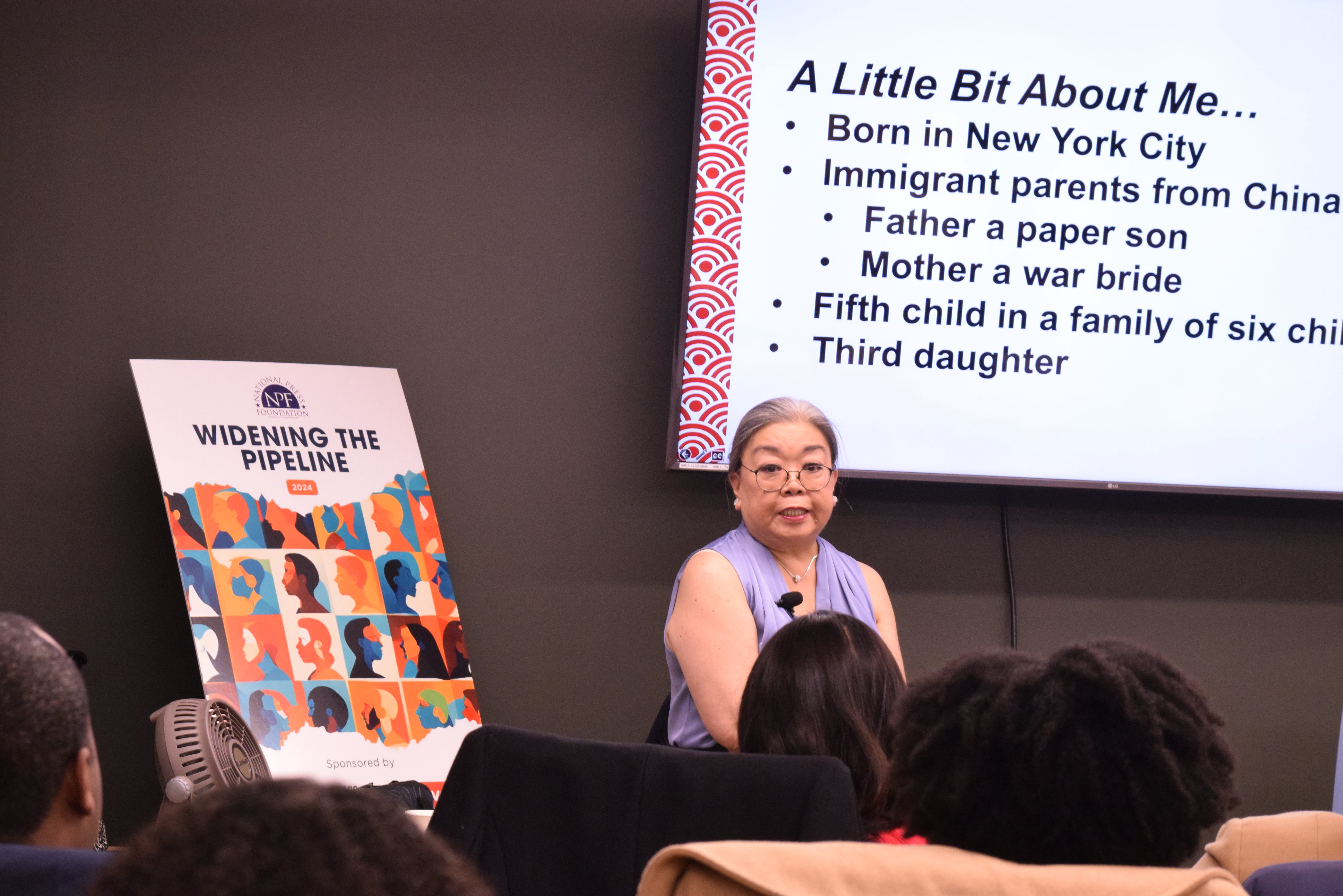
At the heart of the most consequential reporting are solid networks of sources best cultivated on the ground, meeting potential contacts where they are.
That was the bottom-line message to National Press Foundation Paul Miller Washington Reporting fellows from Cheryl W. Thompson, a Pulitzer Prize-winning investigative correspondent at NPR. Her own journey is proof that successful careers in Washington rely heavily on in-person reporting, from Capitol Hill and the White House to the departments of State and Justice.
“Get out there as often as you can and hang out,” said Thompson, who reported for The Washington Post for more than 20 years. “An editor at The Post came to me once when I was new, and she said, ‘News isn’t happening at your desk.‘ And so that was all I needed to know. I stayed out on the street, and that’s how I made my sources, by being out and about …
“Yes, it is totally different in terms of the news cycle than it was 20 something years ago when I started in this town. And it is harder to probably break stories than it was back then too, because of the 24 hour news cycle, but you can do it and you can make sources … Go to committee meetings, go to anything you think people will be at who you might want to cultivate.”
While the crush of deadlines and the fast-moving news cycle often requires increased electronic contact, Thompson, a member of NPF’s board of directors, urged reporters not to surrender to it.
“I don’t do anything by email, don’t do phone stuff, because you never know who’s listening,” Thompson said.
‘The best investigative reporters were beat reporters’
After years on high-profile Washington beats with daily responsibilities, Thompson moved to investigations, which she describes as her “dream” job.
“I think the best investigative reporters were beat reporters because you learn a subject, you learn a topic … you become an expert in that. And I think you can carry that with you into investigative journalism,” she said.
Investigations take time, and Thompson said it’s often difficult to understand when you have gathered enough information for publication.
“In terms of when to let go, that’s a tough question because we as reporters always want to make sure that we’ve done our due diligence,” Thompson said. “When to let go is when you feel good that you’ve got everything you need to write a really strong investigation. … I also am really mindful of competition. Again, I don’t like to get beat, so I’m always, in the back of my mind going, ‘Gosh, I wonder if somebody else is working on this … That sort of keeps me motivated and sort of pushes me along to hurry up and get it.”
Keep editors in the loop
As a beat reporter, getting time to spend on an investigative project can be a challenge. But Thompson advised backgrounding the subject as much as possible before making a pitch to editors.
“I work seven days a week when I need to,” Thompson said. “But managing my boss, I think one good way to do it is to keep them informed and do some reporting when you have time away from your daily duties … Do as much reporting as you can and update them. … That’s going to keep them interested and it’s going to show them that, OK, this may be going slowly, but they’re working on it …
“I think you have to show your managers that you know how to manage your time, that you’re not just sitting around doing nothing,” Thompson said. “And those of you who cover the White House beat, you are definitely not sitting around doing nothing.”