As local reporters across America scramble to cover the run-up to the 2026 midterm elections, two NPF Widening the Pipeline Fellowship alums have advice for their colleagues hoping to accurately reflect voter sentiments.
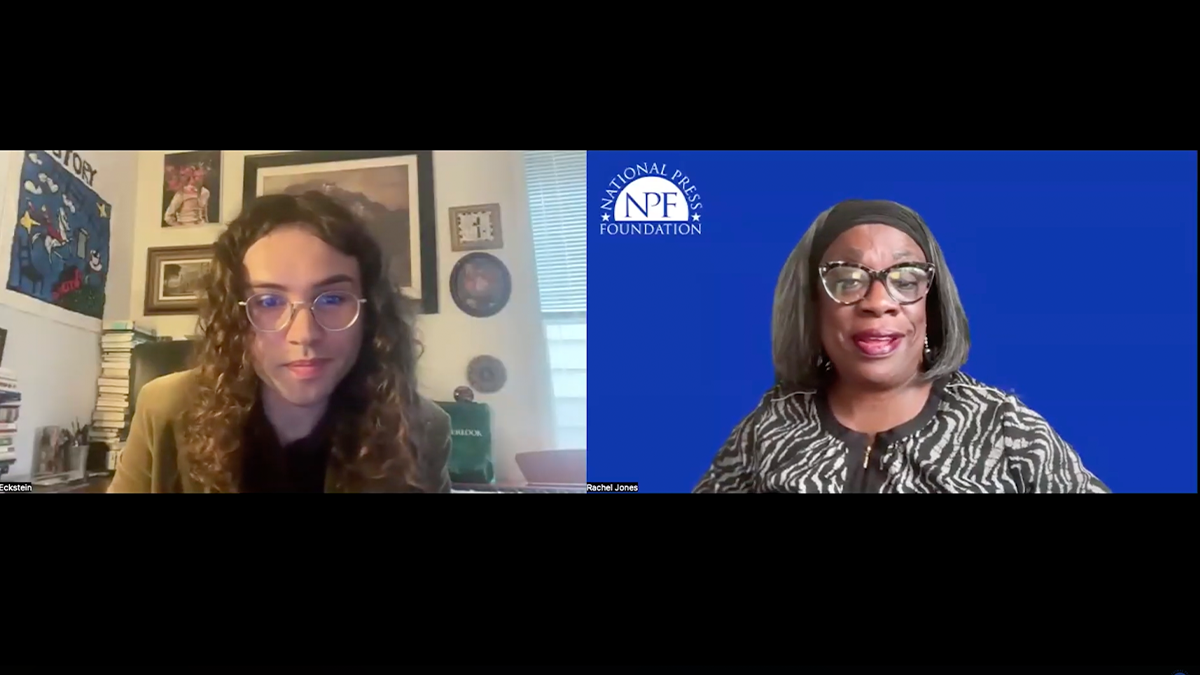
Briah Lumpkins, the Georgia Correspondent for KFF Health News and Raisa Habersham, the former race and culture reporter for the Miami Herald, offered strategies for leveraging sources and amplifying midterm issues from a local perspective in a recent session with 2026 Widening fellows. They also shared insights about navigating challenges as journalists of color covering politically and culturally complex beats.
In one of her recent projects, Lumpkins traveled to one of Georgia’s Trump voter stronghold districts to ask residents about healthcare access. The expiration of Obamacare subsidies in the 14th District has had catastrophic financial consequences for some residents, and former representative Marjorie Taylor Greene’s public break with Trump over the subsidies issue served as the story’s entry point.
Lumpkins recalled the story of one voter who until recently had been paying $0 in healthcare premiums. “It was helping her go to the doctor for a ton of different health conditions that she has. Once the subsidies expired last year, the quote that she got to have her insurance went from zero to $1,200 a month,” she said.
Still, Lumpkins’ reporting uncovered a strong allegiance to the Trump agenda. “She acknowledged that she had frustrations with the President, that this wasn’t his best term… but she still felt a loyalty to the president and described herself as all in.”
There are potential challenges of reporting on flashpoint “Red State-Blue State” topics as a journalist of color, but Lumpkins developed strategies for building trust. “I’m often reporting in very rural communities where there’s a lot of media skepticism, media aversion. There isn’t an active newspaper or news presence in these communities, so it definitely takes time to break down barriers and get people to open up and trust you.” She said she leaves business cards at local shops, scrutinizes posts in Facebook groups and attends community meetings to build credibility over time.
“I think for me, it’s important to come in with an open mind and listening ear and just letting people know that I’m willing to hear their perspective and to understand where they’re coming from. I think at the root of it, these are communities that feel ignored in some cases, not only by media, but also by the folks in government who are representing them and are really, really looking for an outlet to share their perspective and to be listened to.”
For Habersham, pivoting from a focus on covering race and culture in South Florida to local politics yielded an interesting challenge. But she learned quickly that good reporting skills can help you tap into the issues driving public concern during a tense election cycle.
“You don’t have to be a political reporter to cover politics,” Habersham said. “Politics will be up on your beat. It’s akin to when people say, ‘Oh, I don’t really pay attention to politics. I don’t really vote.’ Well, politics will pay attention to you.”
Habersham told fellows that her local government accountability reporting background also gave her a strong advantage. “I think a lot of times people assume that when you’re covering politics, if you’re not doing it out of DC, you’re not doing it. And I had to really rewire that thinking through a mentor of mine, (Atlanta Journal Constitution Washington Bureau Chief) Tia Mitchell, who’s been a mentor through the National Press Foundation fellowships in the past. And she was like, “If you’re covering local government, you’re covering politics too, and you should have that cap on when you do it.”
An assignment like covering a North Miami Beach mayor who’d been arrested on voting irregularities helped drive those lessons home for Habersham. And in a primary-filled Florida, grappling with volatile governor and U. S. Senate races, threats to voting rights, the redistricting fight and the retirement of long-time Representative Frederica Wilson, there’s a lot at stake.
“I’ve only been in Florida for four years, and I can tell you Florida four years ago isn’t the same now. But we spoke to residents about what they want in their new congressperson. So that’s kind of a good way just to get out of your beat and tie it to ‘what do residents want?’ ”
Access the full transcript here.


 Reload document
 Open in new tab