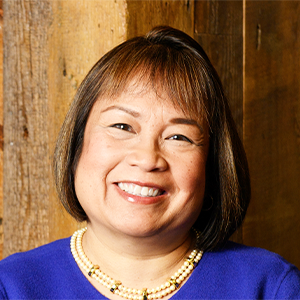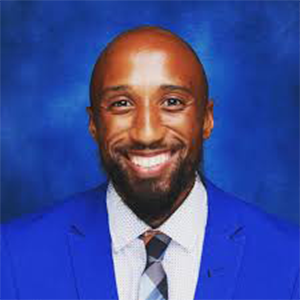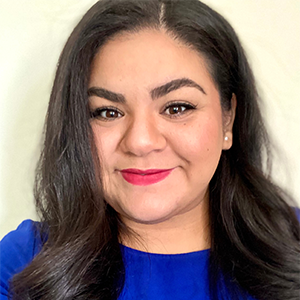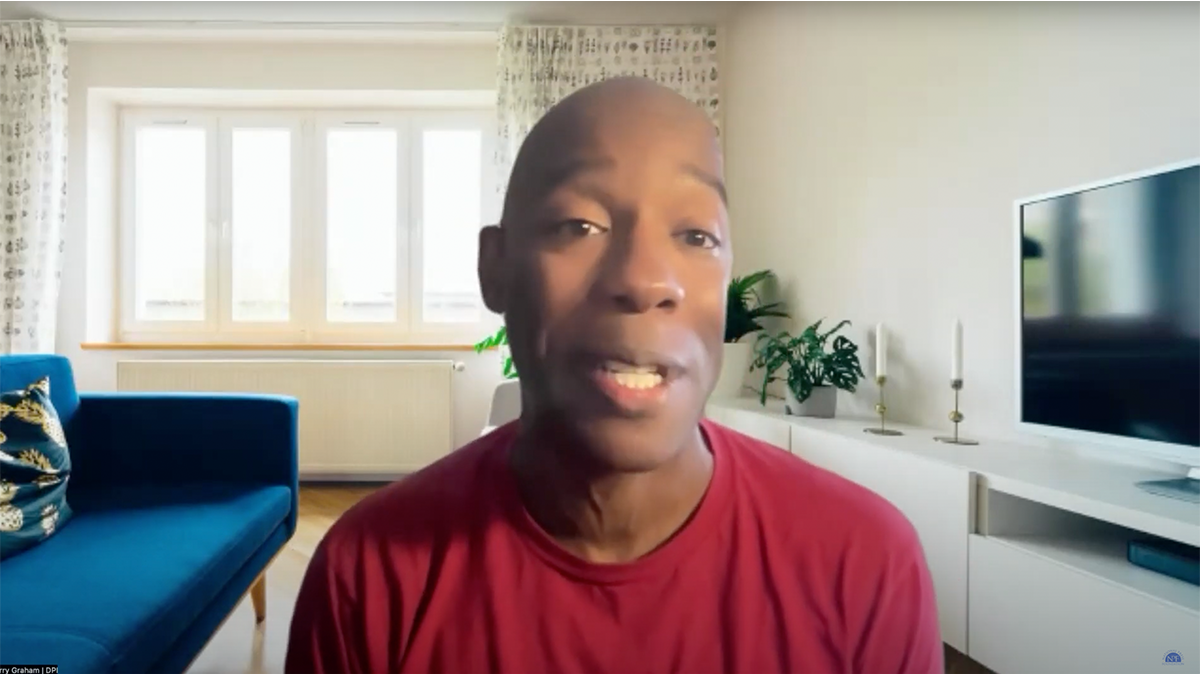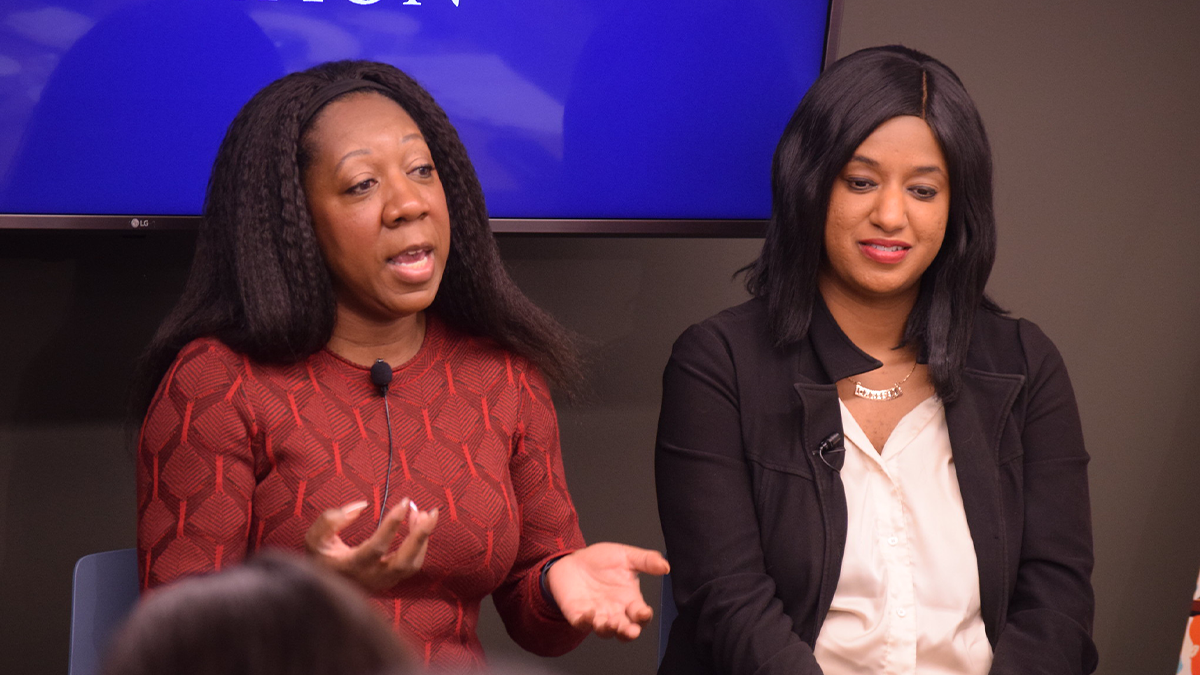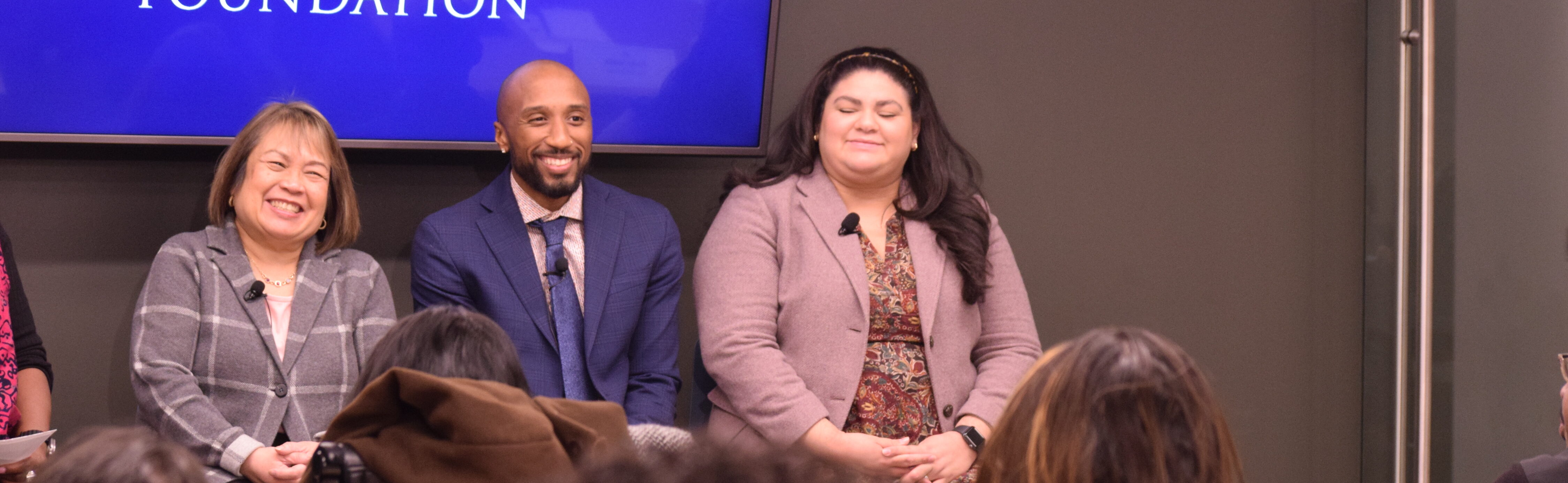
Forming and maintaining relationships with mentors can provide journalists with an invaluable sounding board outside of your newsroom and help strengthen your career goals. Former NPF Widening the Pipeline fellows Torrance Latham of the Miami Herald and Politico’s Bianca Quilantan, as well as her former mentor and current NPF board member Catalina Camia of Bloomberg Law, spoke with the 2025 class about how to maximize lessons learned from a mentoring relationship.
4 Key Takeaways:
1. You belong exactly where you are
Many young professionals battle with feelings of anxiety about whether they’re qualified for their positions – or whether people think they are.
Latham described how the concept of imposter syndrome can affect your job performance. But he also urged fellows to reject that feeling.
“I believe there is no such thing as imposter syndrome. You are who you are,” Latham said.
The sentiment was echoed by Camia.
“You belong in every room that you are in. No matter what you look like, no matter your background, no matter your education level, you belong,” she said.
2. Be prepared to speak with your mentor
When meeting with a mentor, have a plan for what you want to discuss. When Camia and Quilantan first met, this was important to establish.
“At the beginning, we set up some kind of general thoughts or rules, I guess … we would have a plan for what we wanted to talk about, and that was really important because then we could both get something out of it,” Quilantan said.
Camia suggests thinking deeply about what you want from the mentoring relationship.
“The ones that are more beneficial, both for the person I’m trying to mentor, and me, is when the person I’m trying to guide and help actually has a plan,” Camia said.
When Latham had his first mentor he said, “I felt like at the time I was a jack of all trades and a master of none.” Working with his mentor helped Latham find his purpose.
It’s also important to distinguish the difference between mentorship and sponsorship, Camia said. She described a mentor as an adviser and sponsorship as someone who can assist by recommending you for a job.
3. Pursue options that will open up more opportunities
The paycheck matters, but it’s not the only thing that matters.
“Take the opportunity that will give you the most opportunities later,” Quilantan said.
You also don’t always have to wait your turn, Latham said. This mindset was especially important for him when making the shift from broadcast journalism to print.
“I encourage all of you to not wait your turn either. You take your turn,” he said, encouraging the journalists to be “proactive.” “This is you being authentically who you are. You never know who’s watching you … And you have to be willing to step outside of your comfort zone.”
4. Mentors benefit from guiding others, too
After mentoring Quilantan, Camia said, “I told her I got as much out of the mentoring relationship as I hope she did.”
Camia also discussed the creation of the Widening the Pipeline program, and why it’s a key part of NPF’s mission of making good journalists better.
“That pipeline needs to look like the America we live in,” Camia said. “Sometimes you need a situation, a program to help you look into yourself and figure out who you are and what your place is, and that’s what Widening the Pipeline today has become.”
Latham also found strong peer support outside of his newsroom.
“I felt more at home in the NPF pipeline than I did in my own newsroom,” he said.
Access the full transcript here.
This fellowship is funded by the Evelyn Y. Davis Foundation and the John C. and Ethel C. Eklund Scholarship Fund. NPF is solely responsible for the content.