4 takeaways:
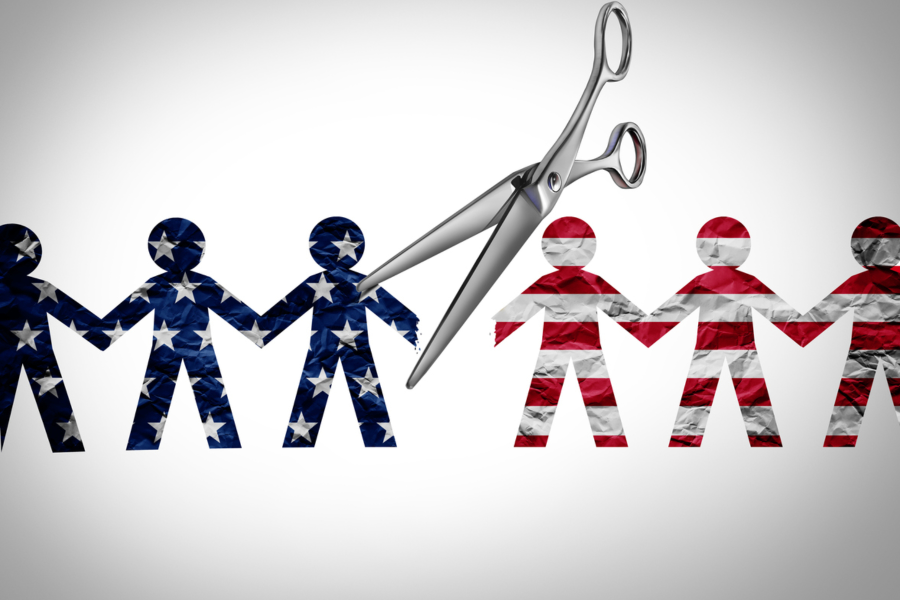
➀ Dealing with partisan divide: “It is an angrier place.” People have been saying Congress is divided for decades, but the Jan. 6 insurrection added fuel to the fire already glowing with anger over campaign spending, personal feelings and disparity. “[Jan. 6] still is with us every day. There’s still a lot of very raw feelings here from everybody. It’s still a factor in how lawmakers work with each other … especially those who had been under attack, or felt they were under attack for causing the attack,” said PBS NewsHour Correspondent Lisa Desjardins, whose Jan. 6 coverage from inside the Capitol won a Peabody Award and NPF’s Dirksen Award. [Transcript]
“It’s a very tricky time because you have normal, Newt Gingrich-style, bare-knuckle partisan politics, which has become normal. And then you have this other layer, which is sort of Trump kind of anger and riots. And a seething America.” Wall Street Journal reporter Eliza Collins, a Paul Miller alumna, agreed that covering Congress has changed since Jan. 6. “The Hill’s a fun beat to have, but it is an angrier place,” she told Paul Miller fellows. Other Capitol Hill reporters agreed, especially when it comes to the House. “The group of far-right and far-left members are growing, especially in the House but even in the Senate and that influences legislation. It’s harder to get things done,” Collins said. “Another thing is people can raise money on social media now. Marjorie Taylor Greene, AOC, they don’t need committees. They don’t need their leadership to reward them, so that also changes the way the House works.” [Transcript]
➁ “There’s a million storylines to chase. And there’s a million people to get to know,” CNN Reporter Annie Grayer said about covering the House. Grayer, who covers the Jan. 6 committee, reminded reporters to do a gut check with editors or colleagues about the newsworthiness of certain storylines or details. “Sometimes you don’t realize that what you’re seeing is a story because you’re seeing it every day, whereas just a reader or a viewer might not have the context that you have,” she said. “Something as small as someone showed up late today – try to find out why that is and it’s like, ‘oh, because there was a huge deposition going on’ and you never know what clues might be right in front … sometimes that’s the paper trail or how those breadcrumbs start.” Grayer and Collins also emphasized getting to know the aides, clerks, Congressional historian and former staff and members who now work in lobbying or think tanks as potential sources.
➂ Use spreadsheets to your advantage. In addition to covering threats to democracy, reporters still need to cover the work of Congress, the bills that will affect citizens’ daily lives. For that, organization is key. “I’m a very big spreadsheeter, and it’s really saved me,” Desjardins said. For the Ketanji Brown-Jackson hearings in the Judiciary Committee, she made a spreadsheet of all the questions to help her figure out how they were targeting her. With appropriation bills – which she called a nightmare – she’ll do a side-by-side look at the bill and the report that goes with it, along with the prior year’s appropriation spreadsheet. “Sometimes my first take is a very fast look through the charts. What’s getting the biggest increase, what’s getting the biggest decrease. And then I’ll make a quick spreadsheet of that. So that’s like a day one.” The following weeks she goes through section by section. “I never cease to be amazed at how, two years later, some really weird fact that I know about an old appropriations bill will come up, and I’ll be able to connect some dots.”
➃ Be yourself. New York Times reporter and Paul Miller alumna Emily Cochrane had advice for young reporters. “The thing that I wish I had known was, it’s a lot better than it was, but this is often a male-dominated institution. I think I tried too hard at the beginning to be something I wasn’t.” Cochrane said she can’t be the same as a 40- or 60-year-old man. “I’m bubbly. I don’t like sports. I like musicals. I have cats. That’s just my personality and things worked out a lot better when I just let that come through a lot more instead of trying to be what I thought a Times or a Journal journalist should be.” She also noted one positive to come out of the past several years: During the pandemic, congressional reporters became more collaborative.
“Now there is a bit of an understanding where if Eliza is in a scrum when Joe Manchin has this real snappy quote, she’ll send it out,” Cochrane said. “We realized there was a lot of energy we used to expend where you would see someone tweet out a really good quote from somebody and then have to go run and find them. ‘Can you please say it again in a similar way’ … That’s not the most productive use of time for either us or the member.”
Help support the Paul Miller Fellowship by visiting nationalpress.org/donate. NPF is solely responsible for this content.