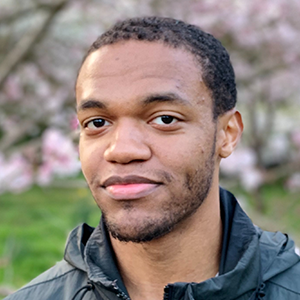
When Nate Tinner-Williams switched his undergrad major from journalism to theology, he wasn’t planning on combining the two fields of study one day.
But Tinner-Williams may have been divinely inspired to launch the Black Catholic Messenger online publication in 2020.
The venture followed his 2019 conversion to Catholicism and was spurred in part by the racial unrest that stemmed from the murder of George Floyd.
“This was – unfortunately only a temporary time, but a time nevertheless – when Catholic media was quite interested in writing about racism, about African Americans, about the Black experience,” Tinner-Williams said. “And so as I’m thinking about this whole topic, why is there no Black representation in Catholic media and why is there no longer a black Catholic newspaper?”
That serendipity expanded when Cardinal Robert Francis Prevost was ordained Pope Leo XIV in May 2025. At the time, his African-Creole roots dominated headlines, and Tinner-Williams recognized an opportunity to amplify the role of African Americans in Catholicism. In October, he spoke to NPF Widening the Pipeline fellows about launching an online publication and what it takes to produce stories that contextualize America’s religious tapestry.
Here are some highlights from that session:
History holds the truth about African Americans and Catholicism
Tinner-Williams said he learned about Black Catholic traditions when he moved to San Francisco after being raised in the Baptist church in Evansville, Indiana.
“I think I knew maybe … one Black Catholic. So I was like, ‘that’s not really a thing,’ but apparently it is. I learned that Black people, Black Catholics actually were some of the first people to reach the Americas even way before the founding of the United States. First in Puerto Rico in the early 16th century. And then about 50 years later in St. Augustine, Florida, which is actually the United States oldest city, that city was co-founded by free and enslaved Black Catholics under the Spanish crown. I learned that black Catholics were also involved in the founding of Los Angeles where I went to college.”
In his quest for more information, Tinner-Williams realized that the largest Catholic publications in the United States are majority white-owned and operated, and the content they produced did not reflect the lives or concerns of Black Catholics.
“This troubled me as someone who had learned quite a bit, like a fire hose about Black Catholicism in a short course of time, and then saying that almost none of that history or experience was really reflected in Catholic media.”
Start small — but start smart.
Though his journalism foray was relatively limited, Tinner-Williams knew he had to cover all the right bases.
“We certainly were not huge when we started, but raising a couple thousand dollars in 2020 before we launched was crucial. It would’ve been a disaster had we just tried to jump into it and say, ‘oh, we’ll figure it out as we go along.'”
The venture found support because donors acknowledged the lack of representation.
“If you’re able to tell your story in a way that resonates with people, a project that can get people excited, having that out there even before the publication is launched is a great idea.”
When you’re one-of-a-kind, you’ve got a natural edge
As the only Black Catholic publication in the U.S., Tinner-Williams leans in to that unique status. One early coup was their feature profile of former Poet Laureate Amanda Gorman.
“I remember seeing her give her poem at the inauguration of President Joe Biden, and at that time, anytime I saw something in the news involving a Black person, my method was to ask if that person is Catholic. Google it, ask around, figure something out because it’s a question that almost never gets asked.
“It was not until after the inauguration ceremony was over that it was brought to my attention that her home parish in Los Angeles was run by a religious order that historically works with African Americans.”
It was the Black Catholic Messenger’s first viral story, and Tinner-Williams was bolstered by the way it elevated conversations about African Americans in the faith. “That was emboldening for us to know that people were interested in this kind of story … and it all started with asking that story or asking that question, is there a Catholic angle here with an African American story?”
Access the full transcript here.
This fellowship is funded by the Evelyn Y. Davis Foundation. NPF is solely responsible for the content. To support the 2026 program, contact rjones@nationalpress.org.


 Reload document
 Open in new tab