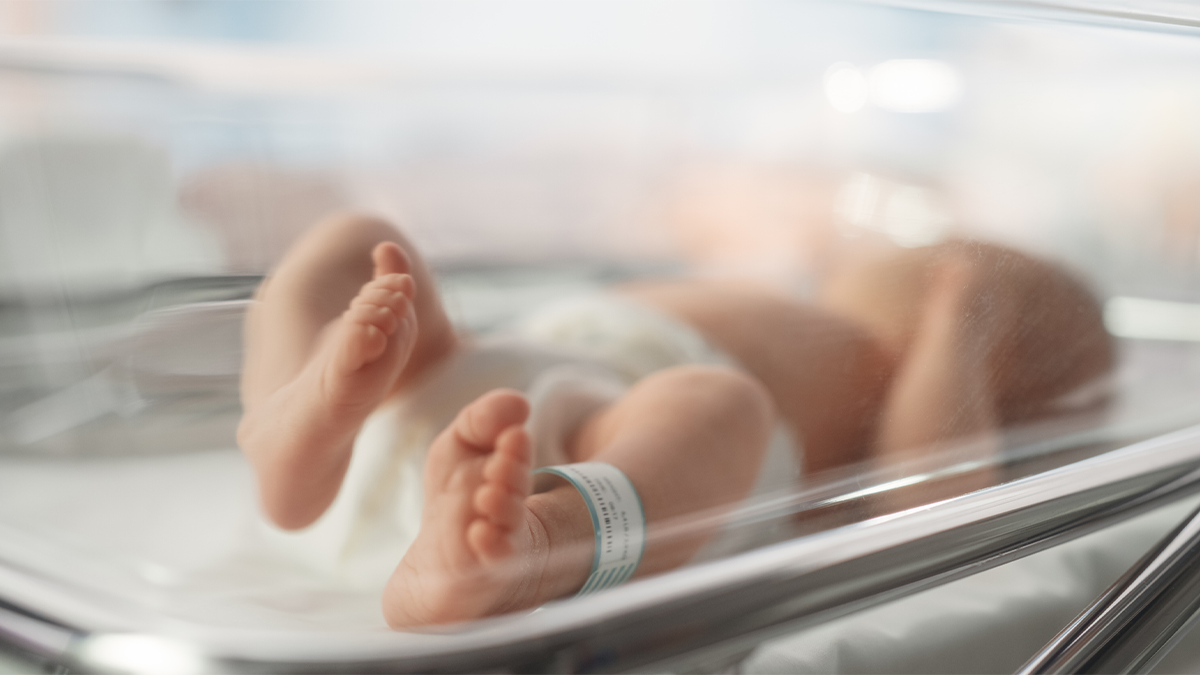
KJ Muldoon was only eight days old when researcher Rebecca Ahrens-Nicklas met him and his parents Kyle and Nicole at Children’s Hospital of Philadelphia (CHOP). The newborn had been diagnosed with a rare genetic disorder in a gene that breaks down protein, which produced a high level of ammonia in his system that could eventually kill him.
Ahrens-Nicklas’ research focus as an assistant professor in genomics at the University of Pennsylvania is on urea cycle disorders like KJ’s. The infant’s diagnosis of severe carbamoyl phosphate synthetase 1 (CPS1) deficiency offered the chance to explore a gene-editing process that might correct the problem. After teaming up with fellow researcher Kiran Musunuru, a professor of translational medicine at Penn, the quest to save KJ’s life combined complex biotech, an expedited approval process and a great deal of parental self-education and trust in scientific innovation.
That collaboration yielded one of the biggest science stories of 2025, the historic successful editing of a faulty gene in an infant whose life hung in the balance. It’s the latest entry in the extraordinary series of personalized medicine therapies based the landmark CRISPR gene-editing process that yielded a Nobel Prize for scientists Jennifer Doudna and Emmanuelle Charpentier in 2020.
On Nov. 17, Ahrens-Nicklas and Musunuru briefed NPF Rare Disease Reporting fellows about the historic biotech achievement and about its wider implications for treating rare diseases in infancy.
Baby KJ’s genes had a ‘misspelling’
Musunuru used a simple analogy to communicate the core strategy of K.J.’s treatment. If there’s a misspelling of a word in a sentence, it can obscure the meaning of the whole sentence, and perhaps the whole paragraph. In K.J.s case, there were two “misspellings” in two copies of a particular gene that help remove toxic metabolites from the protein the baby needed to thrive.
“He ended up with a very high level of what’s one of the waste products of protein, which is ammonia. And if it sounds like ammonia is a bad thing to have in the body, it is. Normally you have a string of enzymes, six enzymes in a row that turn that ammonia into urea, which is a benign metabolite that can be passed out of the body through urine. In fact, that’s why urine is called urine because it has a lot of urea. But his broken enzyme can’t break down that ammonia. It builds up in the body and becomes life-threatening.”
CRISPR isn’t new – but scientists have only just begun to harness its potential
The genetic components of CRISPR technology have existed across many bacterial species for billions of years, Musunuru said. Just like humans, microscopic bacteria have to “fight off invaders.” The CRISPR gene editing tool uses a system derived from a natural defense mechanism in bacteria to take little snippets of DNA sequence and monitor for any repeat infection.
“If that same virus shows up and has a matching DNA sequence to the snippet that was stored away from the past encounter, the bacterium can use CRISPR to actually search out and destroy, if that’s the right way to think about it, that foreign sequence, that invader of the virus.”
In the race to perfect precision medicine, fast-tracking is critical
Because Ahrens-Nicklas had been collaborating with the Innovative Genomics Institute to develop urea cycle genomic medicine tools, a fairly solid foundation already existed when she met Baby KJ. The development work continued, and while the process was not a formal clinical trial, the team felt ready to proceed.
“We provided the first dose right before he was seven months old and within a week or two, we could increase the amount of protein that he took in his diet. So kids with this disease, one way you help treat them is you restrict how much protein they take. And very quickly, within about a week, we were able to get him up to the recommended daily allowance for protein for a baby his age. And this is really important because protein is necessary for babies to grow.”
KJ received two more doses of the intravenous therapy over the course of the next few months and was discharged when he was about 300 days old.
“We continue to see signs that he has benefited from this therapy. But to make definitive conclusions, like I said, is hard. But the timeline in general is that we had an editing solution by six to eight weeks after he was born.”
Gaining the trust of worried parents is critically important
Parents navigating the profound complexity of a rare disease diagnosis are often overwhelmed by the scientific research and the potential therapies — or the lack thereof.
Ahrens-Nicklas said the Muldoons quickly met the challenge of whether to trust the unknown.
“Little by little, they became real experts in the possibilities and the science and what this meant, the pros, the cons. Really this is all part of the informed consent process, which for something like this can’t happen over the course of one day. It happened over the course of months and multiple interactions,” Ahrens-Nicklas said. “Part of what I felt I needed to do was to make sure that the plans that we had laid out to ensure that this drug was as safe as we could possibly make it.”
Access the full transcript here.
This fellowship is funded by Fondation Ipsen. NPF is solely responsible for the content.



 Reload document
 Open in new tab