For people living with rare diseases worldwide, the intersection of scientific research and artificial intelligence holds extraordinary opportunities to advance diagnostics and treatments for rare disorders. AI can also unearth vital information that helps families provide better care.
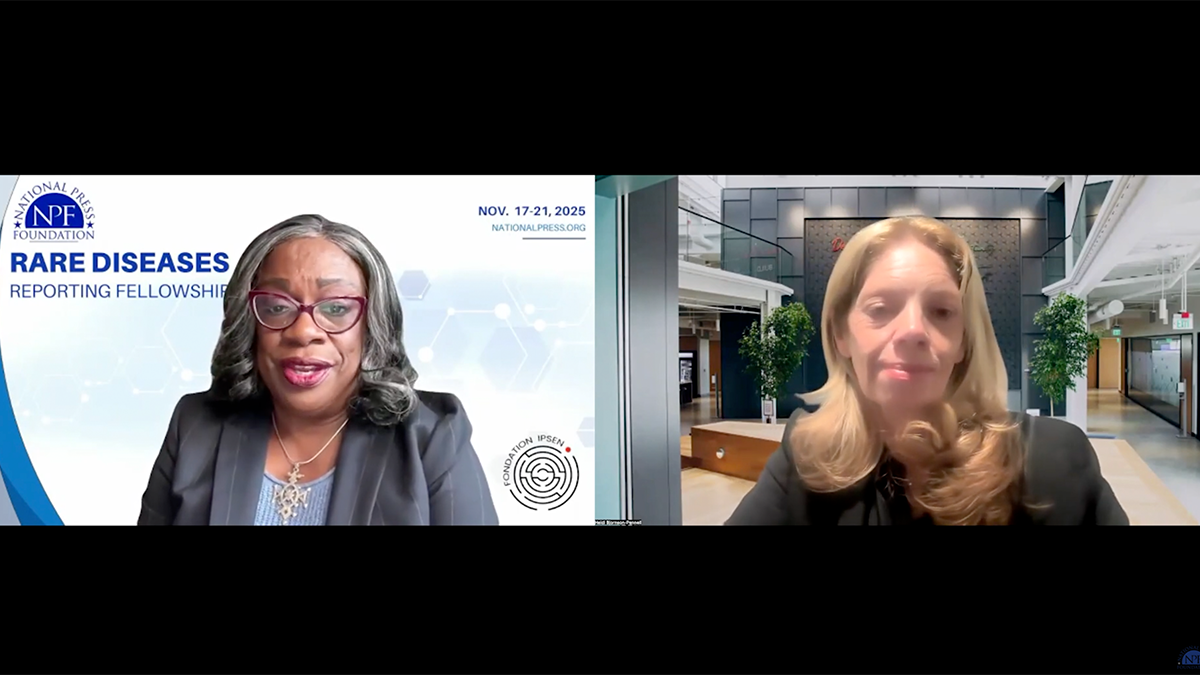
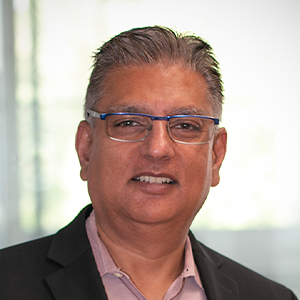
Those were the messages shared with NPF Rare Disease Reporting fellows by Vanessa Almendro-Navarro, vice president and head of science and technology innovation at Danaher Corporation and her colleague Mary Carmichael, who heads science and technology communications at Danaher. They were joined by Vik Sharma, the founder of MiraKare, a health-tech startup that empowers families caring for loved ones with complex medical needs through the use of AI powered diagnostic tools.
Here are highlights from their session:
Innovation must be scaled to reach more rare disease patients
Almendro-Navarro cited three revolutionary scientific developments over the past 13 years that were significantly fueled by AI:
- In 2012, Emily Whitehead was the first child to be cured of leukemia with experimental CAR T-Cell therapy.
- In 2019, Victoria Gray was successfully treated for sickle cell disease using experimental CRISPR gene-editing technology.
- In 2025, baby KJ Muldoon received a successful personalized CRISPR-based editing therapy for his metabolic urea cycle disorder.
All three of those treatments provided long-lasting cures, but the challenge of commercial viability still looms for researchers and bio-technology companies. As more rare conditions are identified and the specialized therapies to treat them are developed and refined, Almendro-Navarro says a tipping point of sorts will be impossible to ignore.
“When we look into the investment that has been made and the actual progress in pairing these genomic mutations with actual therapeutic interventions, innovation and drug development has lagged behind. We are not keeping pace in developing treatments for these potential genomic mutations that can be virtually providing some sort of treatments and opportunities for these patients,” she said. “We know that genomic medicines are still in their infancy. We are not yet capitalizing and maximizing the impact that these modalities could have in human health.”
What’s the ‘secret sauce’ of AI in research?
Carmichael said AI’s strength is speed. AI can accelerate research by identifying patterns and data that humans might miss.
“It can match patients to potential diagnoses or to clinical trials more quickly. It can simulate the way that disease works, the pathobiology, the mechanisms, the treatment responses, and that way it can help researchers prioritize therapies and move faster. Time is a luxury that a lot of these patients simply do not have. As you know, many of them are children. We do not have time to sit and wait. We’ve got to move as fast as we can without compromising quality.”
As a former science journalist herself, Carmichael believes reporters have a responsibility to fully grasp the research to help drive thoughtful conversations. But she also cautioned against falling into the hype trap, which means listening to the technology skeptics.
“Now I said skeptics, not opponents, not people who are so against these technologies that they won’t even think about them critically, but skepticism. That’s at the core of journalism. My literal job right now is to tell stories about the transformative power of biomedicine, our technologies and AI. But look, even I’m aware that there is a lot of hype out there. Rare disease families are especially vulnerable to that kind of hype. They are living through uncertainty, exhaustion, grief. A lot of these technologies, AI included, sound so powerful. They can give people unrealistic expectations and that’s a problem that you need to avoid contributing to.”
AI can turn chaos into clarity for rare disease caregivers
Sharma’s daughter Mira was born with cerebral palsy and is non-verbal, which requires an extended village to identify and respond to her basic needs. He felt anxious and helpless trying to determine the best way to understand what Mira was experiencing.
“Is she not feeling well? Is she in pain? Is she stressed out? And this helplessness is very hard,” Sharma said. “You can imagine being a parent and not understanding it. And we often make guesses on her care.”
One ongoing problem for Mira was lack of sleep. Sharma and her other caregivers struggled to find answers.
“The genesis of MiraKare, the platform we built now, was that I said when she has spaghetti with tomato sauce, really through some trial and tribulation, we found out that she wakes up at night. And it bothered me that it took us years to figure out why it took us so long. So I said, well, we could collect sleep data through wearables like a Fitbit or a Ring. And as caregivers, we could also then track what her meals were and what took us years to figure out should take us weeks to months.”
“As a father, as a caregiver, my goal is to give a voice to those who cannot communicate, give them that wellness voice.”
Access the full transcript here.
This fellowship is funded by Fondation Ipsen. NPF is solely responsible for the content.



 Reload document
 Open in new tab