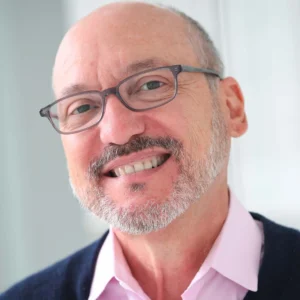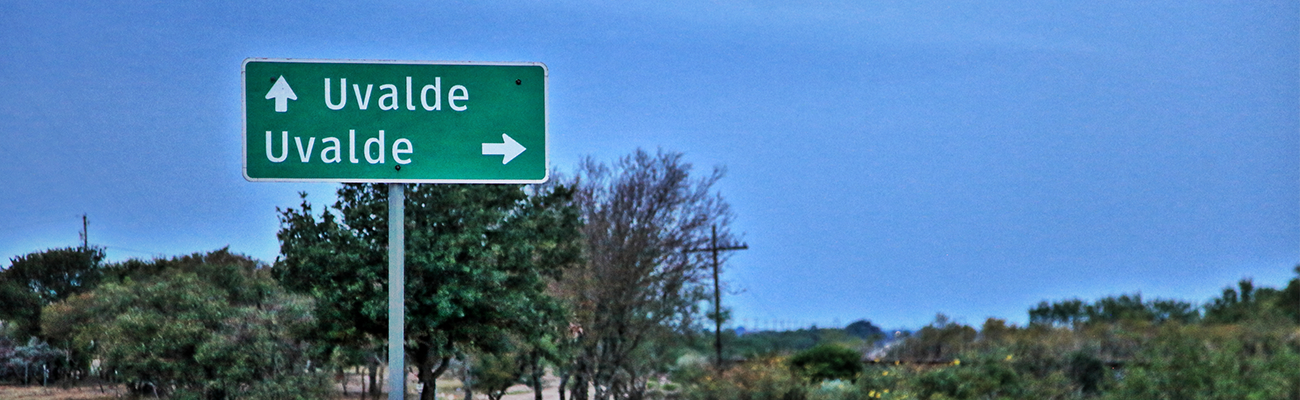
When Manny García’s journalism career began, covering the children’s beat consisted of one major realm: K through 12. Reporters focused on classrooms, teachers and perhaps the occasional tragic event involving a child. As newsrooms evolved and communities sought more contextual information about child well-being, so did the threats to children and families. In May of 2022, García confronted that reality head-on as he sent journalists to cover the horrific school shooting in Uvalde, Texas—just three hours away from his role as Executive Editor of the Austin American-Statesman. [Transcript | Video]
In that moment, García was grappling with competing assignments of gathering timely information, navigating the shock and trauma of child and teacher witnesses, and communicating the utter grief and horror for families and community members. García says there were important lessons learned from covering Uvalde, which should impact how journalism redefines what covering child well-being means.
5 takeaways:
➀ Newsroom managers must acknowledge how breaking news coverage affects staffers. When word of the Uvalde shooting reached the Statesman’s newsroom on May 24, 2022, García had flashbacks to the June 2016 shooting at the Pulse Nightclub in Orlando, which he had covered. “We’ve got to get reporters moving. And above all, we need a video journalist,” García recalled thinking. But during that mobilizing, two of his photo department staffers made what he said was a brilliant call: to rotate reporters and photographers onto the scene two days in, and two days out. There were almost daily conversations about the gruesome assignment. “One of our colleagues Sarah said, ‘I have grown up in a world where since I can remember, we practiced drills about not getting shot. Keep quiet, get down, go in the closet.’” And she was very emotional about it. So think about in this world of journalism, how we’re covering schools and we’re covering children. This is what they’ve grown up with, in this world of survival, survival mode. ‘Welcome to class, this is your teacher. These are going to be your lessons.’ ”
➁ Journalism schools haven’t figured out how to prepare reporters for traumatic assignments. Things have changed in another way since García’s career began. “Journalists now are thrown into stories that no one would’ve let me in for the first three years. I mean it’s like mass shootings, you’ve got interns covering.” It’s painful to consider, but García believes training for handling these events, and insights on how to navigate trauma, should be mandatory for anyone considering the profession. “The other thing that I think is really needed in the universities is training in covering social harassment threats and doxing,” García said.
➂ Informing the public means the entire public. When officials released their final report about the Uvalde massacre, García said some families protested. They asked, “Is this report in Spanish? Because my relative, they don’t read English, they don’t speak English.” Officials responded by saying it would take too long to translate the document, and there was no funding available. García sprang into action. “I texted Teresa Frontado, who is the managing editor of El Nuevo Herald, who translates, she’s Venezuelan. I reached out to Romina (Ruiz-Goiriena, USA Today White House Editor), she’s Colombian. We found another translator and copy editor in Mexico City because we wanted to have the nuance in the report. So we grabbed the report that supposedly was going to take two plus weeks to translate it, and we had it done.” Ten thousand copies were made at Gannett’s Corpus Christi printing facility. A day later, they were in Uvalde. “We distributed the copies all over the churches, city funeral homes, everywhere where the families were, to the advocates. And we have the photos and the names of the children on the back. And so again, this is part of building trust in the community.”
➃ Traumatized communities deserve the truth. Besides translating the report, Statesman editors had another tough call to make. García said the video from inside Robb Elementary School was edited before being released as part of the report. For one thing, there was no sound. “So why is having the sound critically important? Because if you’ve watched the video, there’s an initial group of officers who try to go in there, and there’s a gunman shoots in the classroom, and they retreat. About 40, 44 minutes later, there’s a lot of cops in the hallway. You’re hearing more gunfire, you hear gunfire. No one still goes, no one goes in it. It’s only 77 minutes later that they decide to go in.”
García described it as the biggest failure in law enforcement that he’d ever seen, and felt the murdered victims’ families needed to know what really happened. From the top of Gannett on down, the company’s leaders made the decision that publishing the full video was a public service.
➄ Without context, communities can drown in negativity. García said reporting on breaking news events can be like opening a faucet that’s spewing bad news. Journalists can cut through the noise and bring context and clarity, which audiences crave. García believes nuanced reporting can result in trust from communities, which can bring better ratings and higher subscription rates. And for families with children, that can build hope. “There’s so much coming down on them, what is working in schools? What are the best practices that are working? What can I do as a parent, as I’m working two jobs? What are other parents doing that could be modeled? What is working in schools?”
This program was sponsored by the David and Lucile Packard Foundation, the W.K. Kellogg Foundation and the Heising-Simons Foundation. NPF is solely responsible for the content.