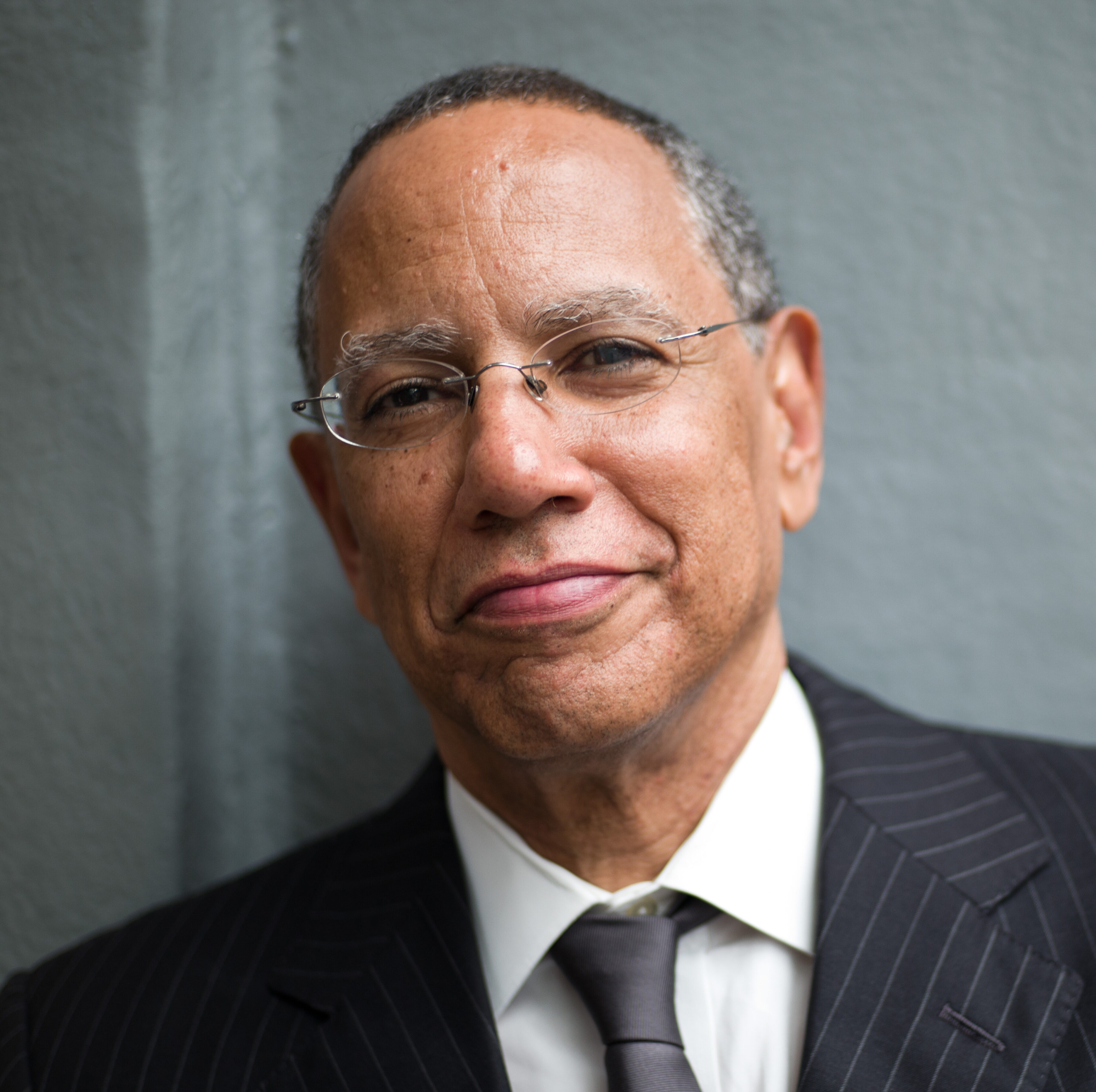
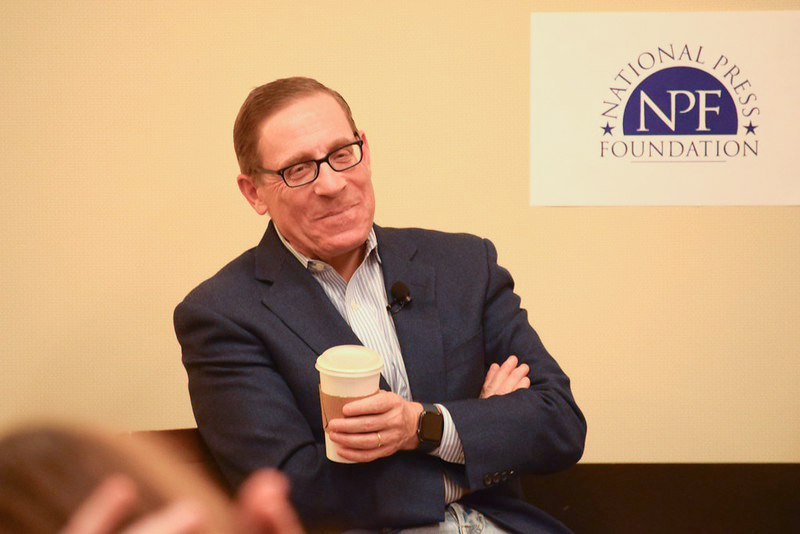
As journalism is buffeted by persistent budget cuts and sagging public confidence, a commitment to original reporting should be non-negotiable, former New York Times executive editor Dean Baquet told the National Press Foundation’s Paul Miller Washington Reporting Fellowship class.
“The most powerful part of journalism is reporting,” Baquet said. “Everything else is secondary … I’m not just talking about the kind of reporting I grew up doing. I’m talking about gathering information, talking to people with empathy, in whatever fashion is yours to produce it and make it available to people. But finding out things that you don’t understand and wrestling with questions where you don’t know the answers, to me, that’s the most important thing.”
Yet Baquet said his “biggest concern” is that the pursuit of the truth could be threatened by the industry’s decline.
“Some of it is money; some of it, frankly, is I think that we have started to reward… a kind of snarkiness and a kind of insidery stuff that I don’t think is as valuable,” said Baquet whose staff won 18 Pulitzer Prizes during his tenure at the Times. “I hope that as we rebuild journalism for the future, which I find exciting, that we hold on to that point [on reporting]. … Everything can change and lots should change, but that’s the North Star that shouldn’t change.”
Rethinking how journalism works
At the same time, Baquet said he looked forward to the stewardship of a new generation of journalists.
“I think what I want to say is how jealous I am of you all,” Baquet said. “And the reason I’m jealous is because I do think that most generations have only gotten to tinker with journalism. My generation tinkered, every generation tinkers. You all get to do more than tinker. You all get to actually rethink how it works.”
Rethinking the future of journalism also will require more transparency.
“I grew up in the print era when we barely thought about readers,” Baquet said. “I literally remember a reader would call up on the phone when I was a 20-year-old reporter for the New Orleans paper and it was like, ‘Why are you bothering me?’ And now a reader would call up and you would take out your pen. And I think we’re going to have to tell people how we work, we’re going to tell people when we make mistakes, we’re just going to have to be much more transparent about how we do the work.”
Access the full transcript here.