Inside a darkened exhibit space, along the marbled concourse of the Library of Congress’s ornate Thomas Jefferson Building, is a modest yet eye-popping collection.
The worn leather wallet, linen handkerchief, wire-rim spectacles, lens polisher, pocket knife, watch fob, newspaper clippings and a five-dollar Confederate note were drawn from the pockets of Abraham Lincoln following the president’s 1865 assassination at Ford’s Theatre in Washington.
The strikingly ordinary items are a dramatic reminder that the largest library in the world is much more than bound volumes of words.
For three straight years, the Library of Congress has welcomed the National Press Foundation’s Paul Miller Washington Reporting Fellowship classes to explore its vast archives of maps, photographs, films, newspapers, books and other iconic artifacts.
Effective tools for journalists
The collections, including an invaluable repository of fire insurance maps depicting block-by-block snapshots of thousands of cities, have proved invaluable for researchers and investigative reporters seeking to identify prior living conditions and environmental hazards in commercial and residential areas, dating back decades.
Produced by the Sanborn Map Company, the surveys were developed to help fire insurance agents assess risk, but they have continued to offer unmatched historic descriptions of early urban development.
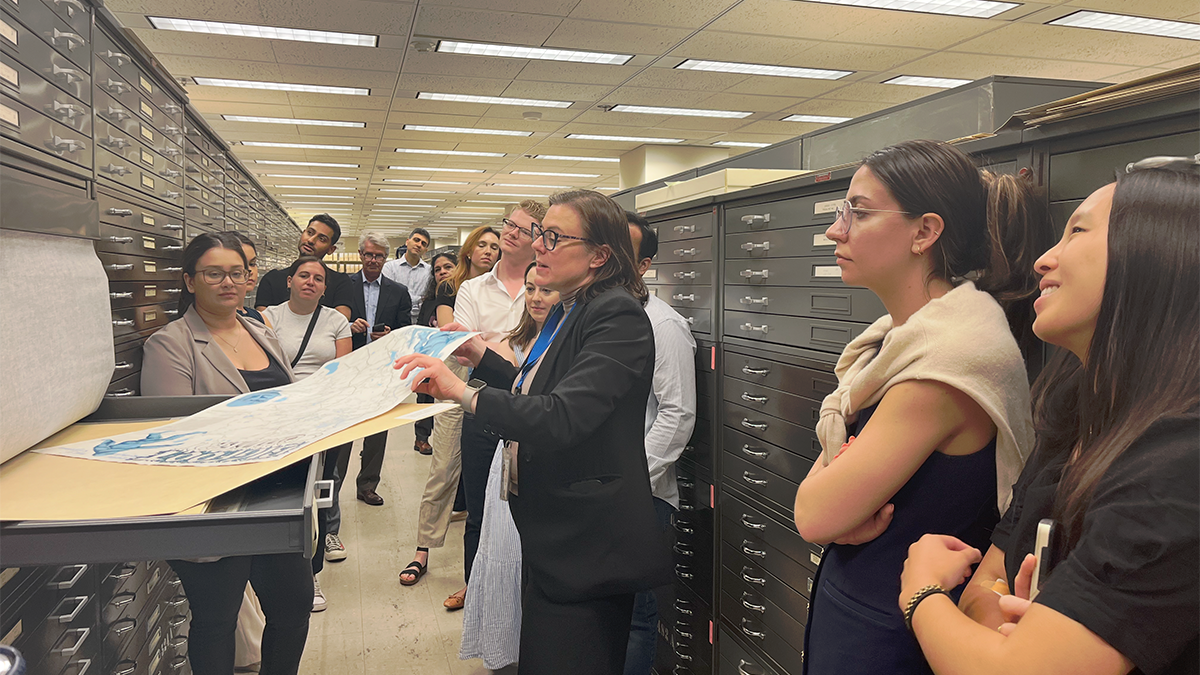
Similar treasures are held in the library’s vast photograph and film divisions.
A century of valuable research
The Congressional Research Service, meanwhile, serves as the non-partisan research arm for Congress, providing public policy and legal analysis to lawmakers, congressional committees and their staffs.
For decades, the CRS’ work has helped inform the public’s understanding of issues beyond Washington, from China’s economic rise and life expectancy across the United States to the cost of maintaining border fencing, federal sentences for drug offenders and interpretations of the Constitution.
Carla Hayden, the institution’s most recent chief librarian, has described the library complex as the “national symbol of knowledge.”
Nominated by then-President Obama in 2016, Hayden served as the first woman and first African American in the post before her abrupt dismissal earlier this month by President Trump.
Reaching beyond Washington
Yet Hayden’s ambitious vision for the institution endures.
“I recently had the opportunity to view one of the latest Library of Congress acquisitions – the Rosa Parks Collection – which includes her
family Bible, the Bible she carried in her purse, and her handwritten letters,” Hayden said during her 2016 swearing-in ceremony. “In one such letter she reflects on her Dec. 1, 1955, arrest, writing, ‘I had been pushed around all my life and felt at this moment that I couldn’t take it anymore.’ That letter – and all of her papers – are now digitized and available online. So anyone, anywhere can read her words in her own handwriting.
“Read them in the classrooms of Racine, Wisconsin, in a small library on a reservation in New Mexico, and even in the library of a young girl in Baltimore, looking around as her city is in turmoil. That is a real public service.”