Few journalists have faced tougher assignments over the past 18 months than reporters tracking global economic upheaval — outside of those covering armed conflicts.
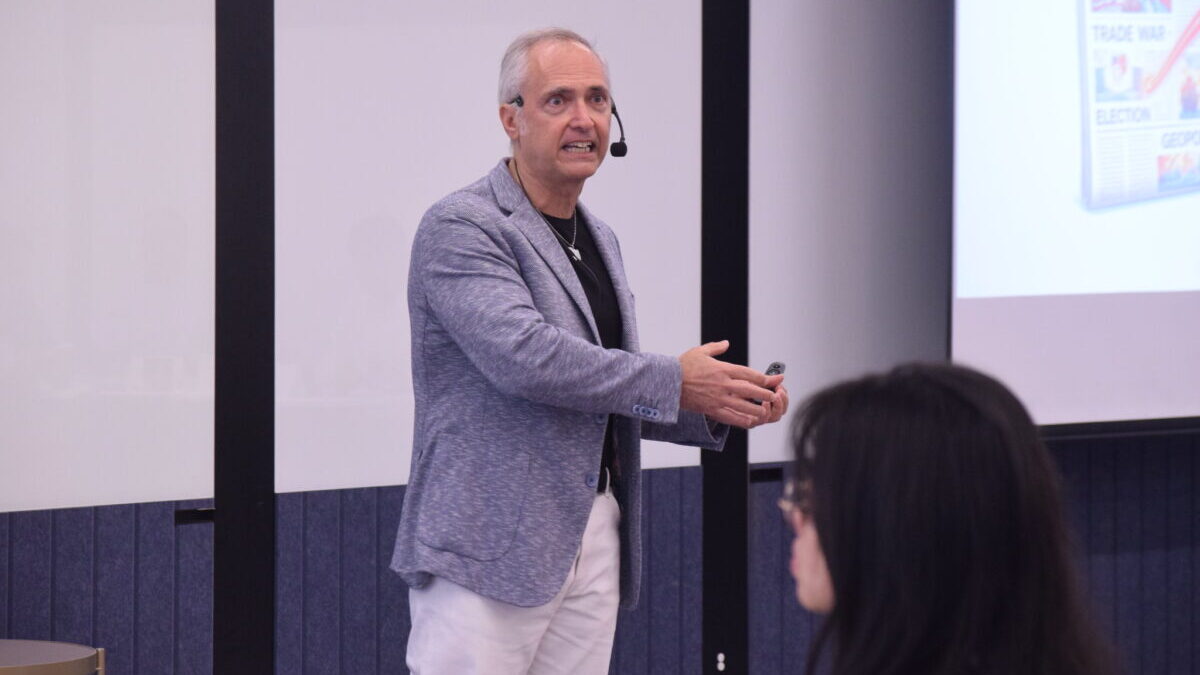
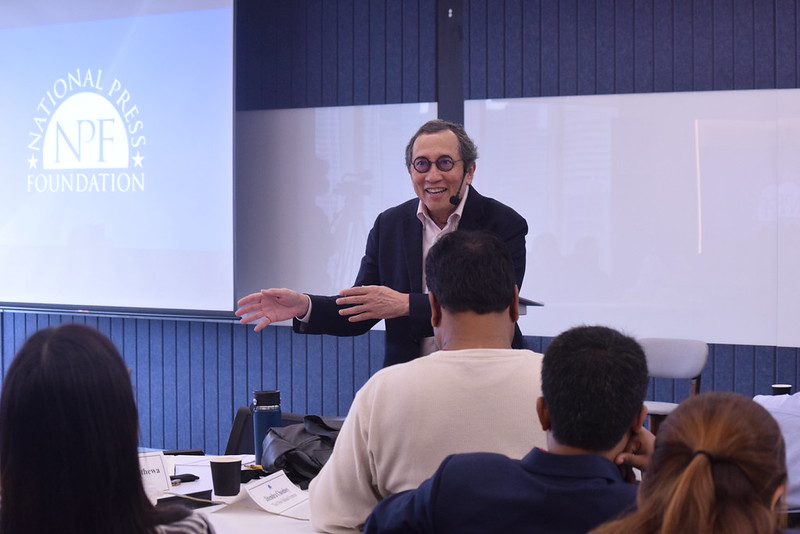
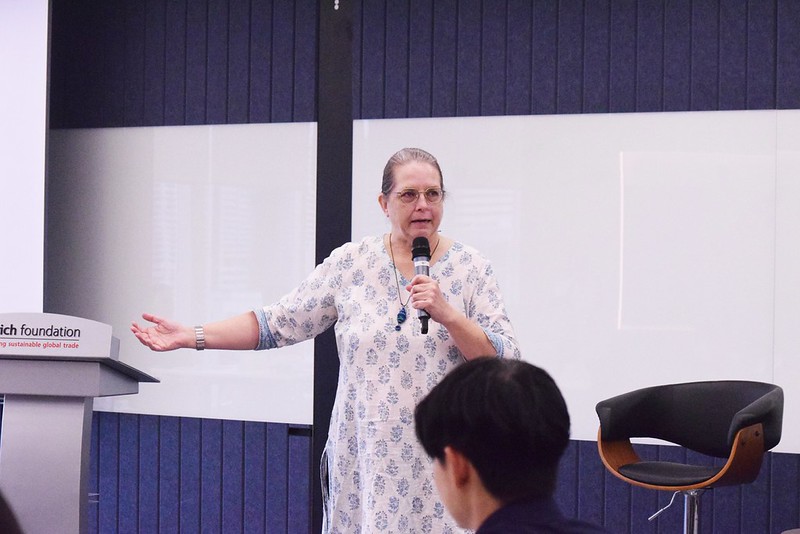
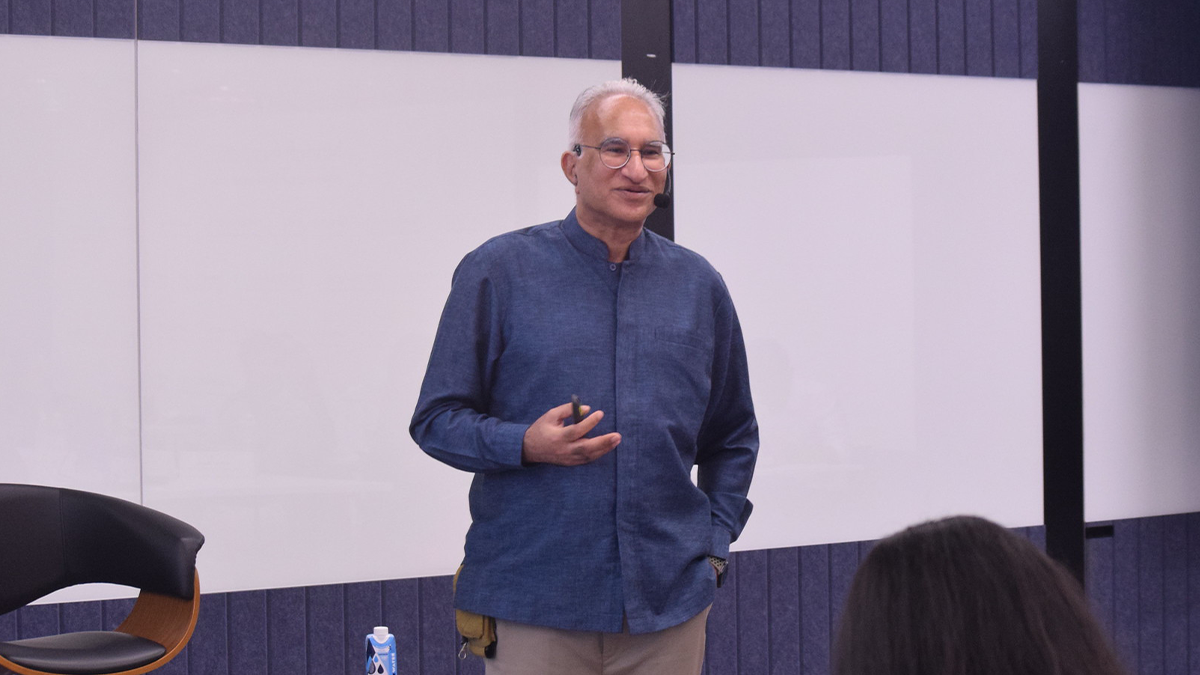
Three veteran journalists — Ruairí Arrieta-Kenna, senior editor for TIME; Elaine Kurtenbach, Asia business editor for the Associated Press; and Peter Landers, The Wall Street Journal’s Asia business, finance and economics editor — shared strategies for strong economic and trade reporting with 25 reporters and editors from more than a dozen Asian countries attending the International Trade Reporting Fellowship in Singapore.
Demand for quality economic reporting on global trade has never been higher, although the average news consumer is generally going to engage with just one or two stories that really grab them.
“What they are looking for increasingly is our analysis,” said Landers of The Wall Street Journal. “They still want scoops if we can get them, but they also want us to interpret what the news means for them or have the story told through individuals, people or companies that are experiencing the great changes that we’ve seen in the last 18 months.”
Demand for information forces hard choices
“What we don’t cover is a very difficult decision, but there are so many stories now to tell that we have to pick and choose which ones we want to tell for the readers,” TIME’s Arrieta-Kenna said. Still, the range of topics has widened.
“There’s greater awareness of the supply chains that link everything together, which means that you can do reporting on topics that are not strictly economic or trade,” Kurtenbach of the AP explained. “You’re talking human rights, you’re talking illegal logging, environmental issues, all of these things. Well, they matter in a trade sense as well. So, there are links in most cases to international trade and so it’s drawing the links together that can make your stories relevant to the wider audience.”
Human stories remain the anchor. “You’ve got to report about the trade deals in many aspects, but it’s the stories about people that readers will remember and be drawn to,” Kurtenbach said.
Cultivating strong sources key to storytelling
“It’s not just about finding the source, whether looking online for someone who can speak to the issue that you’re reporting on at that moment, or doing the on-the-ground reporting to find someone who can talk about the story you’re writing then, but about maintaining them when they’re not needed by you at that moment, but… might be in the future,” Arrieta-Kenna said.
He encourages reporters to check in with sources regularly, even if they’re not needed at that time, since “they can help give you ideas about what you might be missing…”
But sources are growing reluctant to speak on the record. A premature leak can derail a merger; a critical story can invite a SLAPP lawsuit–baseless legal actions designed to intimidate or silence critics. The panel also discussed the rare situations when they’d allow an anonymous source.
“At AP, we take the issue of anonymity extremely seriously,” Kurtenbach said. “There’s some things that you can’t get any other way and we will discuss them and see if it’s justified and, of course, we want to have multiple sources for such information because you’re not going to go with a single source.”
Arrieta-Kenna said the bar is higher for institutional sources.
“On the editing side, you really don’t ever see many justifications for [anonymity], especially if it’s coming from a company or a government official. But, if it’s coming from someone in delicate situations — we’ve covered shootings where if you’re speaking to a victim’s family— you’d want to give them anonymity to speak” candidly.
Landers agrees that getting corporate sources to talk is a persistent problem in Asia.
“What troubles me is corporations often taking that stance and not answering questions or being unnecessarily disputatious and difficult because we’re talking listed corporations that employ tens of thousands, hundreds of thousands of people. They make products that we all use or maybe make materials for products that we all use. I feel they do have some public responsibility to deal with journalists. Unfortunately, some of them don’t see it the way I do and feel that they can just ignore publications like ours… I’m not sure what the answer is except to keep trying.”
Making the work more accessible
While journalists are feeling some pressure to create shorter, easily scanned pieces, the panel advocated for creating a mix of formats.
“There is this drive among a lot of publications to give shorter, more digestible content for shorter attention spans, but I don’t think that negates the necessity to have the longer pieces, too, Arrieta-Kenna said. “All the prize-winning investigative pieces are not 300 words; you can’t reveal anything new in that little of a space.”
He referred to TIME’s print magazine as a model: every cover story and feature runs several pages, meant to hold readers for 20 minutes at a time.
“We also do short stuff because that might get the mass audience, but we need to get the sustained audience, the subscribers who will stay coming to read one or two stories a week to sit down with for 20 minutes and actually engage with that. I think there is value there.”
Access the full transcript here.
This fellowship is part of an ongoing program of journalism training and awards for trade coverage sponsored by the Hinrich Foundation. The National Press Foundation is solely responsible for the content. Resources and transcripts are available to journalists worldwide.