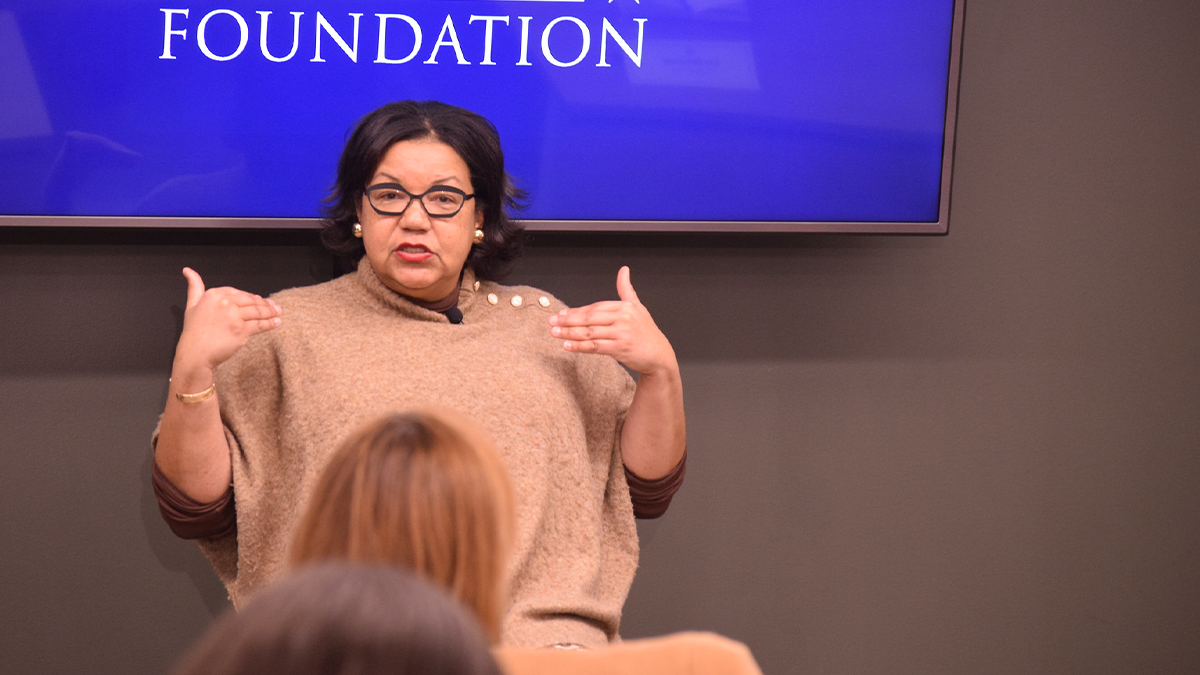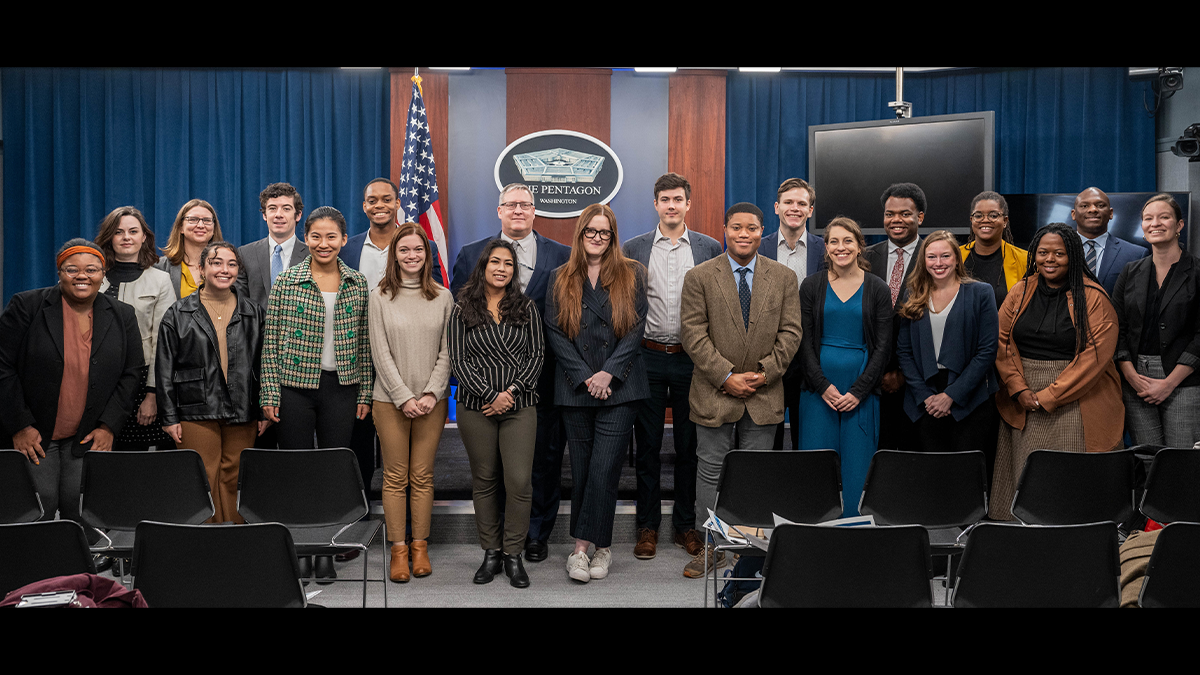
A “crisis of institutional legitimacy” across the government is undermining the value of public service at a consequential time for American democracy, former national security official George Little told the National Press Foundation’s Paul Miller Washington Reporting Fellowship class.
At the same time, the Trump administration’s deep reductions across the federal workforce are “potentially very harmful” to the national security mission, said Little, a former chief spokesperson at the CIA and Defense Department.
“I do think that there is a crisis of institutional legitimacy … at large,” Little said. “It’s not just about (the Pentagon) and CIA and others. I think for whatever reason the American people have lost a lot of trust in government.”
Mass dismissals don’t ‘feel rational’
Mass dismissals and leadership purges at key agencies, part of a series of government actions in the name of government efficiency, don’t “feel particularly rational,” Little said.
“I think it’s a huge problem; I think that people in my former buildings are feeling shocked,” he said. “There’s a lot of uncertainty … a lot of worry about respect for their mission overall. I do worry about the long-term effects of taking a wrecking ball to the federal workforce in this kind of manner.
“I understand the politics of this, you know the administration has a point of view on on how to roll this out, but I think it’s been done in a way that has been … potentially very harmful and cruel in some cases.”
Role of free press is ‘precious’
During unsettling times, Little said, the role of the press in democracy becomes more vital.
“I really do believe that even in times of great change and dynamism – and even turmoil – I think that one of the most precious things we have about American society is the press,” he said. “I thought that when I was in government even during the tough times and the tough moments with reporters. If we don’t have this as a staple of our democracy then I don’t know what we really have.”
Young reporters, ‘come prepared’
Little urged reporters to “come prepared” when seeking information from government officials. That requires not only understanding the subject matter but the person on the other side of the desk.
“You need to come with a point of view or to be informed,” he said. “I mean any reporter, but especially if you’re a younger reporter … it’s like being prepared for your job interview or a meeting with your boss. If you’re prepared, that goes a long way and will, I think, yield over time a much better relationship.
“If you play the young (reporter) card, it doesn’t always work. You know: ‘I’m new and, you know, can you help me out?’ I think be confident, own it. You’re smart people; you know how to do research. You know how to be informed.”
Access the full transcript.



 Reload document
 Open in new tab