The moment rapper and singer/songwriter Andre Lauren Benjamin, aka Andre 3000 of the rap group Outkast, claimed the mic at the 1995 Source Awards, a tectonic shift occurred in the world of hip-hop music.
The group had beat out dominant East Coast performers like Sean “Diddy” Combs and West Coast titans like Snoop Dogg. But they were ready for the backlash that came in the form of some booing from the audience. “I’m tired of folks, you know what I’m saying, close-minded folks,” Benjamin said while accepting the Best New Artist prize. “We got a demo tape and don’t nobody want to hear it, but it’s like the South got something to say.”
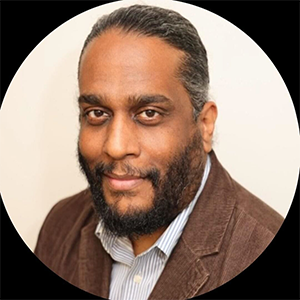
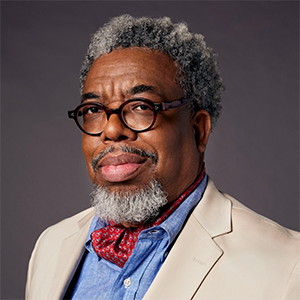
That bold statement helped ignite the vision of Atlanta-Journal Constitution journalists Ernie Suggs and Ryon Horne. Along with Horne’s brother Tyson and DeAsia Paige—also journalists with the AJC—they co-produced the documentary film, “The South Got Something to Say,” (TSGSS) to mark the 50th anniversary of the worldwide musical phenomenon of hip-hop music. Though the genre was born in the Bronx, New York, the AJC documentary amplifies one of the vibrant regional offshoots that have emerged over the past five decades.
On September 9, Horne and Suggs shared insights into the development of TSGSS with NPF Widening the Pipeline fellows. Decades of newsroom experience as writers and multimedia producers paved the way for a solid pitch to AJC newsroom managers in April of 2023 about why the film should be made. The clock was running out on the official anniversary, and other creators had already begun projects. The team had to move quickly.
“Obviously, we were coming in towards the middle, almost the first quarter of the year was already gone, and a lot of these organizations had already started, been working on this from the summer previous,” said Suggs. “And we had a new publisher, a new editor-in-chief, Leroy Chapman, who was the first African-American editor of the newspaper in 155 years. And we had Andrew Morris who came to us from CNN as the new publisher and president of the organization.”
The team decided that the way to stand out from the crowd was to focus exclusively on Atlanta artists, Suggs said. “We had to focus on what story, how this story will be told in a short amount of time with the people we could get to, knowing that we’re going into the summer. And so we presented that idea to the executives. And in that meeting, they didn’t need to think it over. In that meeting, they green-lit it. And it was like, ‘Go ahead, let’s see what you can do.’ We started right away. We hit the ground running a little bit.” The film was released on Nov. 4, 2023.
Like Suggs, Horne believes much of the success of the documentary is a tribute to the media organization where it was developed. “I do think the Atlanta Journal-Constitution has made an intentional effort based on the fact of where we are in the city, as this Black Mecca, if you will, to have done a pretty good job in promoting and enhancing the careers of Black men and women. And you go on our 4:30 call every day, our 8:00 call every day, it’s run by Black men and Black women every day. And no one thinks about that, no one flinches about that.”
As the TSGSS team travels the country to promote the documentary, they also have to navigate breaking news responsibilities while working on other projects at the AJC. But Suggs says that’s just part of his strategy for longevity in an industry that’s evolving at hyper-speed.
“Ten years ago, that was during a time when we were laying people off and people were leaving the industry and things were changing quick in the industry. So I was like, well, what am I going to do to kind of make myself relevant? So I said, ‘I’m going to make this Facebook page. I’m going to start this Black History Month series’ to kind of figure out a different way in which we can disseminate stories and for me to get more clicks on my stories.”
Horne suggests another critical strategy. “I think it’s important to know that your voice is important, and if we continue to focus on the root of what we’re doing, which is journalism, I feel that journalism will never die. It is the ways in which we present it that come and go. We are probably on the last lap of what print means to this country. But I think as the study of print, the understanding of journalism and the understanding of how to get the story and what to do and the ethics of it and the dignity behind it, I think none of that will ever die.”
Access the full transcript here.
The Widening the Pipeline Fellowship is sponsored by the Evelyn Y. Davis Foundation and Lenovo. NPF is solely responsible for the content.