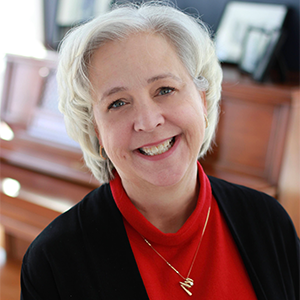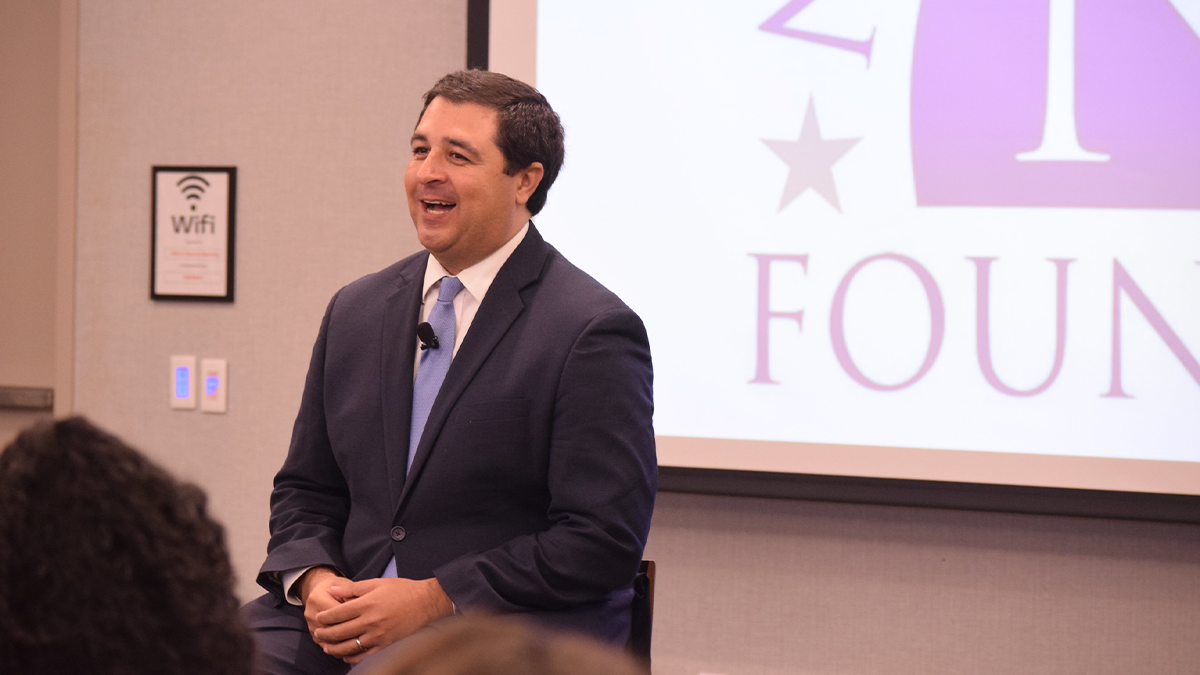
Public confidence in journalism requires a new commitment to transparency at a time when the credibility of government and political reporting stands trial every day, Kathleen Culver, director of the University of Wisconsin-Madison School of Journalism and Mass Communication, said in a wide-ranging discussion of journalism ethics.
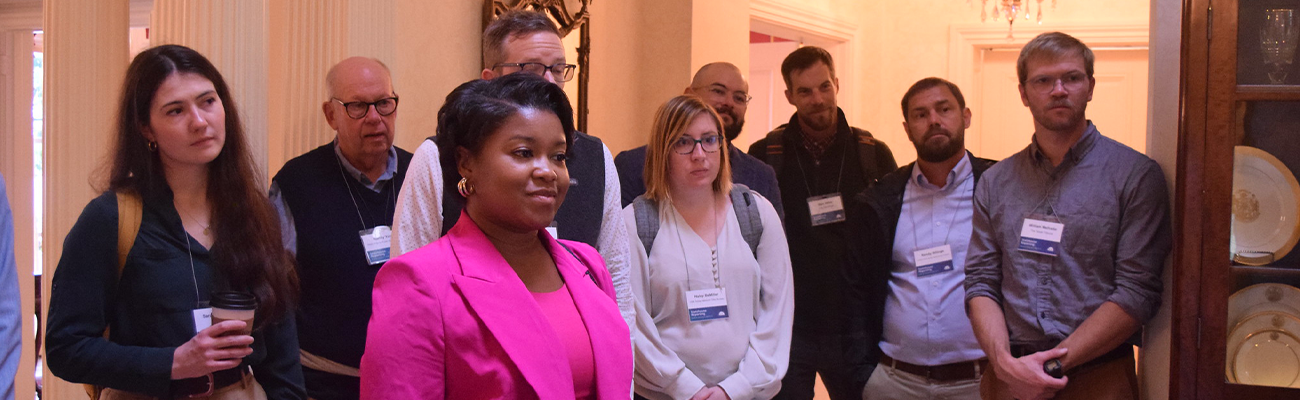
Speaking to the National Press Foundation’s Statehouse Reporting fellows gathered in Madison, Wisconsin, Culver urged reporters to root out potential bias by acknowledging that objectivity is not possible.
“Objectivity is never possible,” Culver said. “Objectivity in a person does not exist; it’s a false construct. We’re not objective. We have to use objective methods to get to fair reporting.”
Too often, Culver said, conversations about journalism ethics take place in the “walled garden” of our own newsrooms.
“It’s about how we reason through the impact of our decisions on the people who are affected by them and how we would justify that to them,” Culver said.
Ethics, according to Culver.
“I think the first thing I would say about how we go about our work is to bring courage to that work.
“These are really hard times to be a journalist. There’s toxic social media, there are political leaders and other influencers attacking the work that we do, and I think it can become very easy to lose sight or very easy to get down about that so that the haters come to dominate. So, I think one of the obligations that we have to the different publics that we serve is to bring that courage to it…
“I mean, I never thought of journalism as a job. I didn’t do it very long. I never thought of it as a job. I thought of it as a calling. I think of my role in education now as a calling in the same way. You wouldn’t spend as many hours a day as you spend and I spend for the little amount of money that you make and I make if you didn’t see it as a calling. So I think bringing that courage to the job is so important.”
“We’ve got to be out there. And I think one of the concerns that I have when I’m talking with journalists about why you do or do not engage with the community, it’s often that code of ethics, independence thing — that I have to be independent. So, I can’t serve on a community board. I can’t go and engage in these ways…
“I think that it’s a good principle for us to remember, but we also have to remember the principles of accountability and transparency and how can we achieve those.”
Why it matters.
“I think it’s a bit of a problem to say to people we are objective because they know we’re not. We’re just not. We do things like, you can’t put a political sign in your yard, but you can vote. People outside of newsrooms are like, what? What’s the ding-dong difference?”
Go to the transcript.
This program is funded by Arnold Ventures. NPF is solely responsible for the content.