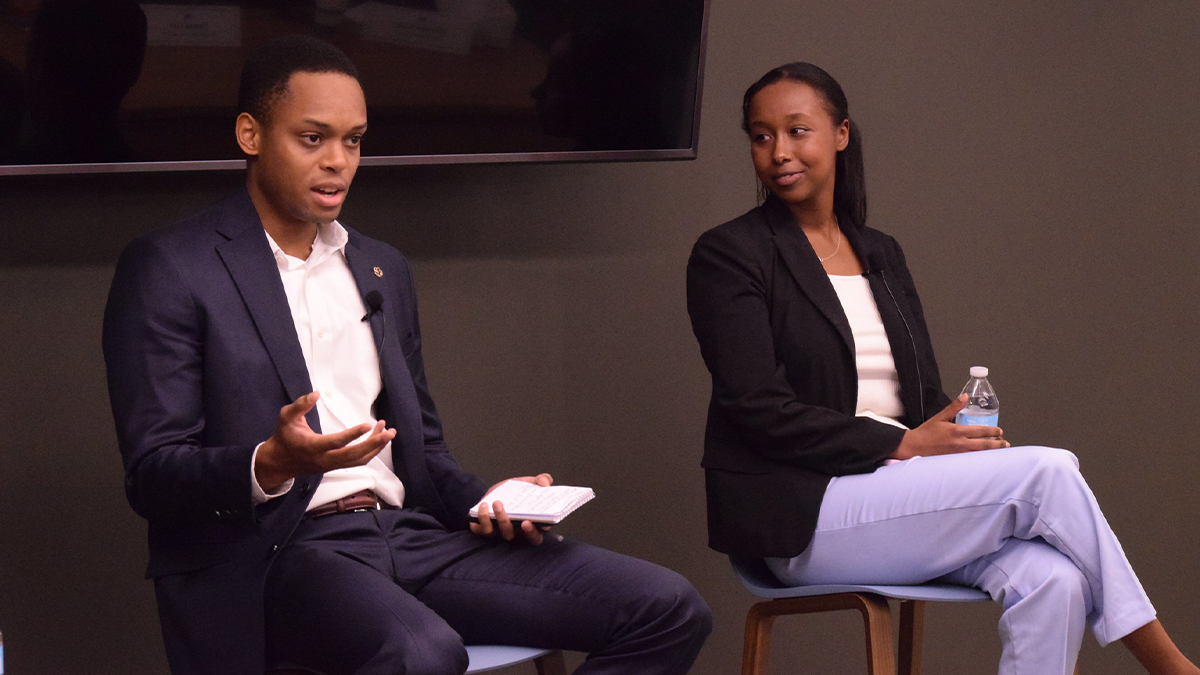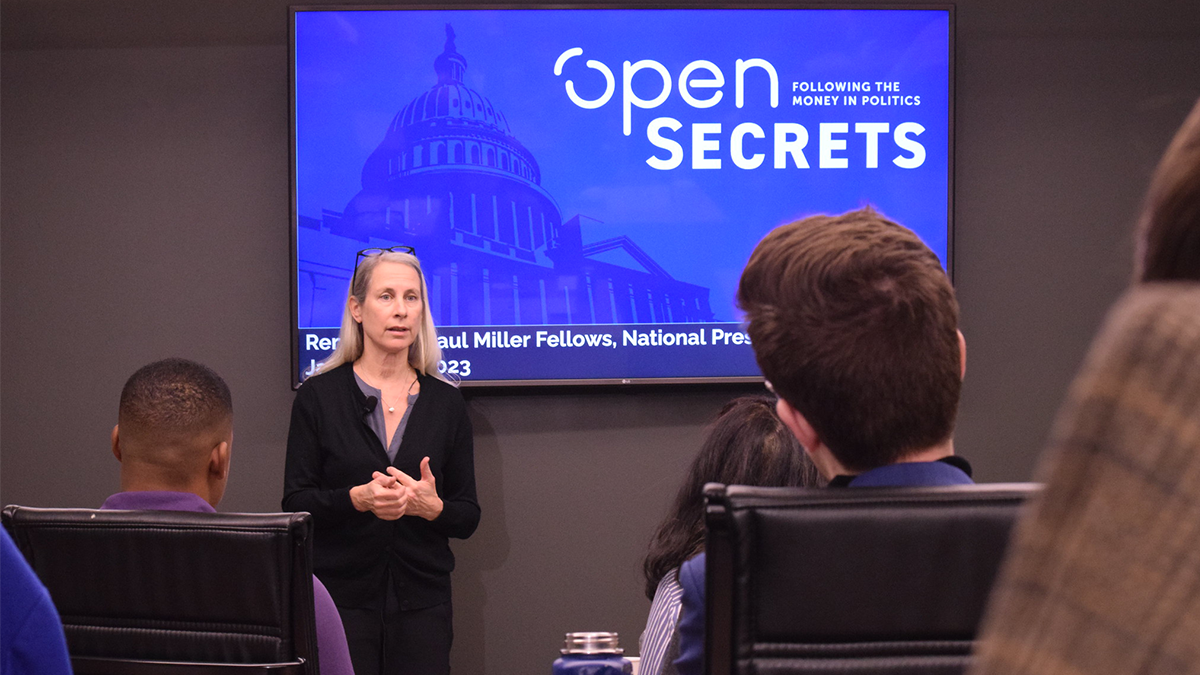
For election administrators, practices that were once “routine” are now under scrutiny. Liz Avore of the Voting Rights Lab discussed how changing election policies and increased criminalization of election officials affect election integrity across states [Transcript | Video].
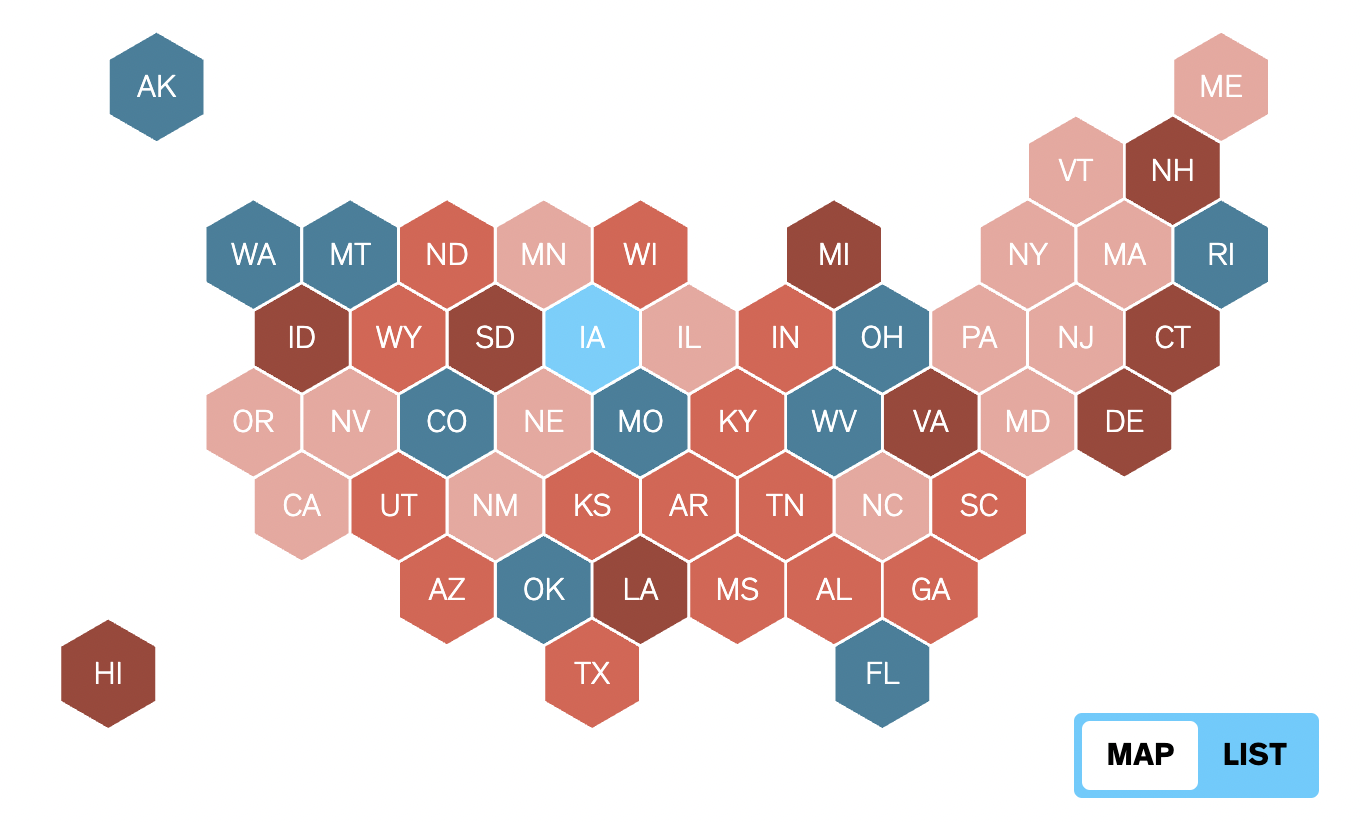
Avore walked through how to use the Voting Rights Lab State Voting Rights Tracker,
3 takeaways:
➀ States turn their attention toward election administrators. Legislation addressing “criminalization of elections” is on the rise. Some states are creating law enforcement groups to investigate election crimes, especially against elected officials. States are also increasing the penalties for election crimes, which can affect election officials, too. “It was pretty unprecedented,” she said. “We haven’t seen that type of legislation in the past that looked to interfere with the actual administration of elections.”
Avore said election officials primarily do bureaucratic work “out of the spotlight.” “These folks, many of them have just decades of experience doing a very technical thing and are now getting threats, not just from members of the public but from their own state legislators,” she said. She said in some cases, election administrators are threatened with “felony-level penalties” for what was previously considered routine protocol.
She said in the 2020 election, states began introducing legislation interfering with election administration, not just voter access. For instance, some legislation permitted partisan election audits, and other legislation criminalized sending mail-in ballots to voters who do not request them.
“This is election interference,” Avore said.
As election administrators leave the industry, they take their experience with them. Election administration requires “institutional knowledge” that can’t immediately be taught. As new administrators replace those leaving the industry, key knowledge is left behind, creating vulnerability. “At best, we’re getting folks who are inexperienced, and at worst, we might be getting folks who have a partisan objective in those jobs,” Avore said.
Some states have explicitly instituted protections for election officials in new legislation, installing requirements to protect election officials’ personal information. “We’ve also seen states introducing legislation that makes it clear that it’s a crime to threaten or harass election officials and to provide them protection that way,” Avore said.
➁ Some states are targeting voter ID. Ohio recently stopped accepting student identification as acceptable voter ID, and Idaho proposed similar legislation. The North Carolina Supreme Court struck down a racially discriminatory voter ID law, but it has agreed to rehear the case. “It’s a bit unusual for it to be re-hearing cases for which there are not new facts and that were just decided a couple months ago,” Avore said.
➂ Where you live determines how easy it is to vote. Some states have created legislation making it more difficult for voters to request absentee ballots, but nationally, trends are “mixed.” Some states have expanded voters’ access to mail-in ballot drop boxes, while others have restricted it. “It is concerning to me to see states headed in such different directions when it comes to ballot access because it means that your Zip Code determines the level of access that you have,” Avore said. “And I think that is problematic. That concerns me as a concept.”
NPF is solely responsible for the content.



 Reload document
 Open in new tab