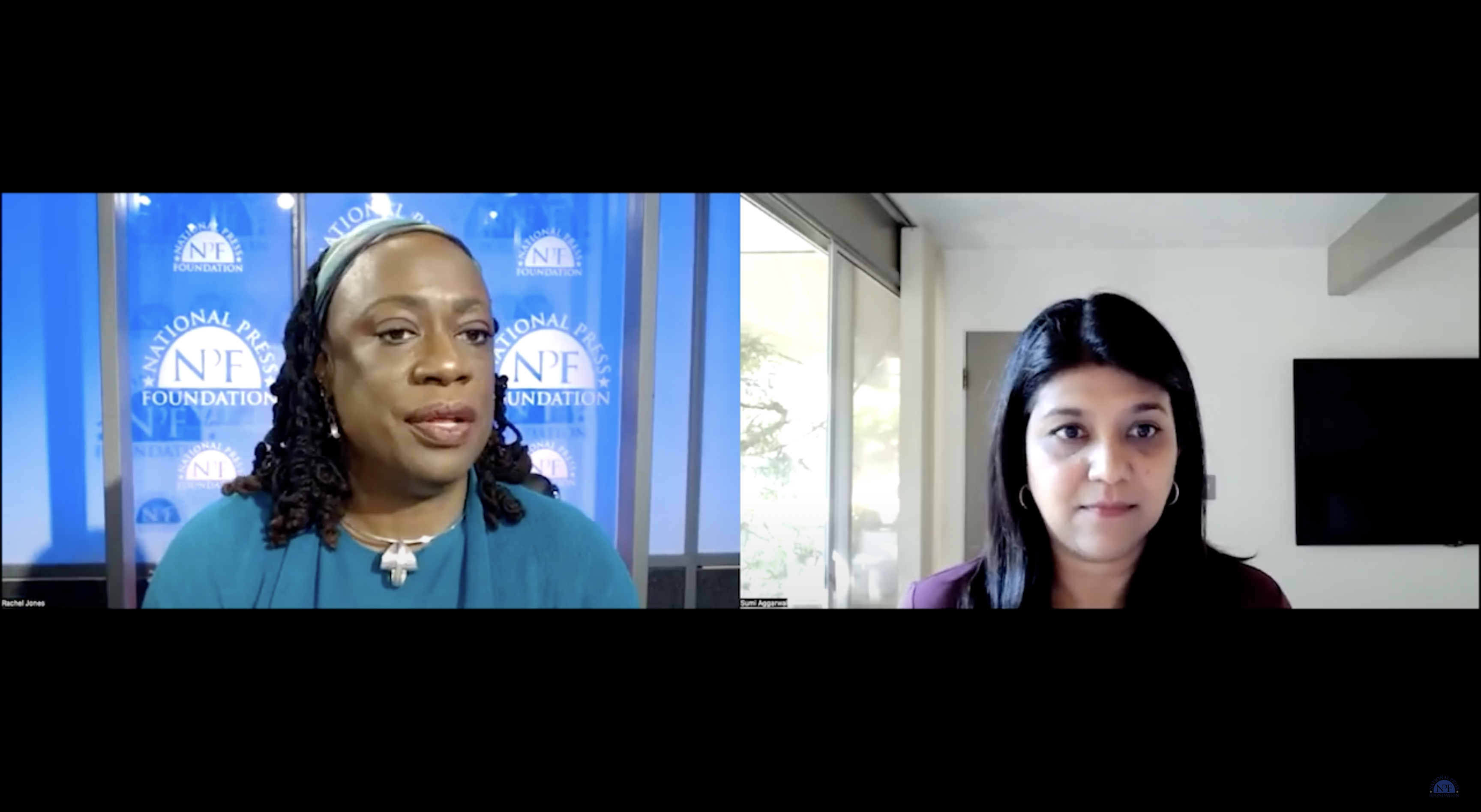
After decades of imbalanced representation, newsroom leadership is diversifying. However, American newsrooms are still more white, especially in leadership positions, than the communities they cover. Emma Carew Grovum, the director of careers and culture for The Marshall Project and the co-founder of the “Sincerely, Leaders of Color” newsletter offers advice on how journalists of color can center their lived experience as newsroom managers. [Transcript | Video]
4 takeaways:
➀ It’s okay to show genuine personality.
“You are not hired by your news organization to represent every person who’s ever looked like you or ever had your similar life experience,” Carew Grovum said. Journalists of color often feel they need to switch between an identity acceptable to white coworkers and supervisors and an identity for everyone else. “There’s not going to be me for white people, me for leadership people, me for people that I’m managing…you get me,” Carew Grovum said.
In some cases, this may mean losing out on opportunities, but those opportunities would likely be unproductive for both parties. “There are lots of people I won’t work with because they don’t have shared values, because they’re still trying to be convinced that diversity matters or inclusion is important and I’m not here to be that friend for them,” Carew Grovum said. “I’m here to push them into the radical space of being less racist, and that is often very uncomfortable for people.”
➁ Time is valuable.
Carew Grovum said the Marshall Project has “a 30-minute rule,” to help avoid spending too much time on a doomed project. “You can spin your wheels and investigate something for 30 minutes, but after that, you’ve got to ask for help,” Carew Grovum said. After 30 minutes, either delegate the project to someone else or abandon the project. If you’re not willing to waste someone else’s time on it, you shouldn’t either.
Breaking large projects into achievable steps that can be accomplished at regular intervals across a long period of time can help accomplish goals.
➂ Leadership doesn’t have to mean management.
Management has to do with organizing schedules and doing administrative work, while “leadership is much more about citizenry of the newsroom at the organization, about vision, about coaching and mentorship,” Carew Grovum said. It’s possible to find leadership roles that are not typical, managerial roles.
➃ Find an identity outside journalistic work.
“Find a hobby,” Carew Grovum said. “Find something that makes you really happy outside of journalism and outside of being a journalist,” Carew Grovum said early in her career, she struggled with self-esteem issues after losing her first journalism job. “I felt like my whole soul had been ripped apart,” she said. “I felt like I was nothing left as a human being, and it’s devastating. I wanted very much to never be in those shoes again.”
She said she developed identities outside her career and prioritized relationships. “The most important people in my early career were the ones who reminded me that finding someone to fall in love with and holding onto them tightly was more important than any scoop or story would ever be,” Carew Grovum said.
The Widening the Pipeline Fellowship is sponsored by the Evelyn Y. Davis Foundation, Bayer, J&J and Lenovo. NPF is solely responsible for the content.



 Reload document
 Open in new tab