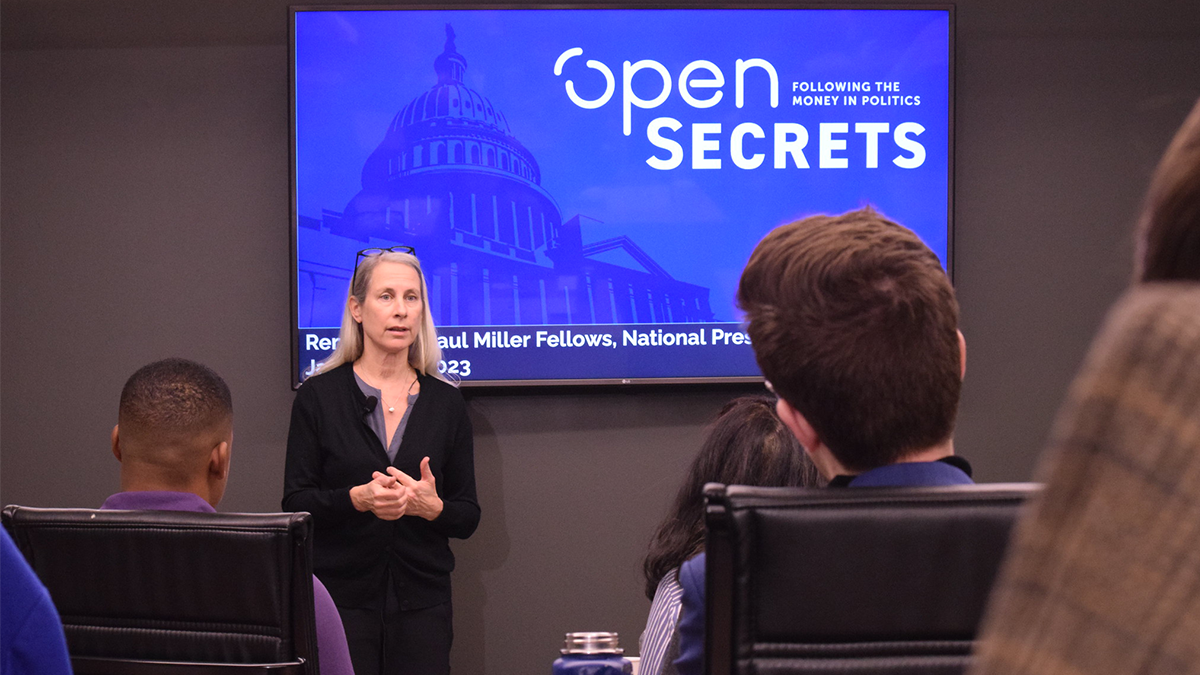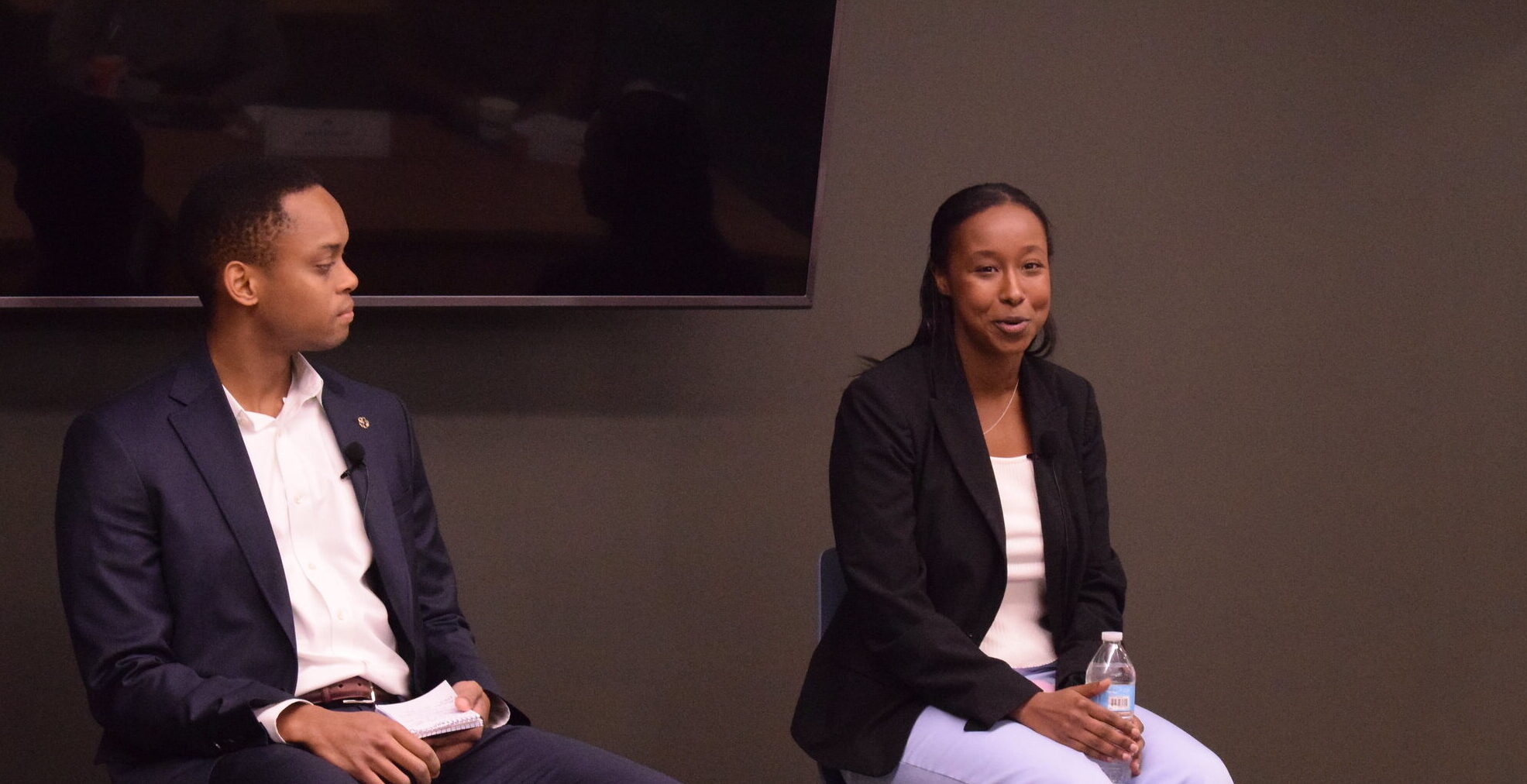
The 2016, 2020 and 2022 elections have launched Georgia into the national spotlight. Matthew Brown, a democracy reporter for the Washington Post, and Lalee Ibssa, a congressional reporter for ABC News, both of whom were long-term embeds in Georgia, briefed NPF’s Paul Miller fellows how they approached covering the critical state. [Transcript | Video]
3 takeaways
➀ Avoiding ‘parachute journalism’ as a national reporter. When journalists at national outlets enter spaces regularly attended by local reporters, they should approach them with respect. Brown, a Georgia native, and Ibssa from Florida, both moved to and lived in Georgia.
Try to forge alliances with local reporters, Ibssa said. “Break that barrier.” She advised national reporters to remember that local reporters care deeply about the communities they cover. “The laws that we’re talking about, the candidates that we’re talking about, there’s also an even deeper personal connection to them.”
How to make a local story national? Find characters, Ibssa said. “You find people, like poll workers, like election officials, who can talk to you about the larger part of the story.”
National reporters should also remember their mission is different from the local beat. “You need to be really disciplined about ignoring all of the little minutiae that everyone’s obsessed with,” Brown said. National journalists should find stories with implications for a wide audience.
Take a step back, Ibssa suggested. When Lindsey Graham testified in front of the grand jury and then immediately went to go campaign with Herschel Walker, don’t pitch a story that’s just on Graham testifying. “I’m going to take a step back and realize the context of it all that this investigation plays in the politics of Georgia.”
➁ The state of voting rights. You can’t cover any state’s politics without knowing their election laws. The heartbeat of Georgia is voting rights, Ibssa said, and it’s become increasingly polarized.
“[Sen. Raphael] Warnock didn’t really talk about voting rights on the trail, but at his victory party, the first thing out of his mouth was that voter suppression is real,” Brown said. “I thought that was a very interesting political dynamic that he had.”
Although Georgia still allows voters to use ballot drop boxes, they’re now logistically difficult to use.
“Rather than get rid of all of them, they’re now reduced the number of them that are allowed per county,” Brown said. “They all have to be with a voting center under 24-hour surveillance with a guard, and only accessible from 9 to 5 at a polling place.”
You can review current and proposed laws through the Voting Rights Lab as well as on LexisNexis U.S. Voting Laws & Legislation Center, which allows you to see a “chance of passage” rating for proposed legislation.
➂ America turns toward the South. With Georgia deciding the Senate, South Carolina moving its primary earlier and populations shifting South and West, politics in Southern states are getting more attention, which some say is overdue.
“There’s a lot of cool dynamics that happen in the South, where there’s a really interesting intersection between politics and culture, especially in Georgia, Ibssa said. “Georgia has cemented itself as this- … candidate state, where Georgians really care about hearing from a candidate and what a candidate is willing to do to reach across the aisle,” Ibssa said. Georgians are increasingly becoming split-ticket voters, too. “That’s really becoming the make or break for a lot of these candidates.”
NPF is solely responsible for the content.