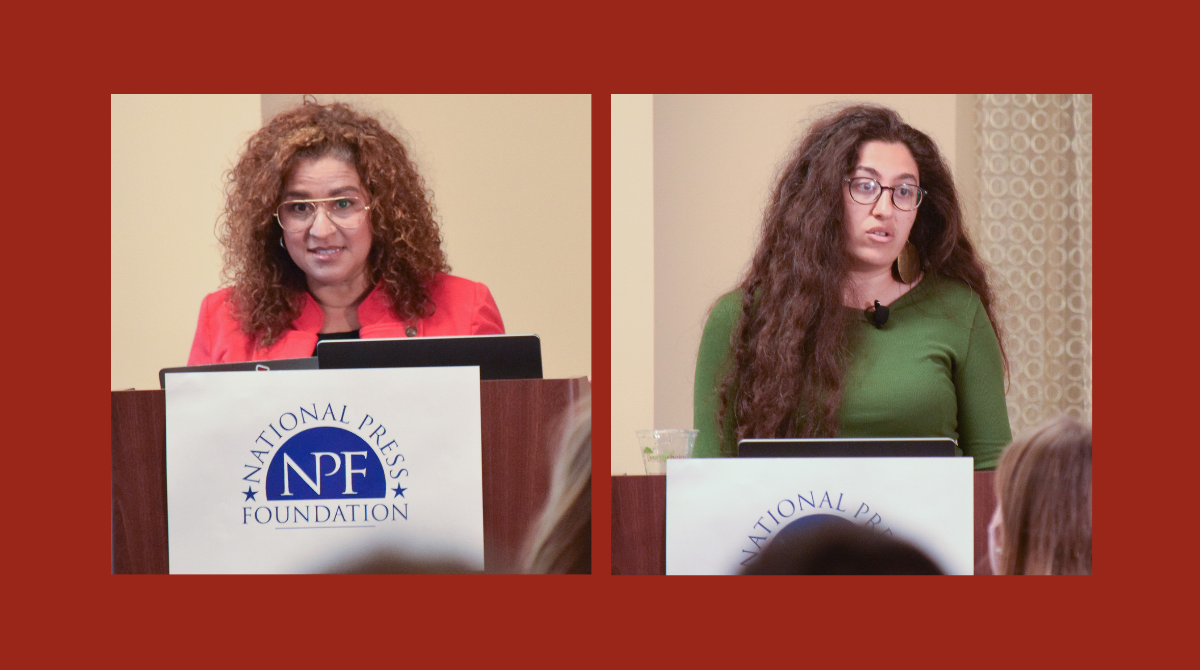
The term “democracy” suggests a society where all or most voices are heard and where participation in the public realm is possible. But when women and people of color are blocked from public service, that goal recedes. The Center for Democracy and Technology‘s latest research finds that misinformation, disinformation, and online gender-based violence are all increasing for women of color who run for political office. [Transcript | Video]
5 takeaways:
➀ The CDT study marks the first time researchers have quantified threats to women candidates of color. All public-facing political candidates risk being targeted by digital harassment and abuse, but the new study took an intersectional approach by identifying the role of race and ethnicity, said Dhanaraj Thakur, research director at the Center for Democracy and Technology. Researchers analyzed data from Twitter during the election period of October to December 2020. Then they focused on a representative sample of the 1,100 candidates who ran for Congress in 2020. They analyzed tweets targeted at those candidates, tweets mentioning them or direct responses to them, Thakur said.
➁ Women of color candidates were twice as likely as other kinds of candidates to be targeted with mis- and disinformation. That’s more than white men, white women and men of color. This abuse largely targeted voting access issues, like promoting false narratives around mailing ballots. But because the research occurred during the first year of the pandemic, there was a lot of COVID-19 misinformation and attempts to connect those women candidates with false information about COVID-19 precautions.
➂ The threat of violence was another major problem for these women. Thakur said researchers analyzed abuse ranging from doxing to the use of offensive language. Women of color were more likely to receive sexist and racist abuse than any other group and they were also four times as likely—particularly compared to white candidates—and twice as likely as men of color to be targeted with violent abuse. And women of color candidates were more likely to be targeted with posts that combined mis- and disinformation with abuse.
➃ To combat this abuse—and its chilling effects—more data is needed. Social media companies should make their data available to independent researchers to help them better understand the impacts of mis- and disinformation, CDT Research Manager Devan Hankerson-Madrigal said. And the candidates themselves told researchers they need the same tools that journalists use to recognize and protect themselves from online abuse and harassment. Hankerson-Madrigal said women journalists of color also report receiving online abuse intended to silence them. “There are likely to be chilling effects,” she said. “How does it affect what you report on if you’re a journalist, how does it impact what kinds of stories you decide to cover?”
➄ Social media companies must be more diligent, Hankerson-Madrigal said. The role of platforms in regulating content is particularly controversial since Elon Musk purchased Twitter. But she argued that social media companies must do a better job of clearly articulating policies that prohibit content that harasses and abuses someone on the basis of race or gender. That language should be in their terms of service and policies and it should also be strictly enforced, she said. Companies should also release transparency reports about mis- and disinformation and abuse before, during, and after an election, she said.
The Widening the Pipeline Fellowship is sponsored by the Evelyn Y. Davis Foundation, Bayer, J&J and Twitter. NPF is solely responsible for the content.




 Reload document
 Open in new tab