Immediately after the 2022 National Organization for Rare Disorders Summit ended in Washington, D.C., Fondation Ipsen’s President James Levine briefed journalists in the Covering Rare Diseases fellowship program on some of the key issues explored. Ultimately, there are several urgent bottom lines that must be properly communicated about the rare disease experience, and Levine says journalists can help. [Transcript | Video]
6 takeaways:
➀ The burden of educating physicians about rare diseases too often falls to the patient. Even patients lucky enough to get to a specialist must eventually go home, and whether in the U.S. or other countries, they and may not find a medical provider knowledgeable about their condition, Levine said. “The patient then needs to actually teach their condition to their healthcare provider, which as many of you know… is often not welcomed by healthcare providers,” he said. “They really don’t like to be told how to do their job, but this is often the necessity in patients with rare disease. And I’ll tell you this, that patients with rare diseases often know far more about their disease than even a very good quality pediatrician.” Since 90% of diagnosed diseases have no FDA-approved treatment, lack of education makes it even harder to provide adequate support.
➁ Patient voices simply aren’t heard enough. “It goes without saying that there is a need to support research,” Levine said. “There is a fundamental calling from patient associations and patients to advance research in rare diseases as an umbrella organization just in the same way that cancer is a thousand different cancers, rare diseases are 7,000 different rare diseases, but the umbrella of rare diseases isn’t fully recognized.”
➂ Diversity, equity and inclusion aren’t interchangeable terms. Rare disease patient associations are calling for greater diversity in clinical trials, equity and access to healthcare, and inclusivity in the decision-making process, not only in clinical trials but also in healthcare decision-making. That’s because historically, there’s been a great deal of deep mistrust, Levine said. But he noted that repairing that mistrust must go both ways, and there should be a customized approach. “There’s no point using the same program for a Latino DNA permission concept than working with Native American tribes,” Levine said. “It’s obvious but not appreciated. And one size certainly does not fit all. All different subgroups of the community require different approaches.”
➃ Data-sharing needs to be streamlined to end “chaos.” NORD meeting participants discussed the problem of overwhelmed families being approached by multiple disease registries, each run by people with different objectives. All may be very well-meaning, but the end result is frustration for families. “They ask the same questionnaires by each of these registries and patients don’t really understand why there is no conglomeration of the multiple registries and things aren’t made more efficient,” Levine said. Families often get shuttled to numerous facilities where information gathering restarts from scratch. “The bottom line that we hear over and over again is chaos,” Levine said.
➄ Gene therapy also can prevent misdiagnosis. The end goal of gene therapy is to reduce the burden of disease and increase the quality—and perhaps length—of life. But Levine said it can also prevent fruitless testing, wrong treatments and harmful complications. Effective treatment also reduces the burden on caregivers, who may be able to resume work or focus attention on other family members, Levine said.
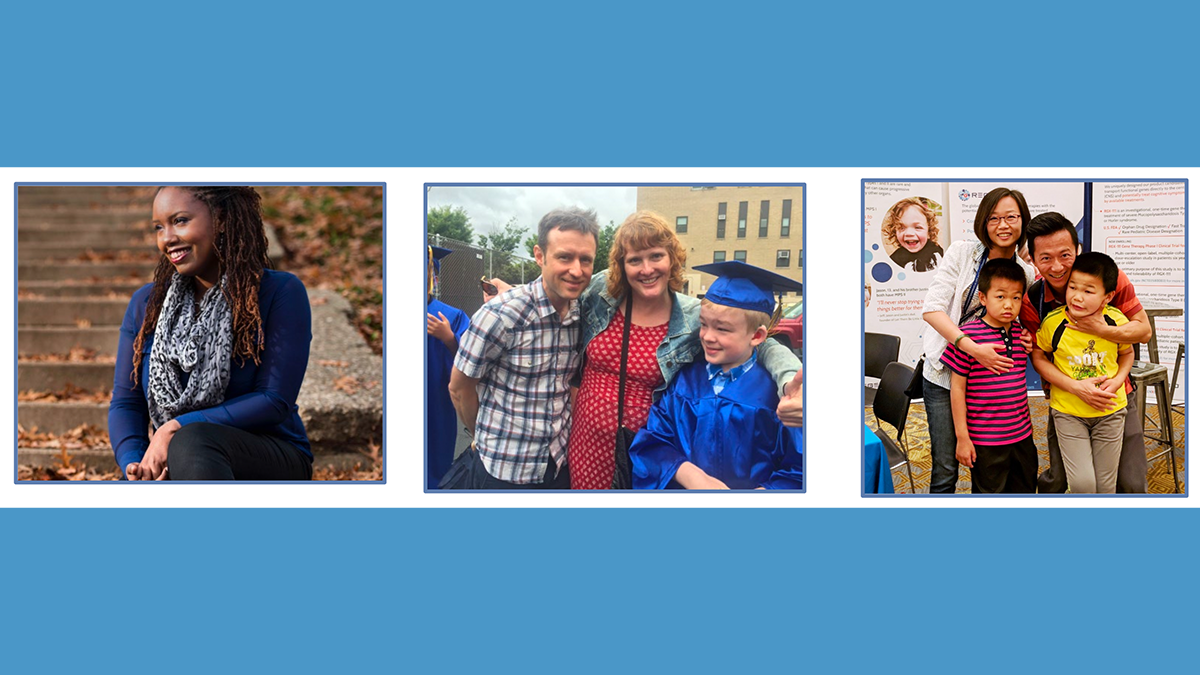
➅ Rare disease patients—and their families—are heroes who deserve journalists’ attention. “A hero is a rare individual in society who rises above the noise…” Levine said. “I just see these heroic stories day in and day out.” That includes “little children who’ve got the biggest smile, who go to school and explain what’s going on with them.” Or the wheelchair athletes he has met who have the same passion and commitment as their non-disabled counterparts. Or Levine’s 84-year-old father, who is the full-time caregiver for his 82-year-old stepmother, who has a rare disease. Heroes are these ordinary people who meet challenges that seem insurmountable, Levine said. “To me, the word ‘rare,’ being a hero is rare,” Levine said. “And that is my take-home message from all of this.”
This program was sponsored by Fondation Ipsen. NPF is solely responsible for the content.



 Reload document
 Open in new tab