5 takeaways:
➀ The White House Press Office has an open-door policy for reporters. Chris Meagher, White House deputy press secretary, said reporters have all-day access to the Lower Press area, where the deputy and assistant press secretary offices are located. “There’s no running and hiding if we don’t want to talk to you guys. You can just pop right in if you have a question,” Meagher said. Press team members also have beats. Assistant Press Secretary Kevin Munoz covers healthcare and COVID-19 and Assistant Press Secretary Vedant Patel covers immigration and climate, explained Meagher. But George Condon, a White House correspondent with National Journal, warned, “Many [assistant press secretaries] are now afraid to go on the record…They want things done on background, and they often don’t give real answers,” he said.
➁ For stories on technology, foreign policy or cybersecurity, call the White House’s National Security Council. The NSC has its own communications team of roughly 10 staffers and they are area experts, Meagher said.
➂ Traveling with the president? Your access may vary. Tamara Keith, a White House correspondent with NPR, traveled with former President Donald Trump to visit the Centers for Diseases Control in March 2020. Although the press pool was 13 people, “there were four of us who were just shouting questions at the president for 45 minutes,” better access than reporters usually get inside the White House, Keith said. On foreign trips, President Biden has been holding press conferences abroad. “People are getting access, but you really have to be in the pool…otherwise you’re doing a standup in a gymnasium waiting for the president to show up,” Keith said.
➃ Don’t be afraid to ask for a source’s personal contact info. “For a long time, I was afraid to ask for cell phone numbers, especially from senior officials…but you don’t know that unless you ask,” said Francesca Chambers, a White House correspondent with McClatchy. She said it’s surprising how often sources do provide their cell numbers if asked. Make a list of ideal sources to have in your stories, then work at establishing relationships with them, said Chambers. “You want to have the best possible people on the record,” she said. The pandemic has been a window of opportunity to make contacts, Chambers added. “I realized they’re all working from home, and everything on their signature right now is their cell phone number and not their office number,” she said. Look for sources outside of the White House, too, like congressional staff or lobbyists, who “often knew what was going on at the White House before they wanted to talk to the White House,” said Eugene Daniels, a White House Correspondent at Politico.
➄ The White House is a front seat to history, where politics and policy intersect with the institution of the presidency. For Keith, the hardest part of covering the White House is that every story is “some element of what does this mean for the president? What does this mean for the presidency? There is so much more analysis that’s required in covering the White House than in covering Congress or policy,” she said.
Speakers:
Francesca Chambers, White House Correspondent, McClatchy; Board Member, White House Correspondents’ Association
George Condon, White House Correspondent, National Journal; Former President, White House Correspondents’ Association; Past Chairman, National Press Foundation
Eugene Daniels, Playbook Co-Author and White House Correspondent, Politico; Paul Miller Fellow, 2017-2018
Tamara Keith, White House Correspondent and NPR Politics Podcast Co-host, NPR; Vice President, White House Correspondents’ Association; Paul Miller Fellow, 2010-2011
Chris Meagher, White House Deputy Press Secretary, White House
This program, part of the Paul Miller Fellowship, was funded by the Walter and Karla Goldschmidt Foundation and other donations to the National Press Foundation, which is solely responsible for its content.
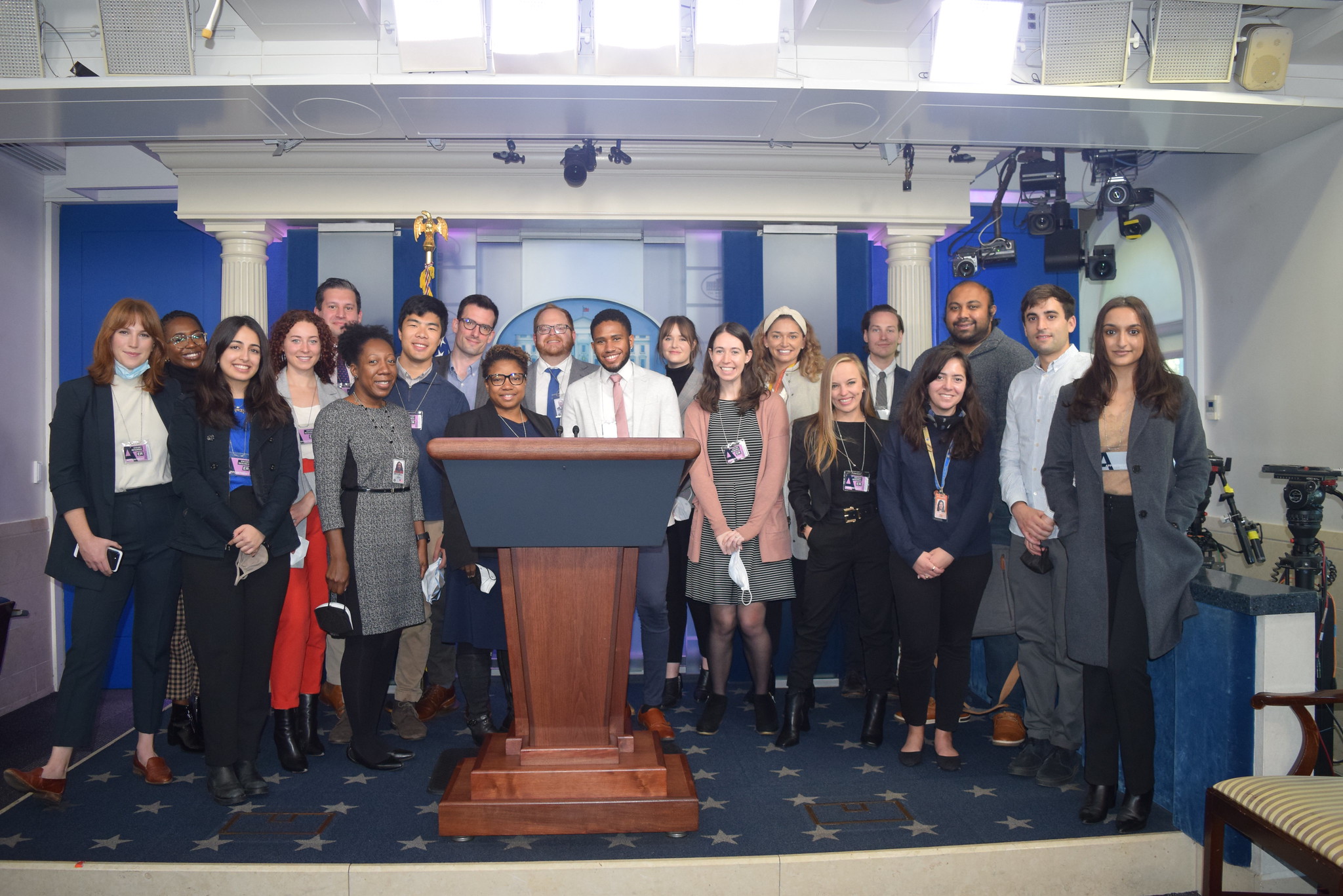
(Photo credit: Sydney Clark, National Press Foundation)